Agnimantha
अग्निमन्थ
Premna serratifolia L.
Lamiaceae · Premna
One name, more than one plant
Accepted name Premna serratifolia L., family Lamiaceae, confirmed against the GBIF backbone on 28 September 2026 at 99 per cent confidence. Older floras and most Ayurvedic textbooks print it as Premna integrifolia or Premna obtusifolia; those are synonyms for one coastal tree, not extra species. The live identity question is regional: across much of north and west India the shrub Clerodendrum phlomidis is gathered and sold as agnimantha, and the commentators settled the clash long ago by speaking of a larger and a smaller agnimantha. Within Dashamoola it belongs to the brihat panchamoola, the five tree roots.
Benefits & side effects
TRADITIONAL VIEW, WITH SAFETY LIMITS
Hindi name: Arni
What the texts say Agnimantha does
- Shothahara — reduces swelling
- Deepana — kindles digestion (appetiser)
- Pachana — digests ama (digestive)
- Vatahara — pacifies vata
- Mutrala — diuretic
What the evidence says. The classical record is long; human study of agnimantha on its own is essentially absent.
Side effects and limits
- Digestive upset
- Burning sensation in those of pitta constitution
Avoid or ask first: No absolute contraindication is documented here. This is written deliberately rather than left blank.
A traditional classification, not a recommendation. The full safety record is below.
Stands in 6 groups
- Anuvasanopaga — Adjuvant to anuvasana basti
- Shothahara — Reducing swelling
- Sheetaprashamana — Allaying cold
- Varunadi — Kapha, fat, and the head (named there as Tarkari)
- Viratarvadi — Urinary disease and Vata in the bladder
- Brihat Panchamula — The greater five roots
A Samhita can only be read forwards, from the group to its members. This is the same list read backwards.
Photographs
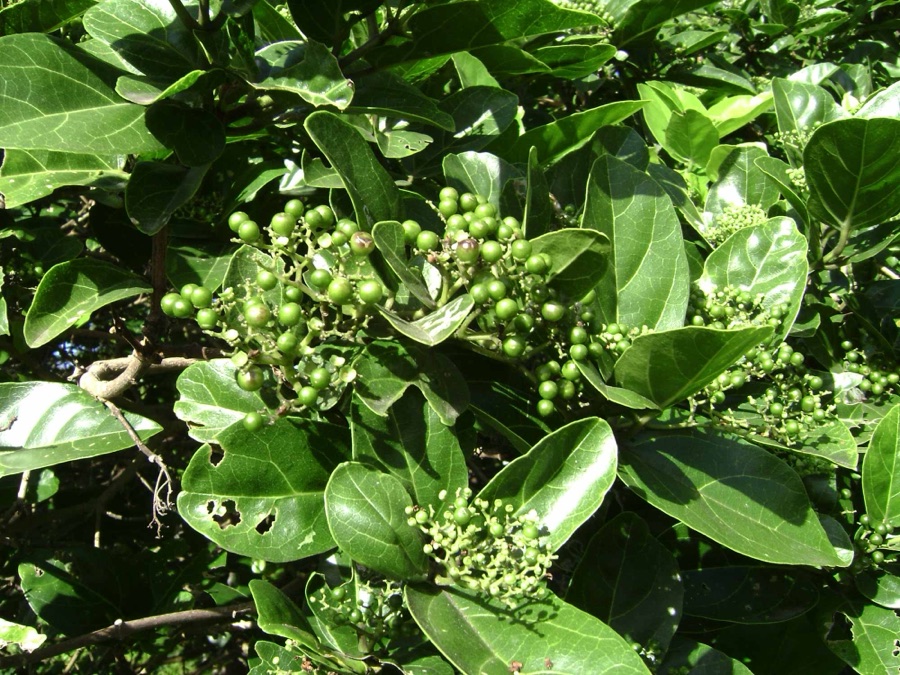
Photo: Tauʻolunga · CC BY-SA 3.0 · Wikimedia Commons

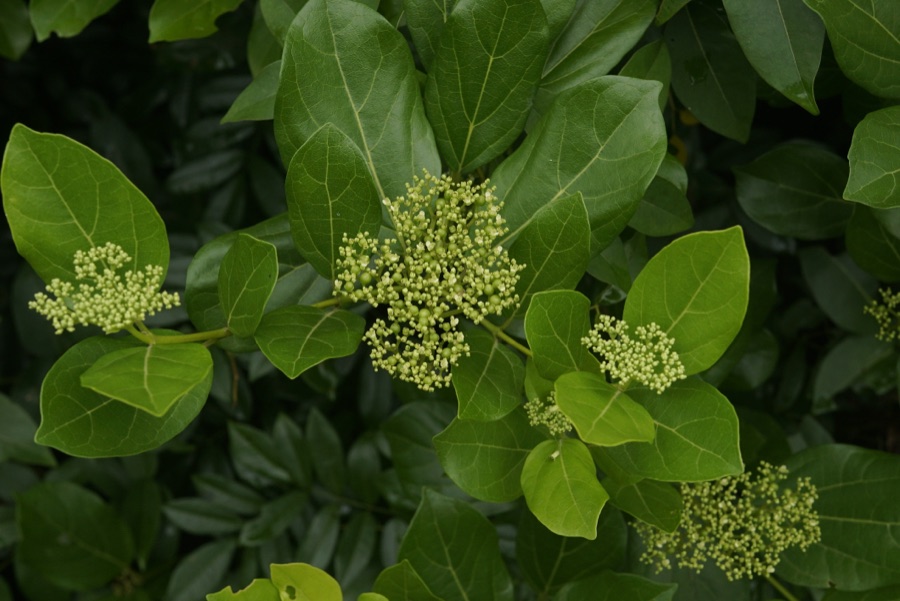
Photo: Vengolis · CC BY-SA 4.0 · Wikimedia Commons

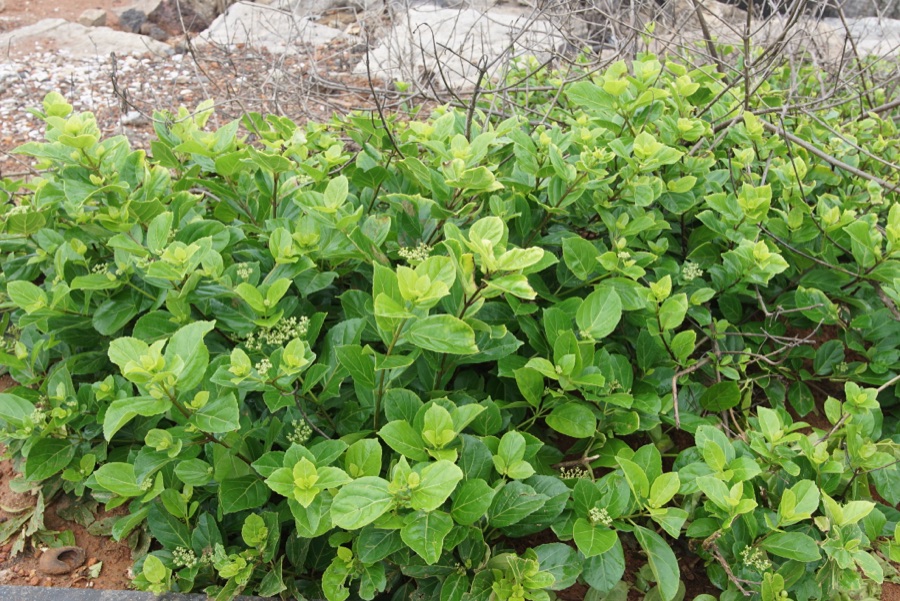
Photo: Vengolis · CC BY-SA 4.0 · Wikimedia Commons

Matra and anupana
AS THE CLASSICAL TEXTS AND THE API PRESCRIBE
| Kwatha | 50–100 ml |
| Churna | 3–6 g |
| Anupana | Ushnodaka |
| Kala | Adhobhakta |
Classical measures for a decoction and a powder of agnimantha root bark. It is seldom prescribed by itself, so these figures serve chiefly for single-herb study.
Reported from Sharangadhara Samhita and the Ayurvedic Pharmacopoeia of India. Laisha states what the texts prescribe; it does not recommend. No quantity here is adjusted for a particular person — not for agni, koshtha, bala, age, pregnancy, kidney or liver function, or anything already being taken.
Pharmacopoeial standard
Ayurvedic Pharmacopoeia of India, Part I
| Marker | Identity precedes any assay |
| Assay | |
| Total ash | |
| Acid-insoluble ash | |
| Alcohol-soluble extractive | |
| Water-soluble extractive | |
| Foreign matter |
Premna serratifolia and Clerodendrum phlomidis both pass as agnimantha with regional authority, so a monograph figure only means something once the species behind the sample is named.
This marker and identity requirement is not a test Laisha has run on any agnimantha sample. Ash, extractive and assay limits belong to the current Ayurvedic Pharmacopoeia of India monograph and should be read there; copying them from memory would risk a laboratory working to a wrong number.
Rasapanchaka
| Rasa | TiktaKatuKashayaMadhura |
| Guna | LaghuRuksha |
| Virya | Ushna |
| Vipaka | Katu |
| Prabhava | Swelling is the theme the texts return to: agnimantha is shothahara in Charaka's list and is named for shotha more readily than any other of the five great roots. |
| Doshakarma | Kaphavatahara. Being ushna it increases pitta. |
Four rasa, with ushna virya and katu vipaka.
Karma and part used
Charaka places agnimantha in three of his groups of ten in Sutrasthana 4: shothahara, the swelling-relievers; anuvasanopaga, herbs that support an oil enema; and shitaprashamana, herbs that drive off cold. That spread fits an ushna root aimed at kapha and vata. Each label is a classical category and is reported here as such, not as a measured anti-inflammatory action in people.
| Upayukta anga | Mula (the root) Mula twak (the root bark) |
| Why it matters | Dashamoola asks for the root. In the trade that normally means bark peeled from roots a few centimetres thick, dried in quills; stem bark is cheaper to gather and also turns up, though it is not the classical part. |
Paryaya
Agnimantha means fire-churner. Its wood served as the drill for kindling ritual fire by friction, so the name records a use that has nothing to do with medicine, and Vahnimantha repeats it with vahni, another word for fire. The Hindi arni is generally traced to arani, the Vedic fire-drill. Jaya and Vaijayanti, names of victory, are shared with other plants in the nighantu, so a paryaya on its own never fixes which plant is meant; Ganikarika and Tarkari are the names that stay closest to this tree.
Names, by language
| English | Headache tree |
| Sinhala | Seru |
| Nepali | Ganiyari |
| Hindi | Arni |
| Kannada | Narvel |
| Tamil | Munnai |
| Telugu | Nelli |
| Malayalam | Munja |
| Marathi | Airan |
| Gujarati | Arni |
| Bengali | Ganiari |
| Punjabi | Arni |
| Odia | Ganiari |
| Urdu | Arni |
Classical references
The mahakashaya named on this page were checked against the Charak Samhita Online text of Sutrasthana 4. The Sushruta and Bhavaprakasha citations give the chapter or varga only, because a verse number could not be confirmed and a guessed number would mislead.
Formulations it appears in
| Dashamoolarishta | Agnimantha root is one of the five great roots in this self-fermented preparation. |
| Dashamoola Kwatha | Decocted together with the other nine roots in equal share. |
| Dashamoola Taila | Its root goes into the decoction with which the oil is cooked. |
| Chyawanprash | Part of the Dashamoola decoction that forms the base of the confection. |
Adulterants and substitutes
Two plants answer to agnimantha. Premna serratifolia is a tree of coasts and the south; Clerodendrum phlomidis is a shrub of drier northern and western country. Each carries regional authority, and neither should be called a fake. The practical trouble lies elsewhere: Premna material is sometimes sold as bharangi, so one sack can travel under two names, and stem bark is passed off as root bark because it needs no digging. A buyer who wants a defined article must ask for the species, not only the Sanskrit name.
Identity
Accepted name Premna serratifolia L., family Lamiaceae, confirmed against the GBIF backbone on 28 September 2026 at 99 per cent confidence. Older floras and most Ayurvedic textbooks print it as Premna integrifolia or Premna obtusifolia; those are synonyms for one coastal tree, not extra species. The live identity question is regional: across much of north and west India the shrub Clerodendrum phlomidis is gathered and sold as agnimantha, and the commentators settled the clash long ago by speaking of a larger and a smaller agnimantha. Within Dashamoola it belongs to the brihat panchamoola, the five tree roots.
A WAY TO REMEMBER IT
Premna from Greek premnon, a tree stump — the genus was named for its short, thick trunk. Serratifolia is serrated leaf. Agnimantha means fire-churner: its wood was used to make the ritual fire by friction.
What the tradition holds
In the tradition agnimantha is classed first among the swelling-relievers. Sushruta counts it among the five great roots, and Charaka lists it as shothahara and also among the herbs that support an oil enema and relieve cold. Its working life is almost always inside a compound, Dashamoola decoctions, Dashamoolarishta and Chyawanprash among them, rather than alone. All of this reports what the texts hold, not an effect shown in a body.
Constituents. The root and bark carry iridoid glycosides and alkaloids including premnine. Composition differs between the two plants used under this name.
What the evidence says
| Status | The classical record is long; human study of agnimantha on its own is essentially absent. |
| Suggested | Laboratory and animal papers exist. One, from a Central Council for Research in Ayurvedic Sciences institute in Chennai, gave a hydro-alcoholic root-bark extract of Premna integrifolia to rats on a high-fat diet and measured glutathione-related markers. Rodent biochemistry of that kind raises questions; it cannot show that the root helps a person. |
| Not established | No controlled human trial shows that agnimantha, alone or as one of the ten Dashamoola roots, relieves swelling or changes the course of any named condition. Centuries of use do not stand in for that trial. |
| The honest gap | Many papers say only 'agnimantha' or print a synonym without a herbarium voucher, so a reader often cannot tell whether Premna or Clerodendrum phlomidis was tested. |
Safety
Nothing serious is on record for agnimantha taken the traditional way, but the plant has scarcely been examined for harm, so silence is not proof of safety. The texts class it as ushna and say it provokes pitta, which is why burning and acidity are the reactions they would predict. Because it nearly always reaches a patient inside a ten-root formula, any reaction is hard to pin on it alone. Pregnancy, regular medicines or a diagnosed illness are each a reason to consult a doctor or qualified practitioner first.
| Side effects | Digestive upset Burning sensation in those of pitta constitution |
| Contraindications | No absolute contraindication is documented here. This is written deliberately rather than left blank. |
| Interactions | No specific drug interaction is documented for agnimantha, which has not been tested against modern medicines. Dashamoolarishta, its commonest vehicle, contains alcohol generated during fermentation, and that matters for anyone on sedatives or told to avoid alcohol. |
| Pregnancy and breastfeeding | No study has looked at agnimantha in pregnancy or while breastfeeding. Its use in either should be decided by a qualified practitioner. |
Growing it
| Climate | Tropical, including coastal scrub. |
| Soil | Wide range, tolerant of poor and saline ground. |
| Planting | A shrub or small tree, grown from seed or cuttings. |
| Harvest | Roots lifted from established plants, washed, cut and dried in shade. |
| What is not stated | Agnimantha is rarely planted as a crop. Root comes mostly from wild and hedge plants, so heavy Dashamoola demand falls straight on those stands, and digging the root usually kills the plant. |
Last updated · How Laisha writes and checks its pages · Report a mistake
Go further with Laisha Smarter
US$10 a month · one price worldwide · cancel any time
- Ask Laisha about any herb or formulation — up to 1,000 questions a month
- The full study tracks with practice questions
- Reports and exports as real files