Bharangi
भार्ङ्गी
Rotheca serrata (L.) Steane & Mabb.
Lamiaceae · Rotheca
Benefits & side effects
TRADITIONAL VIEW, WITH SAFETY LIMITS
What the texts say Bharangi does
- Shwasahara — relieves breathlessness
- Kasahara — relieves cough
- Deepana — kindles digestion (appetiser)
- Shothahara — reduces swelling
- Jwaraghna — used in fever
- Krimighna — anthelmintic (against worms)
What the evidence says. Tradition is long; human trials are lacking, and the pharmacology is almost all animal work.
Side effects and limits
- Digestive upset
- Burning sensation
Avoid or ask first: Pregnancy.
A traditional classification, not a recommendation. The full safety record is below.
Photographs
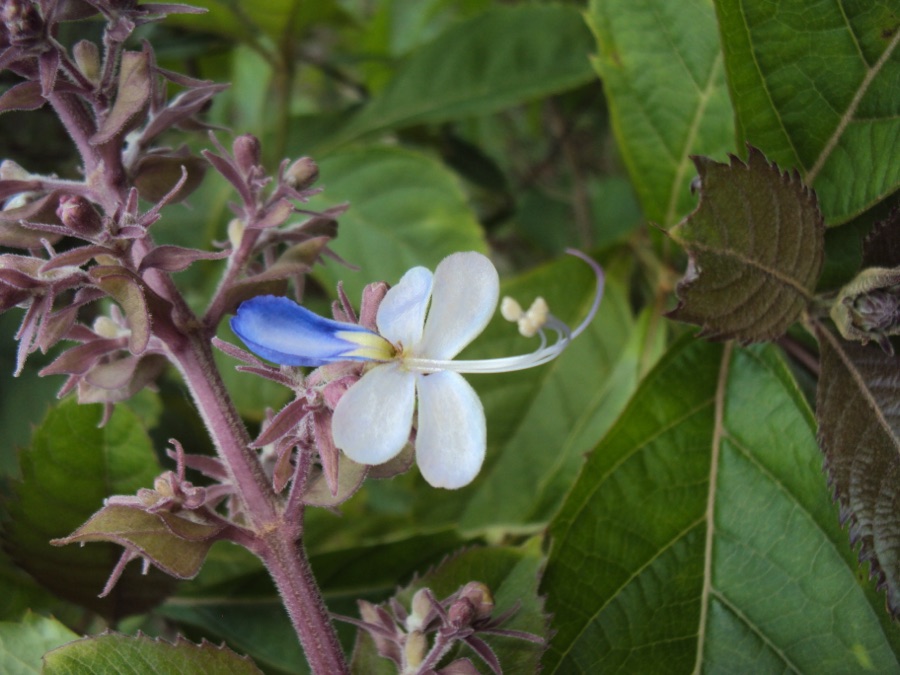
Photo: Vinayaraj · CC BY-SA 3.0 · Wikimedia Commons

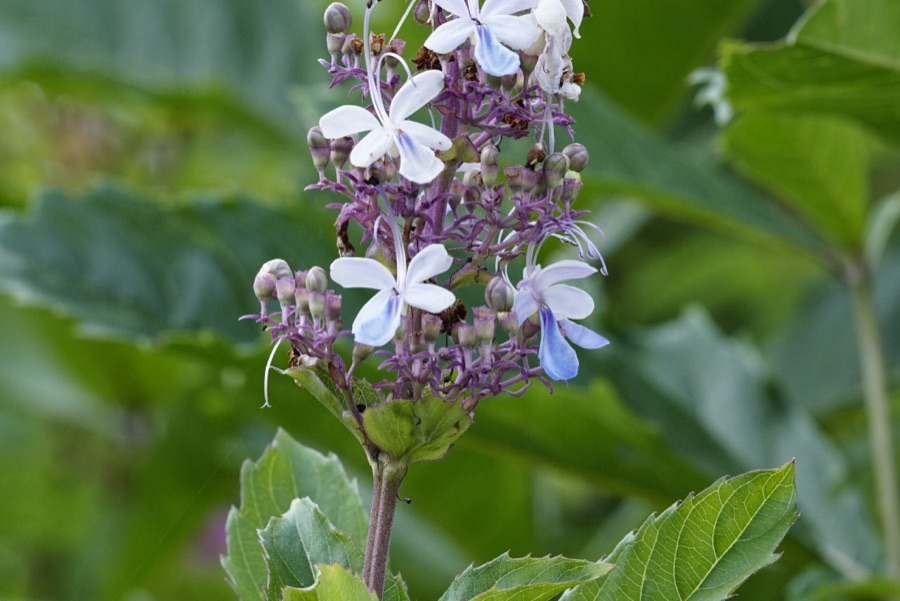
Photo: Vengolis · CC BY-SA 4.0 · Wikimedia Commons

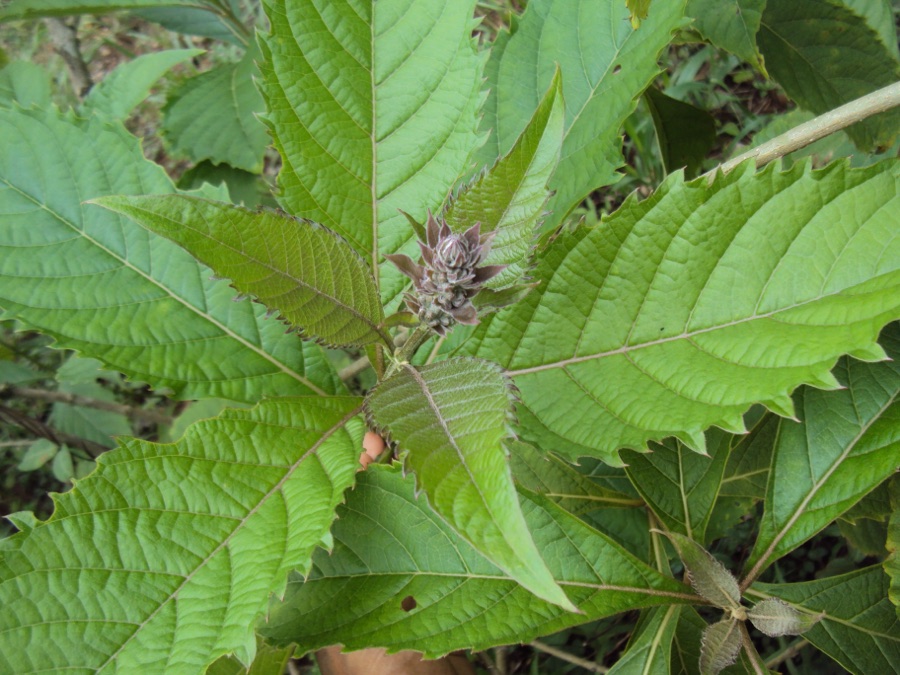
Photo: Vinayaraj · CC BY-SA 3.0 · Wikimedia Commons

Matra and anupana
AS THE CLASSICAL TEXTS AND THE API PRESCRIBE
| Churna | 1–3 g |
| Kwatha | 50–100 ml |
| Anupana | Madhu · Ushnodaka |
| Kala | Adhobhakta |
The classical measures for bharangi root as a powder and a decoction; stem material falls outside them.
Reported from Sharangadhara Samhita and the Ayurvedic Pharmacopoeia of India. Laisha states what the texts prescribe; it does not recommend. No quantity here is adjusted for a particular person — not for agni, koshtha, bala, age, pregnancy, kidney or liver function, or anything already being taken.
Rasapanchaka
| Rasa | TiktaKatuKashaya |
| Guna | LaghuRuksha |
| Virya | Ushna |
| Vipaka | Katu |
| Prabhava | The texts name bharangi among the first dravya for shwasa and kasa and treat this action on the breath as its distinctive one. |
| Doshakarma | Kaphavatahara. Being ushna it increases pitta. |
Tikta, katu and kashaya with ushna virya and katu vipaka.
Karma and part used
Bharangi is not one of the herbs in Charaka's fifty groups of ten in Sutrasthana 4; its standing comes from the treatment chapters and from Sushruta, who lists it as Bhargi in the Pippalyadi group of pungent, warming drugs. The breath-related actions recorded here are classical categories and are not claims about airways in a living person.
| Upayukta anga | Mula (the root) Mula twak (the root bark) |
| Why it matters | The root is the dravya, ideally bark peeled from it. Market samples are often stem cut to look like root, since the stem can be gathered without digging. Studies of the leaf exist, but the leaf is not the classical article and should not be read across. |
Paryaya
Angaravalli, the ember creeper, describes the colour of the flowers. Kharashaka, rough vegetable, names the coarse leaf, which is cooked as a green in some places. Brahmanyashtika is an old lexicon name whose sense is debated, and Bhargi is the shortened form under which Sushruta lists it. None of these names is unique enough on its own to settle identity in the field.
Names, by language
| English | Blue glory |
| Sinhala | Pinna |
| Nepali | Bharangi |
| Hindi | Bharangi |
| Kannada | Bharangi beru |
| Tamil | Cheruthekku |
| Telugu | Gantubarangi |
| Malayalam | Cheruthekku |
| Marathi | Bharangi |
| Gujarati | Bharangi |
| Bengali | Bamunhati |
| Punjabi | Bharangi |
| Odia | Bharangi |
| Urdu | Bharangi |
Classical references
The absence of bharangi from Charaka's fifty groups of ten was checked against the Charak Samhita Online text of Sutrasthana 4. Where only a section or varga is given for other texts, no verse number could be confirmed.
Formulations it appears in
| Bharangyadi Kwatha | The decoction takes its name from bharangi, its lead ingredient. |
| Kanakasava | One of the herbs in this fermented preparation. |
| Vasarishta | Included in some recensions only. |
Adulterants and substitutes
Other Clerodendrum species are gathered with Rotheca serrata, and Premna species, agnimantha among them, are sold as bharangi in some markets. A separate and common shortcut is stem sold as root: the stem is easy to cut, while the root must be dug. Nothing published shows that the stem can stand in for the root.
Identity
Accepted name Rotheca serrata (L.) Steane & Mabb., family Lamiaceae, matched against the GBIF backbone on 28 September 2026 at 99 per cent confidence. Nearly all Ayurvedic literature, and most pharmacology papers, use the older name Clerodendrum serratum; the genus was split, the shrub did not change. Older books also place it in Verbenaceae, a family boundary since redrawn. Several other Clerodendrum species, and some Premna, are sold under the same Sanskrit name in particular regions, so the species on the label matters more than the word bharangi.
A WAY TO REMEMBER IT
Rotheca is an anagram-like Latinisation of the Malabar name. Serrata is toothed, for the leaf margin.
What the tradition holds
Bharangi's place in the tradition is as a root for the breath: it is used for shwasa and kasa, and its decoction is named after it. Sushruta lists it among the hot, pungent Pippalyadi drugs, and the Bhavaprakasha Nighantu sets out its properties. This is what the texts record, not a finding about what the root does in a body.
Constituents. The root carries saponins, flavonoids and phenolic glycosides, including derivatives of serratagenic acid; ursolic acid has been quantified in a standardised aqueous extract of the plant by HPTLC and HPLC.
What the evidence says
| Status | Tradition is long; human trials are lacking, and the pharmacology is almost all animal work. |
| Suggested | An ethanolic root extract was tested in rats sensitised with ovalbumin, a standard laboratory asthma model, where markers of airway inflammation were lower than in untreated animals. A separate study standardised an aqueous extract to ursolic acid and tested it in a rat arthritis model. Such results justify further research; they do not show benefit in people. |
| Not established | No adequate controlled trial shows that bharangi changes breathlessness, cough or any diagnosed respiratory disease in humans. |
| The honest gap | Published work is limited, rarely separates root from stem, and seldom records which Clerodendrum or Rotheca species was used. |
Safety
No serious harm is on record for bharangi in traditional use, though that reflects limited study rather than proven safety. The larger hazard is the situation it is used in: breathlessness is a symptom, and asthma, heart failure and other conditions needing urgent assessment all present that way, so relying on a herb instead of a diagnosis is the real risk. The texts class it as ushna, and it is listed as contraindicated in pregnancy here. Anyone on medication or with a diagnosed condition should speak to a doctor or qualified practitioner first.
| Side effects | Digestive upset Burning sensation |
| Contraindications | Pregnancy. |
| Interactions | No specific drug interaction is documented for bharangi. Anyone using inhaled bronchodilators or corticosteroids for asthma or COPD should treat it, if at all, as an addition discussed with the prescriber and never as a replacement for those medicines. |
| Pregnancy and breastfeeding | Not to be used in pregnancy without a qualified practitioner. There is not enough evidence to establish safety in breastfeeding. |
Growing it
| Climate | Tropical, in forest and scrub across India. |
| Soil | Well-drained ground. |
| Planting | A shrub, grown from seed or cuttings. |
| Harvest | Roots lifted from established plants, washed, cut and dried in shade. |
| What is not stated | Bharangi is collected mostly from the wild, and because the root is the article, collection usually removes the whole shrub. No authoritative cultivation figures are given here. |
Last updated · How Laisha writes and checks its pages · Report a mistake
Go further with Laisha Smarter
US$10 a month · one price worldwide · cancel any time
- Ask Laisha about any herb or formulation — up to 1,000 questions a month
- The full study tracks with practice questions
- Reports and exports as real files