Chavya
चव्य
Piper retrofractum Vahl
Piperaceae · Piper
Benefits & side effects
TRADITIONAL VIEW, WITH SAFETY LIMITS
Hindi name: Chab
What the texts say Chavya does
- Deepana — kindles digestion (appetiser)
- Pachana — digests ama (digestive)
- Krimighna — anthelmintic (against worms)
- Shulaprashamana — relieves colicky pain
- Kaphaghna — pacifies kapha
What the evidence says. The texts record Chavya as a digestive. Modern studies of Piper retrofractum exist but are mostly laboratory work, and clinical trials are lacking.
Side effects and limits
- Burning sensation
- Aggravation of pitta with prolonged use
Avoid or ask first: Not used where there is active bleeding or a marked pitta state, on the classical reasoning that it is ushna and tikshna.
A traditional classification, not a recommendation. The full safety record is below.
Stands in 6 groups
- Deepaniya — Kindling agni
- Trptighna — Relieving cloying satiety
- Arshoghna — Countering haemorrhoids
- Shulaprashamana — Allaying colic
- Pippalyadi — Agni, Kapha, and the digestive disorders
- Panchakola — The five pungents that kindle agni
A Samhita can only be read forwards, from the group to its members. This is the same list read backwards.
Photographs
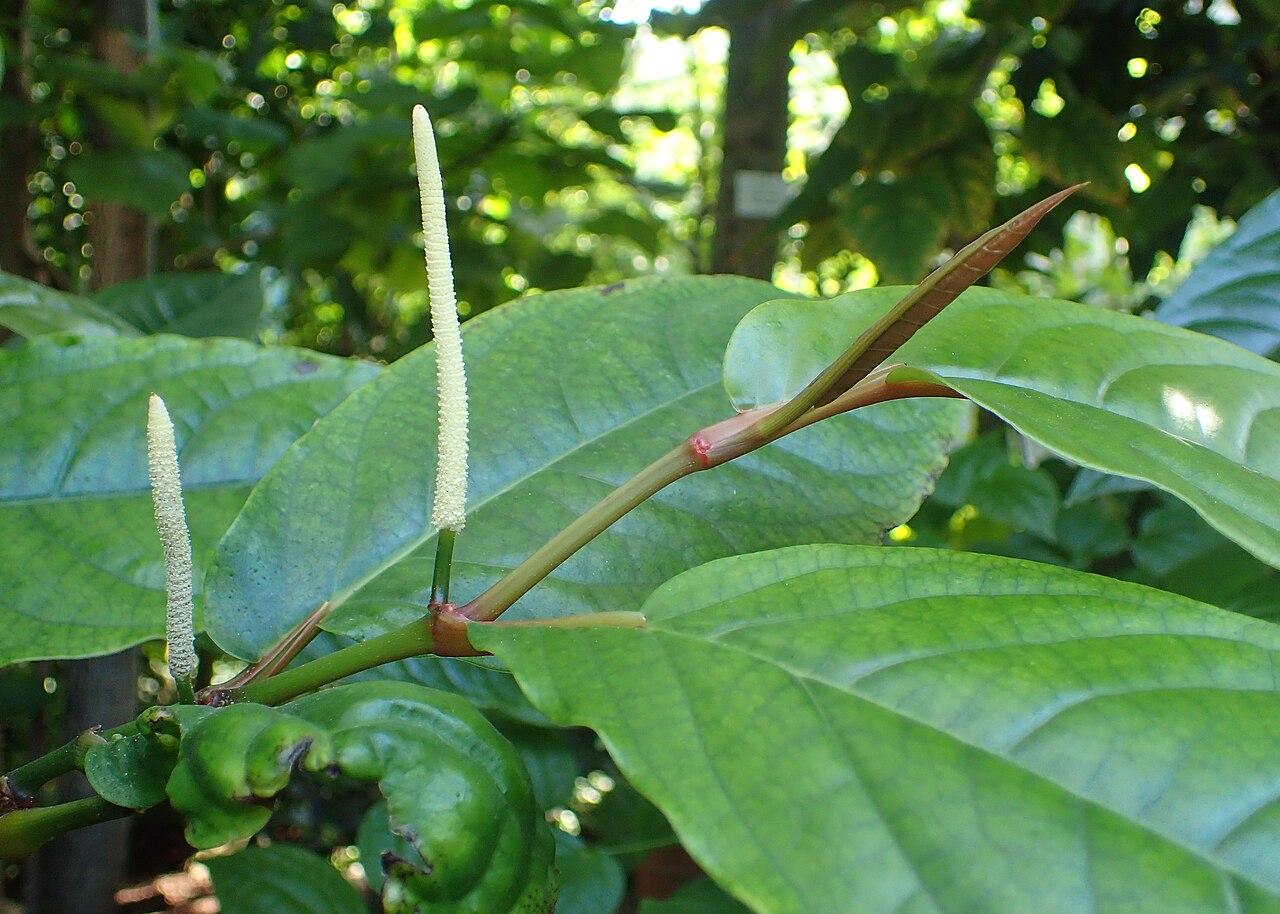
Photo: Krzysztof Ziarnek, Kenraiz · CC BY-SA 4.0 · Wikimedia Commons

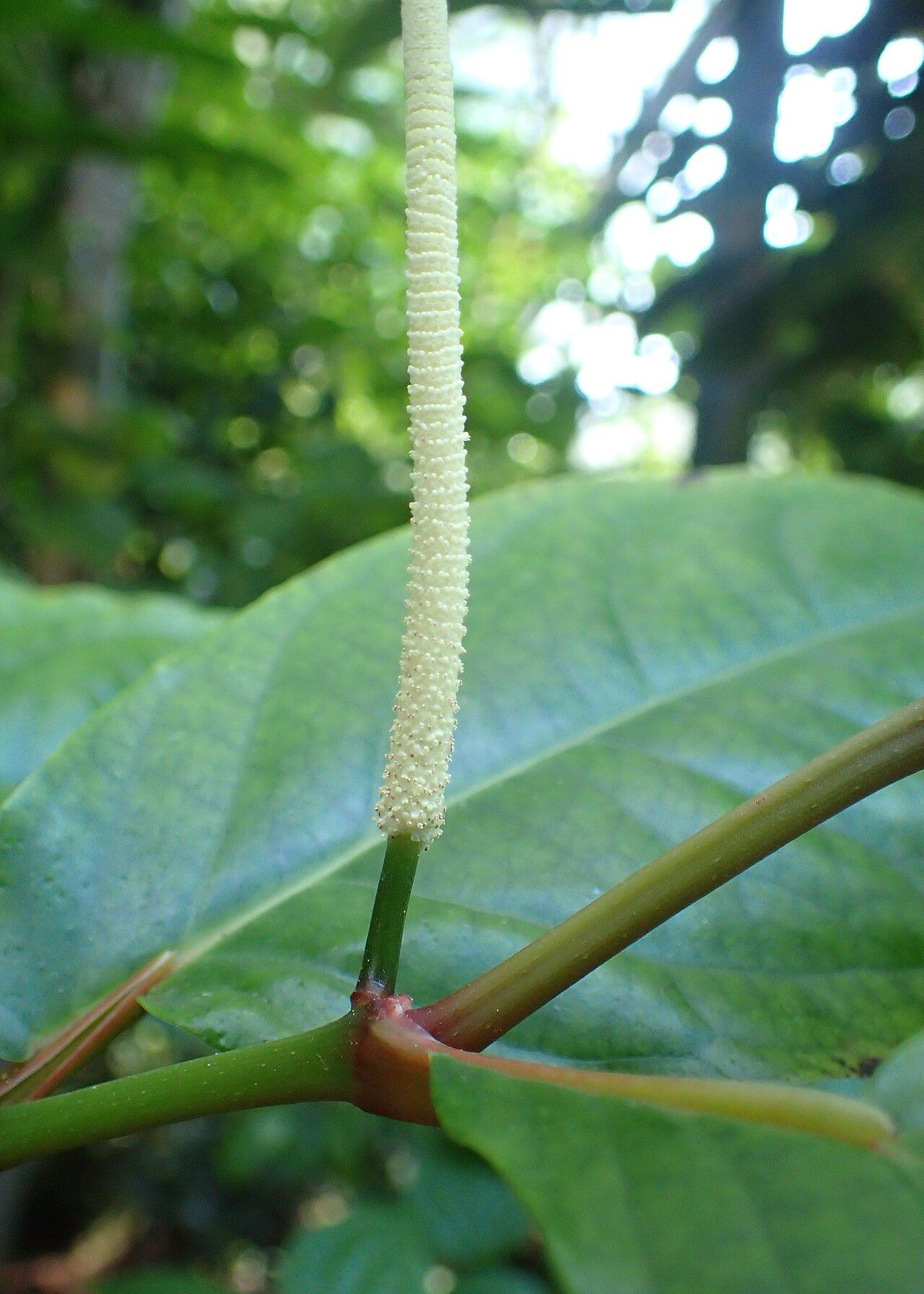
Photo: Krzysztof Ziarnek, Kenraiz · CC BY-SA 4.0 · Wikimedia Commons

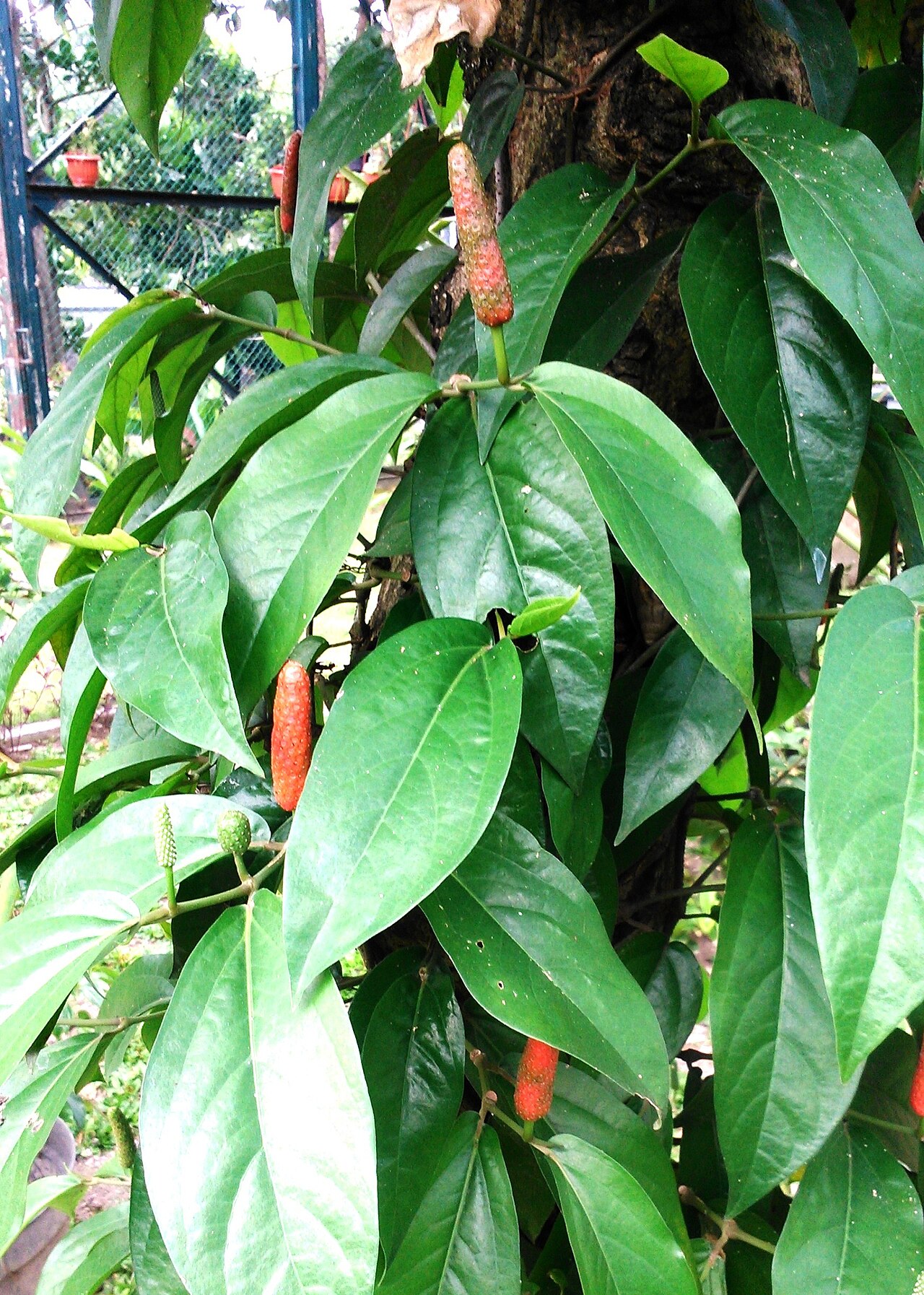
Photo: Kembangraps · CC0 · Wikimedia Commons

Matra and anupana
AS THE CLASSICAL TEXTS AND THE API PRESCRIBE
| Churna | 1–3 g |
| Anupana | Ushnodaka · Madhu |
| Kala | Adhobhakta |
The digestive (deepana) range for Chavya churna as given for the Panchakola drugs. It is normally taken within a compound, not alone.
Reported from Sharangadhara Samhita and the Ayurvedic Pharmacopoeia of India. Laisha states what the texts prescribe; it does not recommend. No quantity here is adjusted for a particular person — not for agni, koshtha, bala, age, pregnancy, kidney or liver function, or anything already being taken.
Rasapanchaka
| Rasa | Katu |
| Guna | LaghuRukshaTikshna |
| Virya | Ushna |
| Vipaka | Katu |
| Prabhava | Chavya is one of the five pungent drugs of Panchakola (with Pippali, Pippalimula, Chitraka and Shunthi), the classical group for kindling digestion. |
| Doshakarma | Kaphavatahara. Increases pitta. |
Katu rasa, laghu, ruksha and tikshna guna, ushna virya and katu vipaka: the plain, hot profile of the pepper family, without the sweet vipaka the texts give to fresh Pippali.
Karma and part used
Deepana, pachana, krimighna, shulaprashamana and kaphaghna are the actions recorded for Chavya. Charaka also counts it among drugs for arshas (haemorrhoids). These are the tradition's statements, not tested findings.
| Upayukta anga | Kanda (the stem) |
| Why it matters | The traded article is the woody stem, cut into short cylindrical pieces; the root is sometimes included. It is easily confused with Pippalimula, the root of Piper longum, and the two should not be swapped. |
Paryaya
Chavika is a variant spelling of the same name. Ushana means hot or burning, for the taste. Kola is also a name for pepper and shares its root with Panchakola, the group of five pungents. Tikshnatandula, sharp grain, points at the pungent fruit of the plant.
Names, by language
| English | Java long pepper |
| Hindi | Chab |
| Kannada | Chavya |
| Tamil | Chevyam |
| Telugu | Chavyamu |
| Malayalam | Chavyam |
| Marathi | Chavak |
| Gujarati | Chavak |
| Bengali | Chai |
| Odia | Chabya |
| Urdu | Chab |
Classical references
Formulations it appears in
| Panchakola Churna | Chavya fills one of the five places in the group of pungents this churna is named after. |
| Chitrakadi Vati | A digestive tablet in which Chavya joins Chitraka and other pungents. |
| Dashamularishta | One of the many ingredients of this fermented preparation. |
Adulterants and substitutes
In eastern India the stem of Piper longum is sold as Chavya as a matter of routine. Both are pepper-family stems with similar cross-sections and a similar bite, so the substitution is hard to detect without knowing the supplier. It matters most in Panchakola, which is meant to contain both Chavya and Pippalimula as separate items.
Identity
The Ayurvedic Pharmacopoeia of India takes Chavya to be Piper retrofractum, the Javanese long pepper, a climbing pepper of South-East Asia. Much of the literature, including Charak Samhita Online, calls the same plant Piper chaba. In Bengal and neighbouring regions the thick stem of Piper longum is used as Chavya instead, which means a different part of a different species.
A WAY TO REMEMBER IT
Piper is Latin for pepper, borrowed through Greek from the Sanskrit pippali. Retrofractum means bent backwards, for the curved fruiting spike. Chavya, Pippali and Pippalimula are three articles from two species, and keeping them apart is half the work.
What the tradition holds
Chavya is a digestive pungent. Charaka lists it among the drugs that kindle digestion, ease colic, relieve a heavy, over-full feeling and help with haemorrhoids. It is used almost always in combination, most famously as one of the five of Panchakola.
What the evidence says
| Status | The texts record Chavya as a digestive. Modern studies of Piper retrofractum exist but are mostly laboratory work, and clinical trials are lacking. |
| Suggested | There is a pharmacopoeial monograph for Chavya in India, giving it a defined identity and quality standard. Piper retrofractum, like other peppers, contains piperine, which is why some laboratory research has looked at it. None of this proves a clinical effect. |
| Not established | No adequate trial has shown that Chavya helps digestion, colic or haemorrhoids in people. |
| The honest gap | Because the Piper longum stem is so often sold as Chavya, studies that buy their material in the market may not have tested Piper retrofractum at all, and few record a voucher. |
Safety
Chavya is a hot, pungent pepper stem used in small amounts within compound formulas. Like the other pungent, heating drugs it can cause a burning feeling and aggravate pitta, and the texts do not intend it for long continuous use. Anyone pregnant, on medication or managing a diagnosed condition should speak to a doctor or a qualified practitioner first.
| Side effects | Burning sensation Aggravation of pitta with prolonged use |
| Contraindications | Not used where there is active bleeding or a marked pitta state, on the classical reasoning that it is ushna and tikshna. |
| Interactions | No specific drug interaction is documented for Chavya itself. Piper retrofractum, like Piper longum, contains piperine, so the caution about piperine raising blood levels of other medicines may reasonably apply, though it has not been studied for this plant. |
| Pregnancy and breastfeeding | Not established. The texts are cautious with strongly heating pungents in pregnancy, and no modern safety data exist for Chavya. |
Last updated · How Laisha writes and checks its pages · Report a mistake
Go further with Laisha Smarter
US$10 a month · one price worldwide · cancel any time
- Ask Laisha about any herb or formulation — up to 1,000 questions a month
- The full study tracks with practice questions
- Reports and exports as real files