Mahameda
महामेदा
Polygonatum cirrhifolium (Wall.) Royle
Asparagaceae · Polygonatum
Benefits & side effects
TRADITIONAL VIEW, WITH SAFETY LIMITS
What the texts say Mahameda does
- Jivaniya — vitalising, life-sustaining
- Brimhaniya — nourishing, builds body tissue
- Shukrajanana — promotes the production of semen
- Balya — strengthening
What the evidence says. There is a long classical record of Mahameda and almost no clinical work. Studies of Polygonatum cirrhifolium are rare and seldom confirm the identity of their material.
Side effects and limits
Products naming Mahameda nearly always contain Shatavari root, by official substitution, or larger pieces of Meda. Neither Himalayan Polygonatum has a published human safety record. The label is the honest guide to what is actually being taken. Anyone pregnant, on medication or managing a diagnosed condition should speak to a doctor or a qualified practitioner first.
Avoid or ask first: The sources used here record no absolute contraindication for Mahameda. Given how little it has been studied, that is an absence of data rather than a clean bill of health.
A traditional classification, not a recommendation. The full safety record is below.
Stands in 3 groups
- Jivaniya — Life-sustaining
- Kakolyadi — Pitta, bleeding, and the building of tissue
- Ashtavarga — The eight - the Himalayan group of the Jivaniya and Kakolyadi drugs
A Samhita can only be read forwards, from the group to its members. This is the same list read backwards.
Photographs
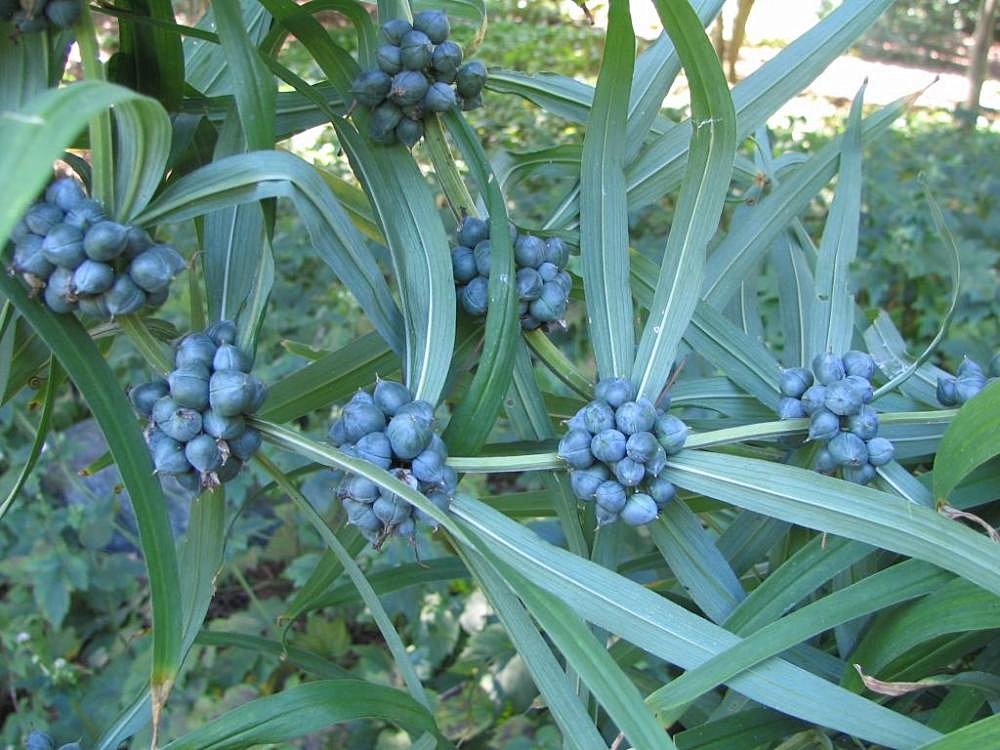
Photo: Photo by David J. Stang · CC BY-SA 4.0 · Wikimedia Commons

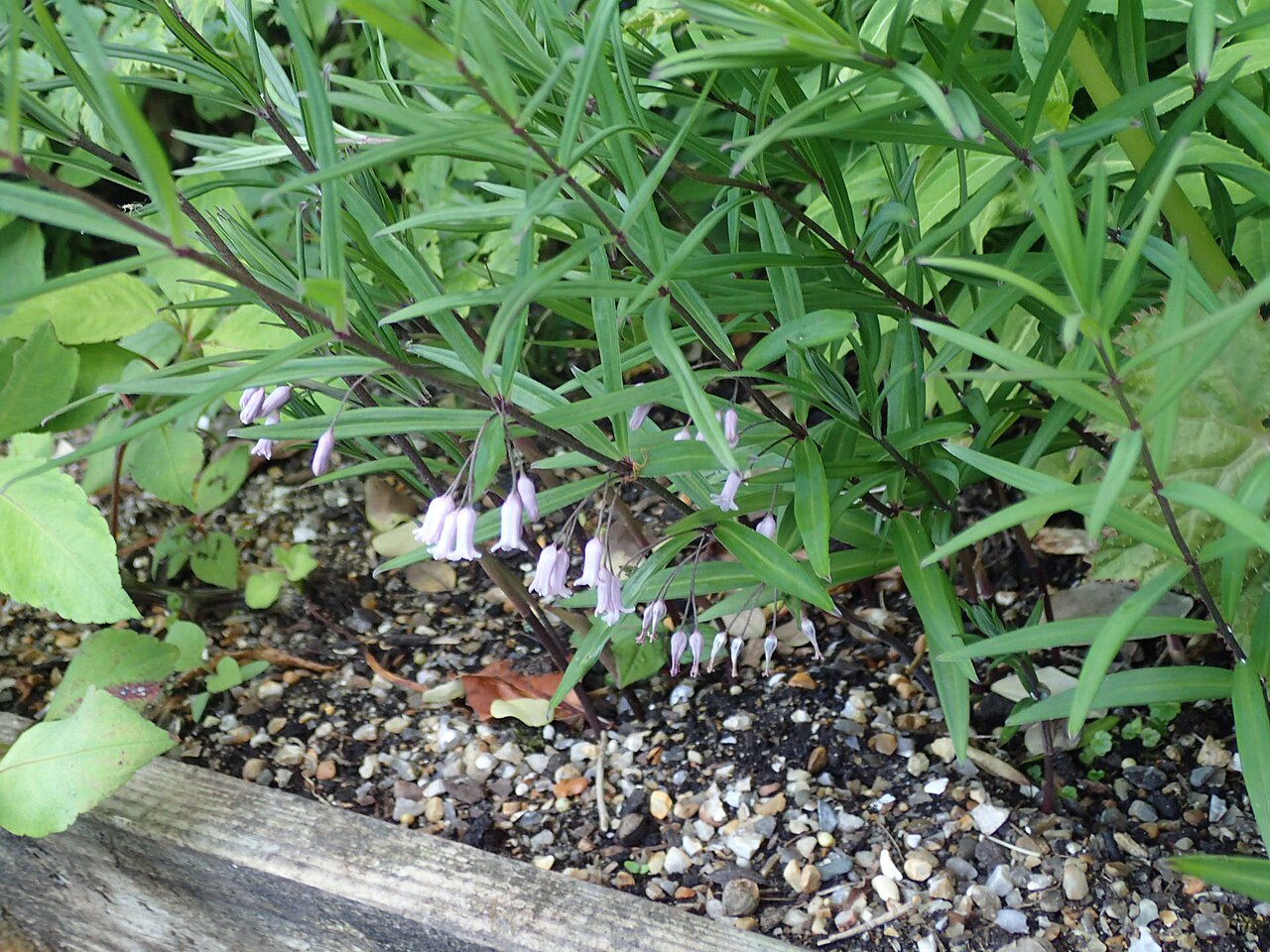
Photo: peganum · CC BY-SA 2.0 · Wikimedia Commons

Matra and anupana
AS THE CLASSICAL TEXTS AND THE API PRESCRIBE
| Churna | 3–6 g |
| Anupana | Ksheera · Madhu |
| Kala | Adhobhakta |
The texts give the Ashtavarga members a common churna range. For Mahameda the article dispensed is normally Shatavari, so the range in practice refers to that root.
Reported from Sharangadhara Samhita and the Ayurvedic Pharmacopoeia of India. Laisha states what the texts prescribe; it does not recommend. No quantity here is adjusted for a particular person — not for agni, koshtha, bala, age, pregnancy, kidney or liver function, or anything already being taken.
Rasapanchaka
| Rasa | Madhura |
| Guna | GuruSnigdha |
| Virya | Sheeta |
| Vipaka | Madhura |
| Prabhava | Mahameda is the 'greater Meda' of the Ashtavarga. Unlike Meda it does not appear in Charaka's Chyavanaprasha. |
| Doshakarma | Vatapittahara. |
Mahameda is recorded as madhura in rasa, guru and snigdha in guna, sheeta in virya and madhura in vipaka. Nothing in this profile distinguishes it from Meda.
Karma and part used
The recorded actions are jivaniya, brimhaniya, shukrajanana and balya. In Charaka's chapter 4 it appears only in the Jivaniya group, a narrower placement than its partner. Tradition, not tested effect.
| Upayukta anga | Kanda (the rhizome) |
| Why it matters | The rhizome, described as larger than Meda's. Size is the only classical distinction, so pieces of a big Meda rhizome can be, and often are, sold as Mahameda. |
Paryaya
Brihanmeda simply means the big Meda. Devamani, 'jewel of the gods', and Vasuchhidra, 'treasure with a hole', are honorifics; the hole is usually taken as the stem scar on the rhizome, a feature shared with Meda's Manichhidra.
Names, by language
| English | — |
| Hindi | Mahameda |
| Kannada | Mahameda |
| Tamil | Mahamedai |
| Telugu | Mahameda |
| Malayalam | Mahameda |
| Marathi | Mahameda |
| Gujarati | Mahameda |
| Bengali | Mahameda |
| Odia | Mahameda |
| Urdu | Mahameda |
Classical references
Formulations it appears in
| Chyavanaprasha | Charaka's Chyavanaprasha (Chikitsasthana 1.1, verses 62–74) names Meda but not Mahameda. Its presence on modern labels comes from the later habit of adding the Ashtavarga as a set, and the article used is usually Shatavari. |
| Jivaniya Gana Kwatha | Mahameda completes the Meda pair within the ten drugs of the Jivaniya group, and this is the only chapter 4 group that names it. |
Adulterants and substitutes
The Ayurvedic Pharmacopoeia of India, Part II, makes Shatavari root the official substitute for Mahameda, as for Meda. Dried material offered as Mahameda is often just larger Meda, and no routine test separates the two Polygonatum species.
Identity
Mahameda is generally identified as Polygonatum cirrhifolium, a Himalayan Solomon's seal whose leaf tips curl into tendrils. The pairing with Meda is unstable: the National Medicinal Plants Board listing summarised by Virk and colleagues gives Mahameda as Polygonatum verticillatum, the species most authors call Meda, and Charak Samhita Online uses that one name for both. The texts separate the two mainly by size, a feature that disappears once the rhizome is dried and powdered.
A WAY TO REMEMBER IT
Polygonatum is Greek for 'many knees', the jointed rhizome; cirrhifolium means tendril-leaved, for the curling leaf tips. Maha means great, so Mahameda is literally the great Meda, and that one word carries the whole classical distinction.
What the tradition holds
Mahameda's place in the tradition is narrower than its partner's. Charaka names it only in the Jivaniya group and omits it from his Chyavanaprasha; Sushruta keeps it in the Kakolyadi gana. It is recorded as a heavy, sweet, building root like Meda, distinguished by the word maha, greater.
What the evidence says
| Status | There is a long classical record of Mahameda and almost no clinical work. Studies of Polygonatum cirrhifolium are rare and seldom confirm the identity of their material. |
| Suggested | What exists is mostly identification work, notes on scarcity and propagation studies on Himalayan Polygonatum. It does not show any effect in people. |
| Not established | No reliable human study has tested Mahameda for any named condition. |
| The honest gap | Because one list makes Mahameda Polygonatum verticillatum and another Polygonatum cirrhifolium, a study labelled Mahameda may have tested what other authors call Meda. Without vouchers and a chemical marker, results cannot be pinned to the classical drug. |
Safety
Products naming Mahameda nearly always contain Shatavari root, by official substitution, or larger pieces of Meda. Neither Himalayan Polygonatum has a published human safety record. The label is the honest guide to what is actually being taken. Anyone pregnant, on medication or managing a diagnosed condition should speak to a doctor or a qualified practitioner first.
| Contraindications | The sources used here record no absolute contraindication for Mahameda. Given how little it has been studied, that is an absence of data rather than a clean bill of health. |
| Interactions | No specific drug interaction is documented for Mahameda, a drug almost never supplied as itself and never studied for interactions. |
| Pregnancy and breastfeeding | Not established. No Mahameda-specific information on pregnancy or breastfeeding exists. |
Last updated · How Laisha writes and checks its pages · Report a mistake
Go further with Laisha Smarter
US$10 a month · one price worldwide · cancel any time
- Ask Laisha about any herb or formulation — up to 1,000 questions a month
- The full study tracks with practice questions
- Reports and exports as real files