How to Grow Guava
Psidium guajava · Also called: Amrood, Amrud, Peru, Jamphal, Koyya, Jambu biji, Bayabas, Goiaba
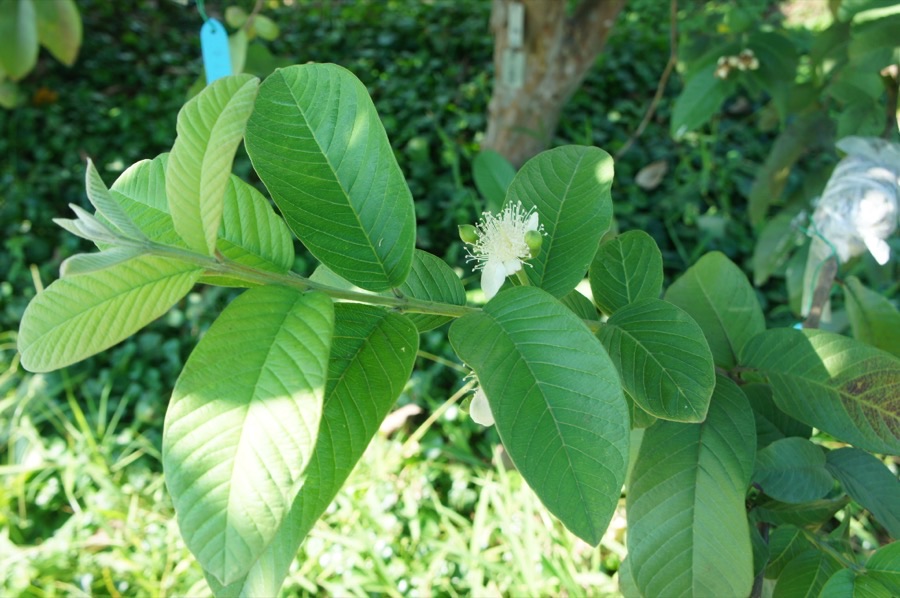
Photo: Olaf8940, CC BY-SA 4.0 (Wikimedia Commons)
Guava is the fruit tree that asks for almost nothing. It will grow on poor, shallow, stony, salty or briefly waterlogged ground, it stands drought, it bears within two to four years, and it goes on cropping twice a year for decades. India grows far more than anybody else, with China, Thailand, Indonesia, Pakistan, Mexico, Brazil, Bangladesh and Egypt following. The fruit carries two to five times as much vitamin C as an orange, which makes a few trees beside a house a genuinely useful thing rather than a luxury. Two facts shape how it is grown. The fruit lasts only a few days after picking, so the market has to be close or the fruit has to be processed. And because the tree flowers more than once a year, a grower can choose which crop to take and throw the other away, which is how the good prices are reached.
Growing Guava, Stage by Stage
- 1. Choose the site and get the land ready — Almost any warm frost-free site will do, so choose for the market and the picking rather than for the soil.
- 2. Choose your planting material — Take an air layer or a graft from a tree whose fruit you have actually eaten, because seedlings are a gamble.
- 3. Plant it out — Plant at the start of the rains, water it through the first dry season, and keep animals off it.
- 4. Water, and use dryness on purpose — Water while the fruit fills, and withhold water deliberately when you want to choose which crop to take.
- 5. Prune, weed, feed and keep the tree within reach — Guava fruits on new shoots, so pruning both feeds the next crop and keeps the fruit where you can pick it.
- 6. Flowering and fruit set — White flowers with a brush of stamens come on the new shoots, and insects visiting them raise the set.
- 7. Watch for trouble, especially fruit fly — The damage that costs you a market is inside the fruit, and the disease that kills trees is in the soil.
- 8. Harvest — Pick at the colour break, by hand, gently, and pick over the tree every few days.
- 9. Sell it or process it within days — Guava keeps three to five days, so the plan you made before planting is the plan you now have to execute.
Common Problems & Troubleshooting
If you see: Perfect-looking fruit that collapses into a soft brown mess within a day or two, full of small white maggots when cut open, and tiny puncture marks on the skin.
It likely means: Fruit fly. The female lays under the skin and the damage is invisible until the fruit is opened or falls apart.
Do this: Pick up and destroy every fallen and damaged fruit every few days, by burying deep or boiling, since this is the single most effective control.
If you see: A whole tree, or one side of it, yellowing, wilting and dying over a few weeks, with browned tissue inside when the trunk base is cut across.
It likely means: Guava wilt, a soil-borne disease that cannot be cured and that has destroyed orchards in several countries.
Do this: Remove and destroy the affected tree with as much of its roots as you can get out.
If you see: A tree grown from a seed of a fruit you enjoyed, now bearing small, seedy, sour fruit that nobody wants.
It likely means: Nothing has gone wrong in the growing. Guava does not come true from seed, and a seedling is a new and usually worse plant.
Do this: Propagate by air layering from a tree whose fruit you have eaten, which is simple and reliable.
If you see: Trees loaded with fruit at exactly the moment every other grower has it, selling for very little, with a great deal rotting under the trees.
It likely means: Every flowering was allowed to crop. A guava will flower more than once a year and will fruit itself into a glut if left alone.
Do this: Withhold water for some weeks to rest the tree, then water and feed so that it flowers together in the season you chose.
If you see: Fruit splitting open on the tree, usually after heavy rain or a heavy watering that followed a dry spell.
It likely means: A sudden swing in water. The inside swells faster than the skin can stretch.
Do this: Water evenly once the fruit has set, rather than letting the ground dry out and then watering heavily.
If you see: Fruit that looked sound when picked arriving at the market soft, brown-patched and unsellable.
It likely means: Bruising and time. Guava keeps three to five days at best and bruises easily, and a bruise becomes a rot within a day.
Do this: Pick in the cool of the morning into padded baskets or lined crates and keep the fruit in shade.
If you see: Guava seedlings coming up through pasture, bush or forest well away from where anybody planted them, forming dense thickets.
It likely means: Birds and livestock have spread the seed. Guava is a serious invasive weed in parts of Africa, the Pacific and the Caribbean.
Do this: Find out whether guava is a declared weed where you live before planting more of it.
Yield & Market Value
Growing the crop is only part of the job. The last part is knowing what a normal harvest looks like where you are, and knowing what your fruit is worth before you agree a price with anybody.
Remember It This Way
If you forget every other page of this guide, keep these lines. They are the whole crop, in order, short enough to carry in your head.
- Never from seed. Air layer from a tree whose fruit you have eaten.
- It grows almost anywhere warm. Choose for the market, not the soil.
- It fruits on this year's shoots, so pruning makes the crop.
- Keep it low. Fruit out of reach is fruit you will not pick.
- Rest it dry, then water, and it will flower when you choose.
- Pick up every fallen fruit. That is your best fruit fly control.
- Bury or boil what you collect. A dumped heap just breeds more.
- Pick at the colour break, firm, with the stalk on.
- Handle it like an egg. A bruise is a rot by tomorrow.
- Three to five days, and then it is jam.
Test Yourself: Identification
What is this white flower like a shaving brush among strongly ribbed leaves?
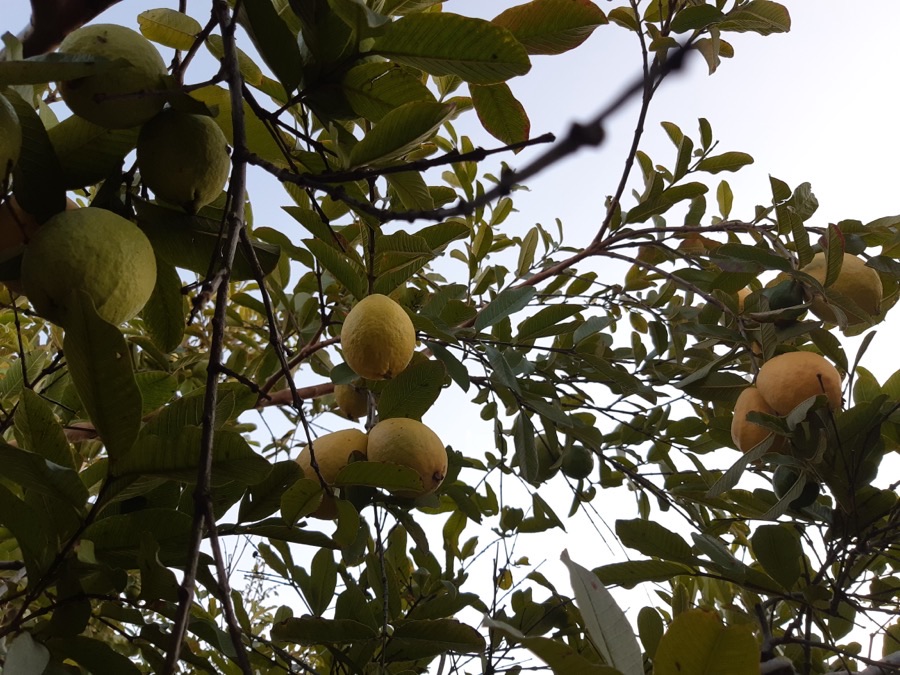
These fruits have gone from dark green to pale yellow. Should I pick them?
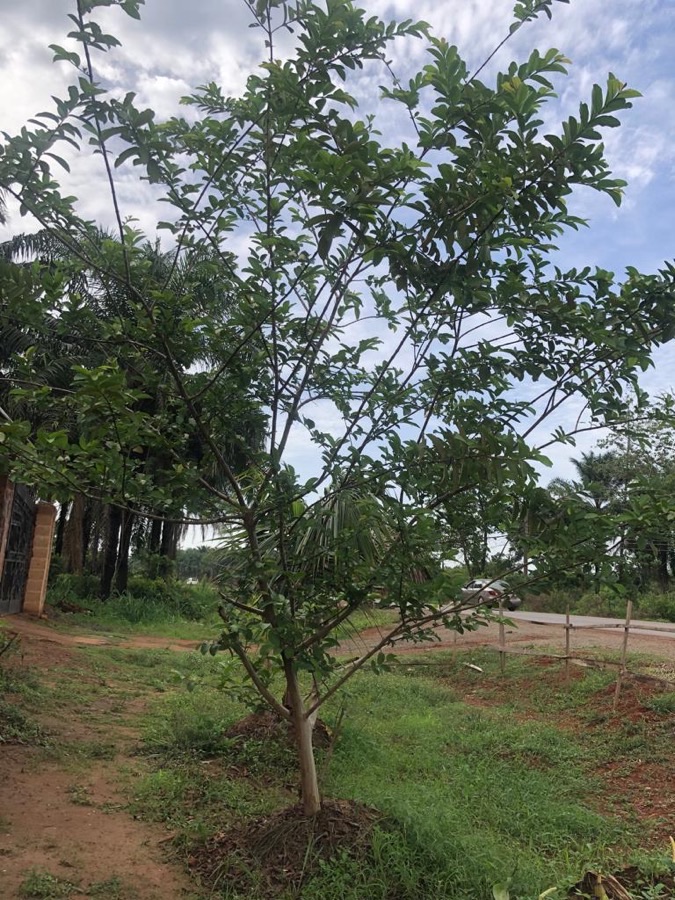
How big should I let this tree get?
Honest Limits of This Guide
- FAO reports guava together with mango and mangosteen as a single item, so any production or yield figure for that item covers three different crops. This guide says so rather than presenting a shared number as if it were guava's own.
- Timings are given in years and seasons rather than in months, because guava flowers more than once a year across the tropics and the useful season differs from district to district. Your picking begins at the colour break.
- The practice of resting a tree with a dry spell to concentrate flowering into a chosen season is strongly local, and how long to withhold water depends on your soil and climate. This guide explains what it is for and says to learn the timing from growers near you.
- Guava is a declared invasive weed in parts of Africa, the Pacific and the Caribbean, and this guide cannot tell you the rules where you live. Find out before planting, particularly near bush or grazing land.
Sources
- GBIF Backbone Taxonomy species-match record for Psidium guajava L. — Global Biodiversity Information Facility (GBIF), Copenhagen (source)
- EPPO Global Database — Psidium guajava (EPPO code PSIGU) — European and Mediterranean Plant Protection Organization (EPPO), Paris (source)
- FAOSTAT crops and livestock products — production data for mangoes, mangosteens and guavas — Food and Agriculture Organization of the United Nations (FAO), Rome (source)
- Psidium guajava (guava) — CABI Compendium datasheet — CABI, Wallingford (source)
Last updated · How Laisha writes and checks its pages · Report a mistake
Go further with Laisha Smarter
US$10 a month · one price worldwide · cancel any time
- Your own crop calendar for this crop, stage by stage
- Pest and disease alerts with IRAC/FRAC-group spray plans
- Ask Laisha about your field — up to 1,000 questions a month
| Free | Smarter | |
|---|---|---|
| Grow guides, pest pages, articles | Read all | Read all |
| Ask Laisha | 5 a day | Up to 1,000 a month |
| Exam practice | The sample on each page | Every question, timed papers |
| Crop calendar and pest alerts | — | For your own fields |
| Calculators and tools | — | All |
| Uploads and reports | — | 100 a month, real files |