How to Grow Isabgol
Plantago ovata · Also called: Psyllium, Blond psyllium, Ispaghula, Isabgul, Desert Indianwheat, Spogel seed, Sat-isabgol, Plantago
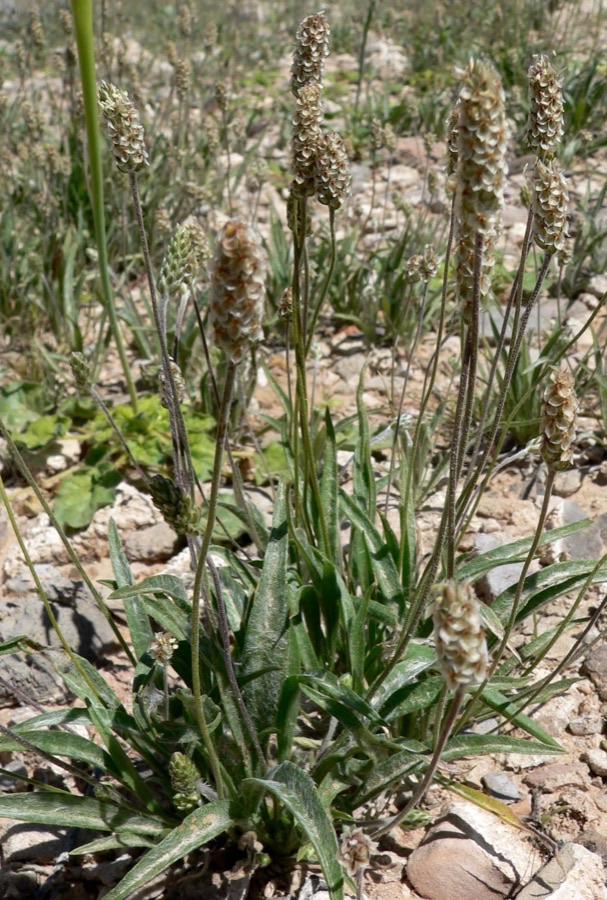
Photo: Stan Shebs, CC BY-SA 3.0 (Wikimedia Commons)
Almost all the psyllium husk used in the world comes from a handful of dry districts in western India, and it leaves the country as an export earner rather than as food. That makes isabgol unusual in this library twice over. It is a crop that asks for very little water, which is exactly why it suits land where nothing thirsty will grow, and it is a crop whose price is set on the other side of the world rather than in the local mandi. For a farmer on light sandy ground with a short cool season and three or four irrigations available, it is one of the few genuinely high-value options. The whole crop turns, however, on one thing that no amount of good farming can control: it must be dry when you harvest it.
Growing Isabgol, Stage by Stage
- 1. Get the land ready — Light, sandy, well-drained ground worked to a fine firm bed.
- 2. Sow the seed — Almost on the surface, at the start of the cool season, and no deeper.
- 3. Weed, water and feed — Three or four light waterings and one careful weeding. That is nearly all of it.
- 4. Watch for trouble — Downy mildew in a damp spell, aphids in a warm one.
- 5. Harvest before the weather turns — Cut in the morning dew, while the crop is ripe and the sky is clear.
- 6. Thresh, clean and keep the seed — Gently, and dry, and away from anything that could taint it.
- 7. Sell it, knowing what is really being bought — You sell seed. The buyer is valuing the husk on it.
Common Problems & Troubleshooting
If you see: A field sown carefully where almost nothing comes up.
It likely means: Nearly always sown too deep. This seed is very small and has no strength to push up from depth.
Do this: Sow no more than about half a centimetre deep, which is barely covered.
If you see: Rain or heavy dew on a ripe crop, and seed that has gone dull, stained or sprouted.
It likely means: The weather turned before the crop was in. This is the single biggest risk in isabgol and it is largely outside your control.
Do this: Sow at the start of the cool season so the crop matures well before the weather can break.
If you see: Seed lying on the ground under the crop and a thin harvest from a field that looked full.
It likely means: It was cut too dry, or in the wind, or handled roughly. The ripe spike lets go of its seed very easily.
Do this: Cut in the early morning while dew is still on the crop, since the damp holds the seed in.
If you see: A short thin crop with weeds standing above it.
It likely means: It was not weeded early. Isabgol is a small low plant and it cannot compete with anything.
Do this: Clear the land thoroughly before sowing rather than planning to weed afterwards.
If you see: Pale distorted leaves with a greyish growth underneath, spreading after cloudy damp weather.
It likely means: Downy mildew. It follows exactly the weather that also threatens your harvest, so it often arrives at the worst moment.
Do this: Do not irrigate heavily during a cloudy spell.
If you see: A buyer marking the lot down for grit, dust or weed seed in the sample.
It likely means: The crop was threshed or stacked on bare soil, or not winnowed properly.
Do this: Stack and thresh on a clean swept floor or on sheets, never directly on bare soil.
Yield & Market Value
Growing the crop is only part of the job. The last part is knowing what a normal harvest looks like where you are, and knowing what your isabgol is worth before you agree a price with anybody.
Remember It This Way
If you forget every other page of this guide, keep these lines. They are the whole crop, in order, short enough to carry in your head.
- You are growing the husk, not the seed.
- Light sandy soil that drains. Poor land is fine.
- Work the bed fine and firm. The seed is tiny.
- Sow barely covered. Deep sowing is why crops fail.
- Mix the seed with sand so it spreads evenly.
- Sow early in the cool season so you harvest dry.
- Three or four light waterings. No more.
- Stop watering when the spikes change colour.
- Cut in the morning dew, or the seed scatters.
- Never stack or thresh it on bare soil.
Test Yourself: Identification
What does the plant look like?
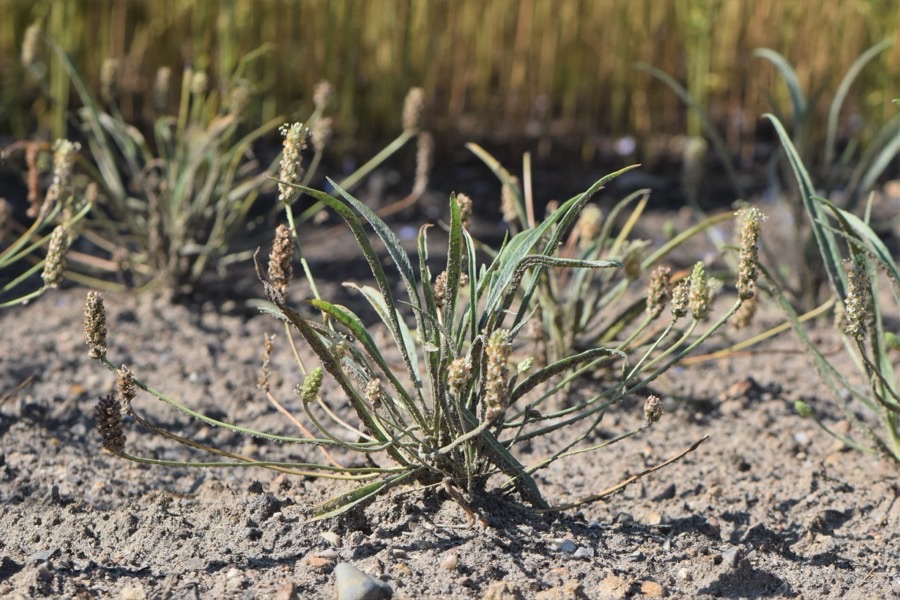
What do the spikes look like as they fill?
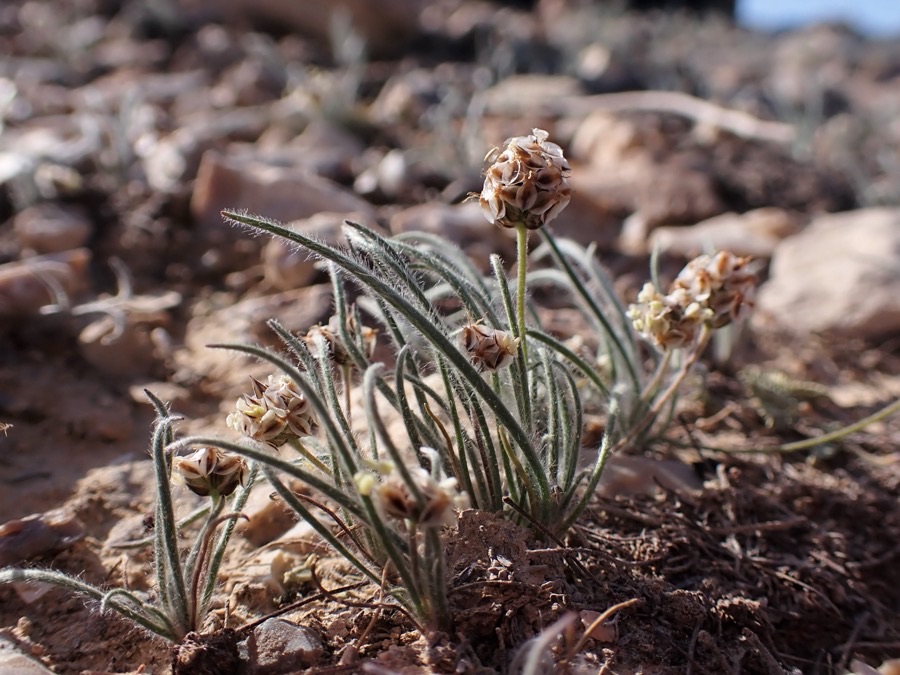
When is the crop ready to cut?
Honest Limits of This Guide
- Timings here are given by season and by the state of the crop rather than in named months, because although nearly all of the world's isabgol is grown in western India, the guide is written for anyone. Count from the start of your own cool dry season.
- The photographs show wild stands of this species growing on stony desert ground rather than an irrigated Indian field, because usable pictures of a commercial isabgol crop are not available under a licence this library can use. It is the same species and the rosette, the bare stems and the packed spikes are exactly what to look for, but a sown field is far denser and more even than anything shown here.
- Variety advice is deliberately local. Bred varieties differ in how long they take and in how badly they shatter, and which one suits a district is a question for a local supplier or research station.
- The advice to harvest in the morning dew is the traditional practice and it is given because it works. It needs judgement: a genuinely wet crop must not be stacked, because damp seed moulds and mouldy husk has no value.
- Husk recovery is described in outline only. The milling that separates husk from seed is an industrial process, and a farmer is almost always selling seed rather than husk.
- No chemical treatments are named here. The husk is eaten, most of the crop is exported to buyers who test for residues, and what is permitted differs by country and by buyer.
Sources
- GBIF Backbone Taxonomy species-match record for Plantago ovata Forssk. — Global Biodiversity Information Facility (GBIF), Copenhagen (source)
- EPPO Global Database — Plantago ovata (EPPO code PLAOV) — European and Mediterranean Plant Protection Organization (EPPO), Paris (source)
- Indian Council of Agricultural Research and State Agricultural University extension guidance on isabgol (Plantago ovata) cultivation — Indian Council of Agricultural Research (ICAR), New Delhi (source)
- Plantago ovata — CABI Compendium datasheet — CABI, Wallingford (source)
- FAO guidance on post-harvest handling, cleaning and storage of small-seeded crops — Food and Agriculture Organization of the United Nations (FAO), Rome (source)
Last updated · How Laisha writes and checks its pages · Report a mistake
Go further with Laisha Smarter
US$10 a month · one price worldwide · cancel any time
- Your own crop calendar for this crop, stage by stage
- Pest and disease alerts with IRAC/FRAC-group spray plans
- Ask Laisha about your field — up to 1,000 questions a month
| Free | Smarter | |
|---|---|---|
| Grow guides, pest pages, articles | Read all | Read all |
| Ask Laisha | 5 a day | Up to 1,000 a month |
| Exam practice | The sample on each page | Every question, timed papers |
| Crop calendar and pest alerts | — | For your own fields |
| Calculators and tools | — | All |
| Uploads and reports | — | 100 a month, real files |