How to Grow Jerusalem artichoke
Helianthus tuberosus · Also called: Sunchoke, Topinambour, Topinambur, Sunroot, Earth apple, Girasol, Hathichak, Canada potato
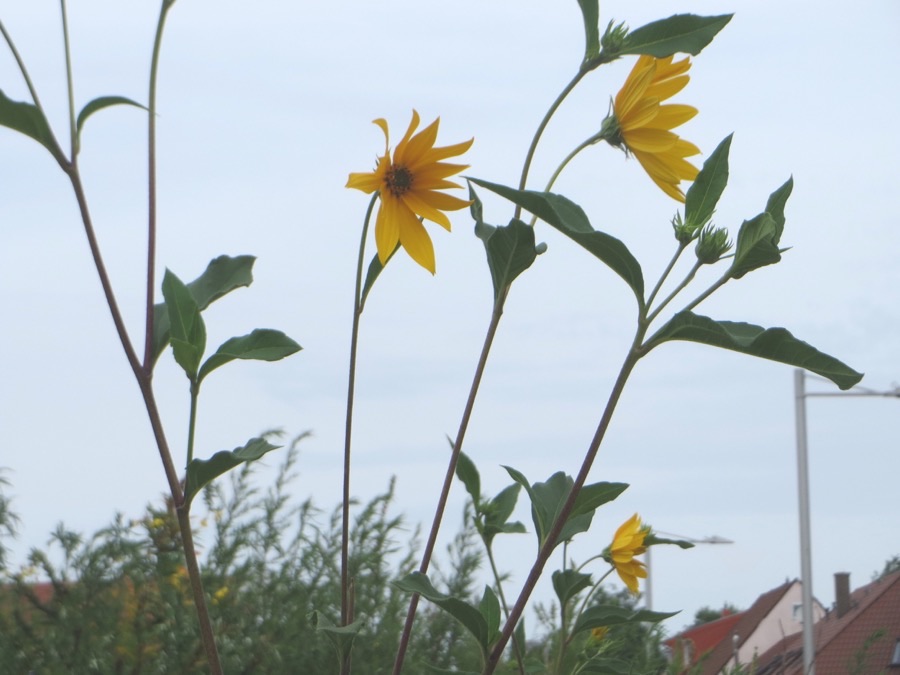
Photo: AnRo0002, CC0 (Wikimedia Commons)
Jerusalem artichoke is close to unkillable, which is both the reason to grow it and the reason to think first. It crops on poor ground with no attention, it stands hard frost, it has almost no pests worth naming, and a good planting gives twenty to forty tonnes a hectare. It also stores itself: the tubers keep far better in the ground than in any shed, so the field is the store and you dig what you need through the winter. That suits a household or a small grower far better than a crop that must all be lifted and then kept. The warning that goes with all this is simple and serious. Every scrap of tuber left in the soil grows next year, so a bed of Jerusalem artichokes is very difficult to remove, and in many countries the plant has escaped and is treated as a weed.
Growing Jerusalem artichoke, Stage by Stage
- 1. Choose the place and get the land ready — Think harder about where than about how. Almost any soil will do.
- 2. Plant the tubers as your planting material — Whole small tubers or pieces with a bud, in early spring.
- 3. Weed, water and support — Weed once. After that the crop does the work.
- 4. Watch for trouble — There is very little. That is one of the reasons to grow it.
- 5. Harvest: lift only what you need — Dig as you eat. The ground is a better store than any shed.
- 6. Keep them and sell them — Out of the ground they shrivel in days, so sell quickly.
- 7. Keep it where you put it — The one job that never ends with this crop.
Common Problems & Troubleshooting
If you see: Plants coming up across the garden or the field, well outside where you planted them.
It likely means: Tubers were left in the ground, or moved in soil, compost or manure. Every fragment grows.
Do this: Dig out escaped shoots with the tuber beneath them, rather than snapping off the stem.
If you see: Lifted tubers going soft and wrinkled within a few days.
It likely means: They dried out. The skin is very thin and gives almost no protection once the tuber is out of the soil.
Do this: Leave the crop in the ground and dig only what you need for the next week or two.
If you see: Tall leafy plants with very few tubers, or only small ones.
It likely means: Usually too rich a soil or too much feeding, sometimes plants too close together, sometimes lifted too early.
Do this: Feed very little, since rich ground gives height rather than tubers.
If you see: The whole stand flattened after wind, with stems snapped.
It likely means: Two or three metres of top growth with nothing holding it. Tall plants on an open site go down in a storm.
Do this: Stake the rows and run a line of string along them.
If you see: Tubers soft and rotten in the ground, in patches.
It likely means: Waterlogging. This crop tolerates almost everything except sitting in wet soil through the winter.
Do this: Plant on free-draining ground, and on a raised bed or ridge where the soil is heavy.
If you see: Tubers so knobbly and irregular that a buyer will not take them.
It likely means: Partly the type you are growing and partly the soil, since heavy or stony ground makes the shape worse.
Do this: Keep planting stock from your smoothest, largest tubers each year.
Yield & Market Value
Growing the crop is only part of the job. The last part is knowing what a normal harvest looks like where you are, and knowing what your Jerusalem artichokes are worth before you agree a price with anybody.
Remember It This Way
If you forget every other page of this guide, keep these lines. They are the whole crop, in order, short enough to carry in your head.
- Choose the spot as though it is permanent, because it nearly is.
- Check whether it counts as an invasive plant where you live.
- It is a sunflower. It will grow taller than you.
- Plant egg-sized tubers in early spring, a hand deep.
- Weed once. After that it shades out everything.
- Feed it little, or you get height instead of tubers.
- Wait for frost. Frost makes it taste better.
- The ground is the store. Dig what you need, week by week.
- Lifted tubers shrivel in days. Do not stockpile them.
- Never compost a tuber, and never dump one on waste ground.
Test Yourself: Identification
What does the crop look like growing?
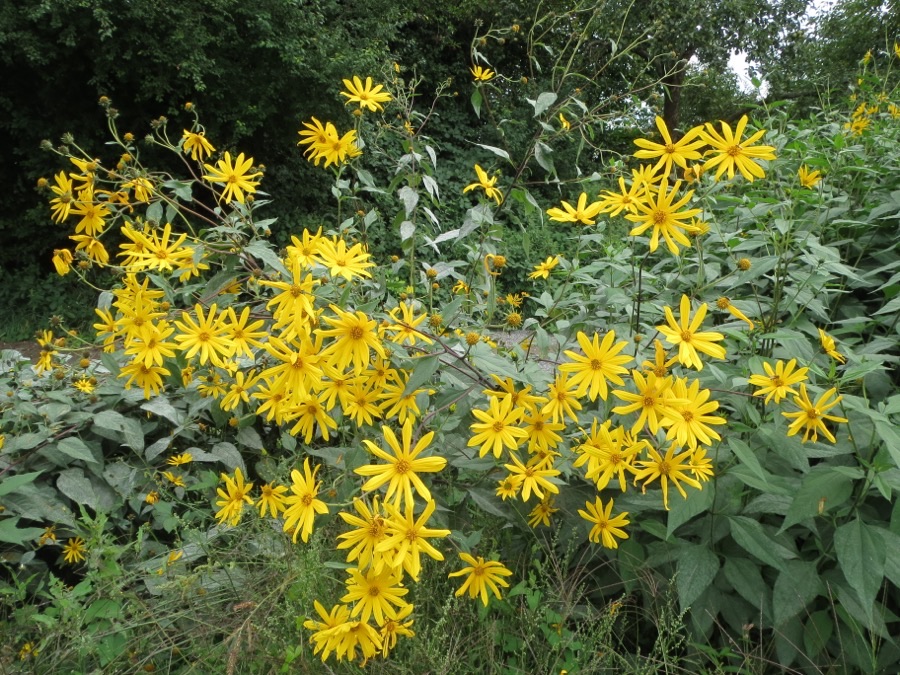
What does an established bed look like?
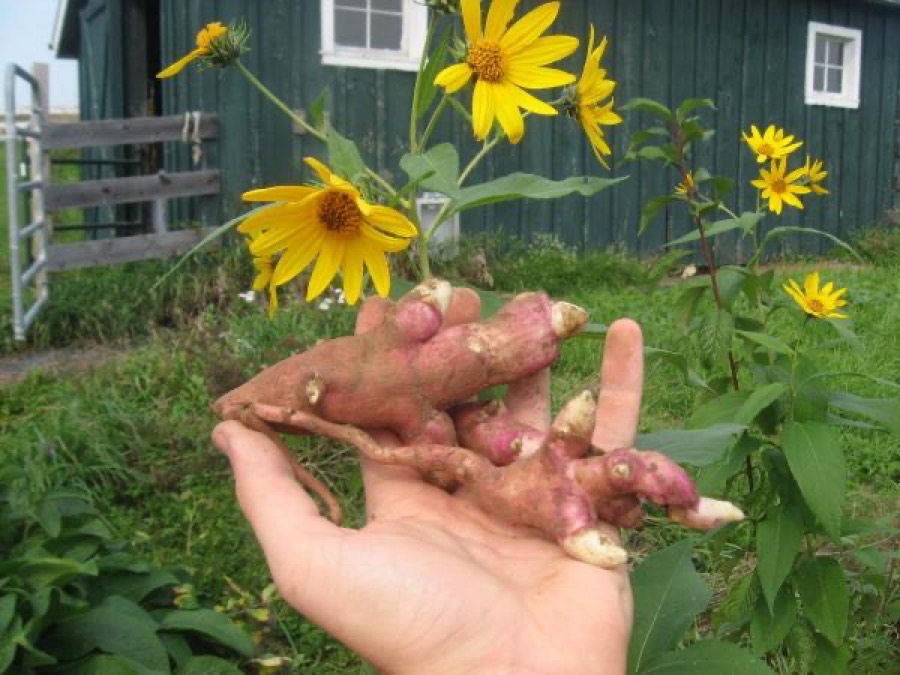
Where are the tubers, and what do they look like?
Honest Limits of This Guide
- This plant is listed as an invasive alien species in a number of countries, particularly across Europe. This guide says to check local rules before planting and cannot tell you what they are where you live. The containment advice is given seriously and is meant to be followed.
- Timings here are given by season and by the state of the plant rather than in named months, because Jerusalem artichoke is grown in both hemispheres. Count from your own spring and your own first frosts.
- This crop needs a real winter cold period to die back properly and is grown almost entirely in temperate climates. It is included for growers who have those conditions rather than as a general recommendation.
- The tubers store their carbohydrate as inulin rather than starch, which is why they are well known for causing wind, particularly for people not used to them. This guide mentions it plainly and gives no dietary advice beyond that.
- The photographs show naturalised and garden stands rather than a commercial field, because usable pictures of a commercial Jerusalem artichoke crop are not available under a licence this library can use. The plant and the tubers are the same.
- Variety advice is deliberately local. Types differ mainly in how knobbly the tubers are and in skin colour, and which is available is a question for a local supplier.
- No chemical treatments are named here. The tubers are eaten, the crop has almost no serious pests, and what is permitted differs by country and by buyer.
Sources
- GBIF Backbone Taxonomy species-match record for Helianthus tuberosus L. — Global Biodiversity Information Facility (GBIF), Copenhagen (source)
- EPPO Global Database — Helianthus tuberosus (EPPO code HELTU) — European and Mediterranean Plant Protection Organization (EPPO), Paris (source)
- Helianthus tuberosus — CABI Compendium datasheet, including its invasive status — CABI, Wallingford (source)
- FAO guidance on root and tuber vegetable production — Food and Agriculture Organization of the United Nations (FAO), Rome (source)
- FAO guidance on post-harvest handling and storage of root and tuber crops — Food and Agriculture Organization of the United Nations (FAO), Rome (source)
Last updated · How Laisha writes and checks its pages · Report a mistake
Go further with Laisha Smarter
US$10 a month · one price worldwide · cancel any time
- Your own crop calendar for this crop, stage by stage
- Pest and disease alerts with IRAC/FRAC-group spray plans
- Ask Laisha about your field — up to 1,000 questions a month
| Free | Smarter | |
|---|---|---|
| Grow guides, pest pages, articles | Read all | Read all |
| Ask Laisha | 5 a day | Up to 1,000 a month |
| Exam practice | The sample on each page | Every question, timed papers |
| Crop calendar and pest alerts | — | For your own fields |
| Calculators and tools | — | All |
| Uploads and reports | — | 100 a month, real files |