How to Grow Lettuce
Lactuca sativa · Also called: lettuce, lettuces, garden lettuce, salad lettuce, iceberg lettuce, crisphead lettuce, romaine lettuce, cos lettuce
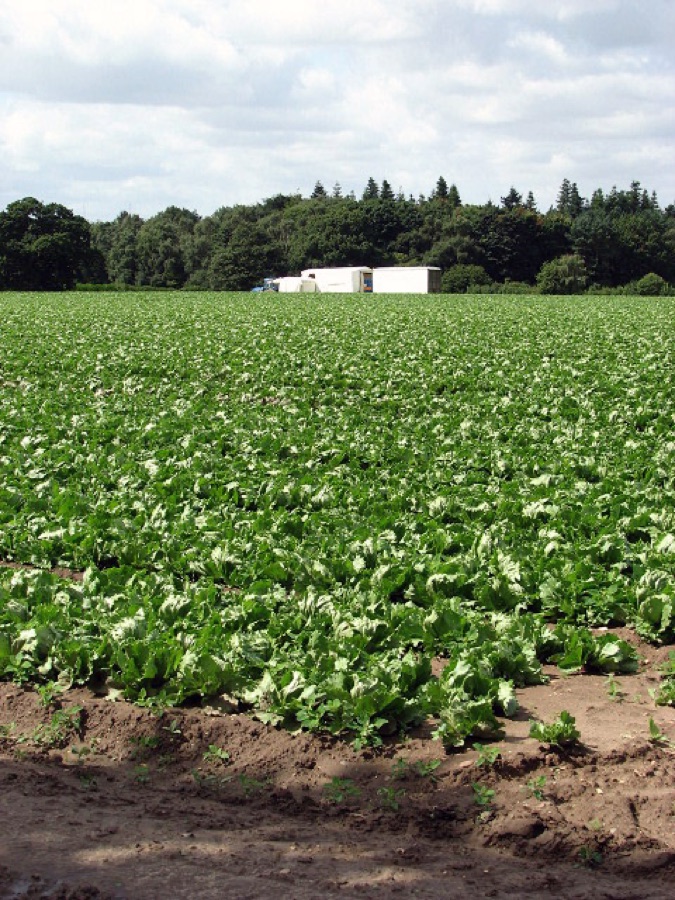
Photo: Evelyn Simak, CC BY-SA 2.0 (Wikimedia Commons)
Lettuce ranks among the ten biggest crops of only six countries in Laisha's research, and leads none, yet it sits in salad bowls on every continent. FAOSTAT counts it together with chicory, so the world tonnage that follows covers both. A published source records combined 2023 world production at approximately 28 million tonnes, led overwhelmingly by China at roughly 14.9 million tonnes, about 53 percent of the entire world total on its own, followed by the United States, India and Spain. Lettuce is one of the fastest real crops any smallholder or home gardener can grow, some looseleaf types ready to cut within about a month of sowing, and its own real cultivar diversity — crisphead, romaine, butterhead, looseleaf and stem types — lets one single species supply a genuinely wide range of real markets from the same seed packet family. Its single most significant real disease worldwide is downy mildew, caused by the fungus-like organism Bremia lactucae, which a published source records as continually evolving new physiological races that overcome resistant varieties almost as fast as breeders release them, and its own real, documented worst insect pest is the lettuce aphid, Nasonovia ribisnigri, which a published source confirms is 'an important agricultural pest in lettuce and endive cultivation' — a real, shared threat with this library's chicory guide. Lettuce likes it mild: leaves grow best at roughly 16 to 18 degrees Celsius, and long hot spells with warm nights push it to bolt. Buy any spray for it from a licensed dealer and use it only as the label on that pack says.
Global Importance
Read every lettuce tonnage with one warning in mind: FAOSTAT adds chicory and endive into the same 'Lettuce and chicory' line, so no world or national figure here is lettuce alone. What the numbers do show is where the crop is grown at scale: irrigated valleys and cool coastal plains in China, the United States, India and southern Europe, cooled and trucked to cities within days of cutting.
Market Segments
A lettuce field is planted for one buyer type. Crisphead (iceberg) and romaine heads go to wholesale and salad processors; butterhead and looseleaf go to closer, fresher markets; baby leaf is cut young from dense beds for bagged salad. Each wants different seed, spacing and days in the ground, so the buyer comes first and the seed order second.
Growth Habit
Lettuce is a shallow-rooted annual whose roots work mostly in the top 15 to 30 centimetres of soil. Growers either sow it straight into beds or raise it first in plug trays of 128 to 200 cells, where one extension guide reaches planting size in 4 to 6 weeks, with 5 to 7 days of hardening outdoors before the move.
Growing Lettuce, Stage by Stage
- 1. Pick cool land, a buyer and a cultivar group — Choose fertile, well-drained ground at about pH 6.0 to 6.7 and a season where the crop grows near 16 to 18 degrees Celsius. Settle whether you are growing crisphead, romaine, butterhead, looseleaf or baby leaf before ordering seed.
- 2. Raise plugs or sow seed straight in — Plug transplants in 128- to 200-cell trays take about 4 to 6 weeks and need 5 to 7 days of hardening. Seed germinates best near 21 to 24 degrees Celsius, so sow direct when the soil is mild, or buy primed seed for hot spells.
- 3. Set the plants out on beds — One extension guide plants leaf and butterhead in 3 or 4 rows on beds about 1.7 to 1.8 metres wide, about 23 to 30 centimetres apart in the row. Baby leaf is sown far denser and cut young.
- 4. Water to keep the top 30 centimetres moist — The roots sit shallow. Water before the plants wilt, keep the soil near field capacity, and favour drip over sprinklers, which wet leaves and feed downy mildew.
- 5. Split the nitrogen and keep weeds out early — Put some nitrogen down before planting and side-dress the rest in one or two passes. Weed in the first weeks, while the rosette is still small enough to be shaded out.
- 6. Scout the heart of the plant for aphids — The lettuce aphid lives in the unopened inner leaves where sprays and eyes rarely reach. Part the head on every walk; armyworms, loopers and thrips feed on the outer leaves too.
- 7. Downy mildew and the rots — Bremia lactucae, the cause of downy mildew, keeps producing new races that beat resistant varieties. Resistant seed comes first; where fungicides are used, rotate FRAC groups. Bottom rot and Sclerotinia drop start where leaves touch wet soil.
- 8. Harvest by the calendar and the hand — Head lettuce takes roughly 70 to 80 days from seed or 60 to 70 from transplants; leaf lettuce 50 to 60 days from seed or 30 to 45 from transplants. A crisphead is ready when it gives slightly under the palm.
- 9. Cool within hours, then sell within weeks — Bring the core down to about 1 to 3 degrees Celsius soon after cutting, by vacuum or forced-air cooling. At 0 degrees and 95 percent humidity head lettuce keeps about 2 to 3 weeks, leaf and butterhead about 1 to 2.
Fertiliser Programme
Lettuce needs all its nitrogen from you, and it needs it in pieces. One extension programme sets a season total of about 90 to 135 kilograms of nitrogen per hectare, the upper end for crisphead and romaine, with about 34 to 56 kilograms put down before planting and the rest side-dressed once or twice. Phosphate and potash follow the soil test. Too much nitrogen makes soft, fast heads that suffer tipburn.
Common Problems & Troubleshooting
If you see: Pale, angular yellow patches on the upper surface of leaves, matched directly beneath by a fuzzy, greyish-white mould growing on the underside of the same patch, worse in cool, humid conditions.
It likely means: Downy mildew, caused by the water mould Bremia lactucae. Damp, cool weather and wet leaves let it infect; its spores are short-lived and carried on the wind, and new races keep overcoming resistant varieties.
Do this: Grow a variety resistant to the races present in your area where one exists; resistant cultivars are the most effective control the University of California IPM programme lists.
If you see: Small, soft-bodied insects colonising the innermost, unopened leaves at the heart of a forming head, not just the outer leaves, sometimes visible only once the head is cut open.
It likely means: The lettuce aphid, Nasonovia ribisnigri. It prefers the young heart leaves, so a head can look clean from outside and still be rejected by a buyer once it is cut open.
Do this: On every walk, open a sample of heads and look in the folded centre leaves, because this aphid settles there first.
If you see: A soft, watery rot starting at the base of the head or stem where it touches the soil, sometimes with white, cottony fungal growth visible on the affected tissue.
It likely means: Bottom rot or lettuce drop, caused by the real fungi Sclerotinia sclerotiorum or Sclerotinia minor, both confirmed against GBIF's own backbone taxonomy.
Do this: Avoid planting into wet, poorly drained soil or land with a known recent history of this disease.
If you see: A soft, greyish, fuzzy fungal growth on damaged, ageing or dying leaf tissue, especially in cool, humid conditions or on leaves that have been bruised or crowded.
It likely means: Grey mould, caused by the real fungus Botrytis cinerea, confirmed against GBIF's own backbone taxonomy as an ACCEPTED species.
Do this: Avoid overhead watering and crowding, since both keep leaf surfaces wet and humid for longer.
If you see: Patchy, mottled light and dark green leaves on a stunted plant, or unusual leaf distortion and a yellowish, bitter, unmarketable head, with no fungal growth or insect damage visible on the leaf itself.
It likely means: Lettuce mosaic virus (spread mainly by aphids) or aster yellows (a real phytoplasma disease spread by leafhoppers) — two genuinely different real causes with the same honest management answer, since there is no cure for either once a plant is infected.
Do this: Pull and remove affected plants from the field promptly, since an infected plant can act as a source for further spread by the insects that carry these diseases.
If you see: A tall central flowering stalk rising from the middle of the plant, with leaves around it turning noticeably more bitter than usual.
It likely means: Bolting, the plant switching from leaf to flower. Long hot spells, especially with warm nights, trigger it, and the leaves turn bitter as the stalk rises.
Do this: Harvest any bolting plant immediately rather than waiting, since its own real market value is already falling fast.
Real Farm Economics
Lettuce earns its money in days, not months. A head keeps only about two to three weeks even in a perfect cold room, so the grower's real costs are labour at cutting, fast cooling, packing and transport. A field cut on time and cooled within hours is worth far more than a heavier field that waited. No worldwide lettuce cost-of-production budget was found to quote here.
Yield & Market Value
Lettuce is priced by the head or by the carton, and a carton is only worth something while the leaves are crisp. Count how many heads per bed reach the buyer's size, how fast you can cool them, and how many days you have to sell before quality drops. Then ask the price.
Remember It This Way
Eight short lines for lettuce, from choosing a cultivar to the cold room. Read them before every planting.
- Decide the cultivar group before you buy seed. Crisphead, looseleaf and baby-leaf are three different jobs.
- Cool weather grows it sweet. Heat above about 24 degrees Celsius bolts it bitter.
- The roots are shallow. Water little and often, not deep and rare.
- It feeds itself nothing. Every bit of nitrogen it takes up, you put there.
- The worst aphid hides inside the head you cannot see into. Check the inner leaves, not just the outer ones.
- Downy mildew keeps changing. A resistant variety from last season is not a guaranteed answer this season.
- It is eaten raw, whole, unwashed by nature. Keep waste and dirty water away from it at every single step.
- It has almost no storage life. Sell it fast, or lose it.
Test Yourself: Identification
Which salad crop is this, standing in tight rows of soft, pale green rosettes on raised beds?
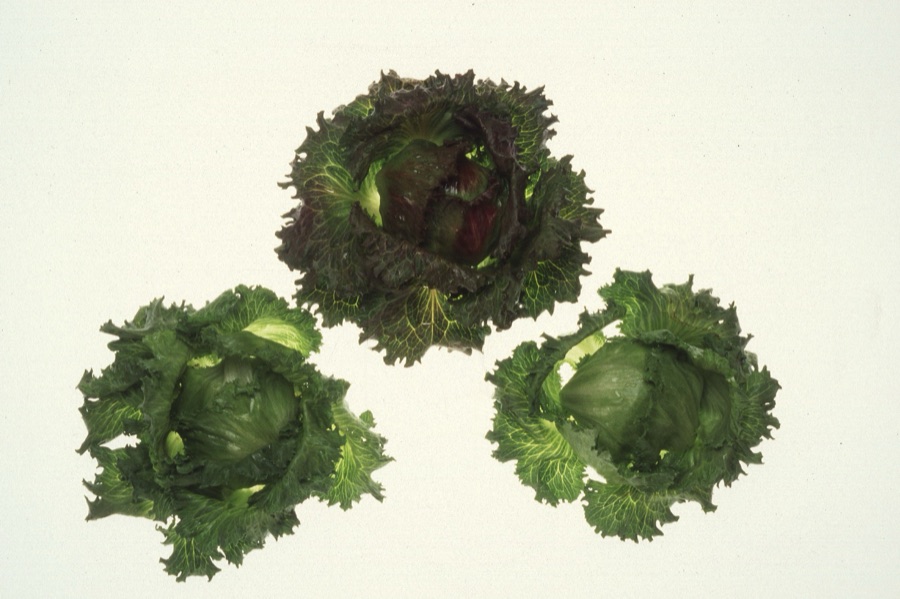
This head is tight, dense and pale inside. What real type of lettuce is this, and is it ready?
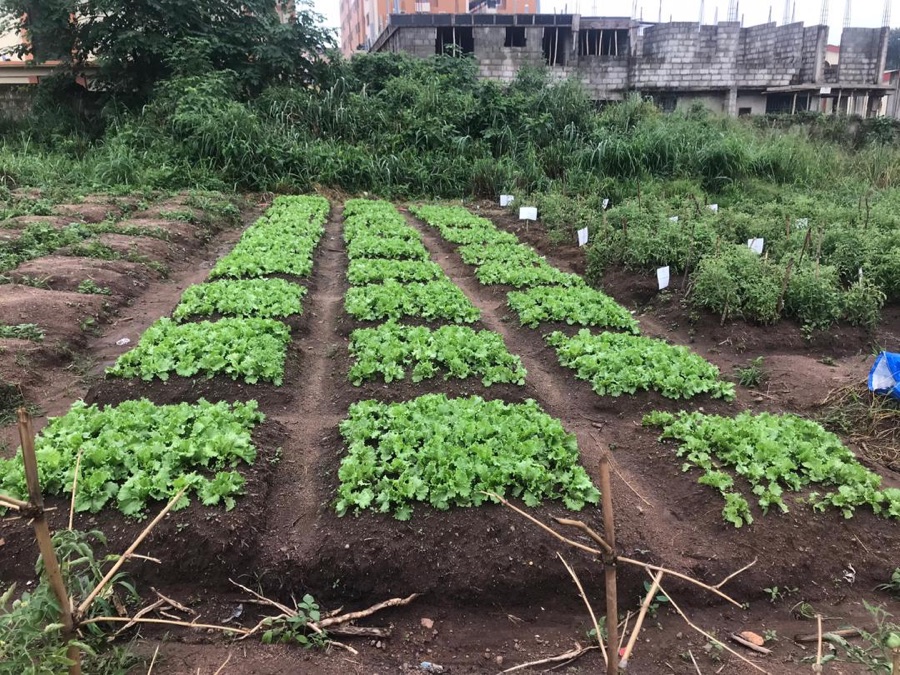
This bed shows small, even green seedlings in tidy rows. What stage of this guide is this planting at?
Honest Limits of This Guide
- Planting months differ by climate. The working rule here: time the crop so its leaf-building weeks fall near 16 to 18 degrees Celsius and avoid long hot spells, which trigger bolting.
- Tonnages quoted come from FAOSTAT's combined 'Lettuce and chicory' line and cannot be separated into a lettuce-only number.
- Nitrogen rates, bed layouts, in-row spacing, days to harvest and storage life come from one extension programme in the south-eastern United States. Treat them as a starting point and check them against your own soil test and local advice.
- Seed counts per hectare for baby-leaf beds vary so much between seed houses and machines that this guide does not give one.
- Little is published that we could check about where and when resistance-breaking lettuce aphid biotypes first appeared, so troubleshooting gives the scouting habit rather than a history.
- No pesticide, fungicide or herbicide product or compound is named here. Disease control is described by FRAC, IRAC or HRAC mode-of-action group only. Buy from a licensed dealer and follow the label on the pack in your hand.
- Colour toxicity bands on packs differ by country and by formulation, so the band printed on your own pack is the one to trust.

The rest of this Lettuce guide is inside Laisha
Every stage, the full fertiliser programme, the economics and the pest diagnosis for Lettuce live in the app — alongside photo-based diagnosis, live market prices, and an agronomist you can actually ask.
Open Laisha — ten days freeTen days free, no card. After that 10 US dollars a month, one price worldwide.
1 more sections of this guide continue inside.
Related Laisha Tools
- Global Market Price Outlook — Check today's price and trend
- Crop Calendar — Build a season-long sowing plan
- Pest & Disease Intelligence — Risk reasoning and a global pest & disease library
- Crop Health — Photo-based first read on a field problem
- Post-Harvest Loss Prevention — Real storage science by crop
Sources
- GBIF Backbone Taxonomy species-match record for Lactuca sativa L. — Global Biodiversity Information Facility (GBIF), Copenhagen (source)
- EPPO Global Database taxon record for Lactuca sativa, code LACSA — European and Mediterranean Plant Protection Organization (EPPO), Paris (source)
- GBIF Backbone Taxonomy species-match record for Cichorium intybus L. — Global Biodiversity Information Facility (GBIF), Copenhagen (source)
- GBIF Backbone Taxonomy species-match record for Cichorium endivia L. — Global Biodiversity Information Facility (GBIF), Copenhagen (source)
- GBIF Backbone Taxonomy species-match record for Nasonovia ribisnigri — Global Biodiversity Information Facility (GBIF), Copenhagen (source)
- GBIF Backbone Taxonomy species-match record for Bremia lactucae — Global Biodiversity Information Facility (GBIF), Copenhagen (source)
- GBIF Backbone Taxonomy species-match record for Sclerotinia sclerotiorum — Global Biodiversity Information Facility (GBIF), Copenhagen (source)
- GBIF Backbone Taxonomy species-match record for Botrytis cinerea — Global Biodiversity Information Facility (GBIF), Copenhagen (source)
- Wikipedia: Lettuce — Wikimedia Foundation, citing FAOSTAT and other primary sources (source)
- Wikipedia: Cichorieae — Wikimedia Foundation, citing botanical sources (source)
- Wikipedia: Nasonovia ribisnigri — Wikimedia Foundation, citing entomological sources (source)
- Global Crop Priority Research — Laisha internal reference data set, built on FAOSTAT-style country data (source)
- Global Seed Certification Standards, lettuce entries — Laisha internal reference data set, compiled from the primary legal instruments it cites (source)
- Laisha's own curated agrochemical mode-of-action and toxicity colour-band reference — Laisha (internal curated research) (source)
- Lettuce Production in North Carolina (Horticulture Information Leaflet), revised December 2025 — NC State Extension, North Carolina State University (E. Torres Quezada and D. Sanders) (source)
- Downy Mildew: Lettuce Pest Management Guidelines — University of California Statewide Integrated Pest Management Program (UC IPM) (source)
Last updated · How Laisha writes and checks its pages · Report a mistake
Go further with Laisha Smarter
US$10 a month · one price worldwide · cancel any time
- Your own crop calendar for this crop, stage by stage
- Pest and disease alerts with IRAC/FRAC-group spray plans
- Ask Laisha about your field — up to 1,000 questions a month
| Free | Smarter | |
|---|---|---|
| Grow guides, pest pages, articles | Read all | Read all |
| Ask Laisha | 5 a day | Up to 1,000 a month |
| Exam practice | The sample on each page | Every question, timed papers |
| Crop calendar and pest alerts | — | For your own fields |
| Calculators and tools | — | All |
| Uploads and reports | — | 100 a month, real files |