How to Grow Mandarin & tangerine
Citrus reticulata · Also called: mandarin, mandarins, mandarin orange, mandarin oranges, tangerine, tangerines, clementine, clementines
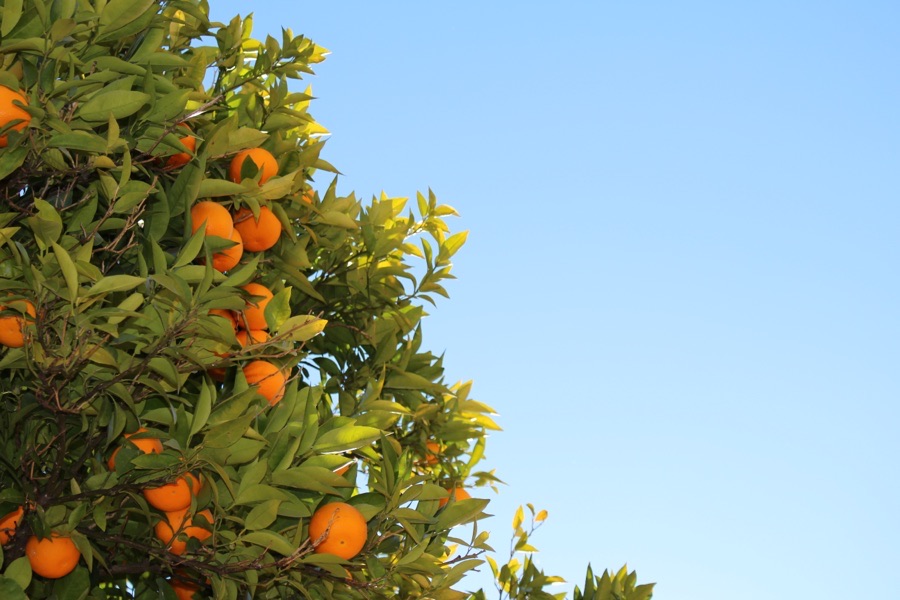
Photo: Brian Jimenez, CC0 (Wikimedia Commons)
Mandarin and tangerine (bundled with clementine in the same FAOSTAT reporting category, 'Tangerines, mandarins, clementines', a real, honest data limitation this guide states plainly rather than hiding — globalImportance) are a real top-ten crop, by Laisha's curated research, in 6 of the world's 195 countries, spanning East Asia, the Caucasus, the Eastern Mediterranean and the Middle East — and, as with this library's orange guide, this crop is not the single biggest crop of all in any one of those 6 countries. A published source records combined 2024 world production at approximately 50 million tonnes, with China alone growing approximately 51 percent of that total, followed at real distance by Turkey. Mandarins are grown for fresh fruit that peels by hand and splits into segments, so rind condition and easy peeling are what a buyer pays for. The group runs from cold-hardy, seedless satsumas of Japan, China, Spain and Turkey to tropical mandarins grown in the hill regions of India. Satsuma trees are the most cold-tolerant commercial citrus, with mature dormant trees surviving about -10 to -8 °C, and they set fruit without pollination. Huanglongbing, spread by the Asian citrus psyllid, infects mandarins as it does oranges. Any agrochemical must come from a licensed dealer and be used as its label says.
Global Importance
China grows about half the world's mandarins, tangerines and clementines, far ahead of Turkey, the next largest grower. Southern Japan holds the world's biggest satsuma industry. FAOSTAT lumps all easy-peelers together, so satsuma, clementine and tropical mandarin tonnages cannot be separated.
Market Segments
Most mandarins are sold fresh, where peel colour, size, few seeds and easy peeling set the price. In Japan, China and Spain part of the satsuma crop is canned as segments or pressed for deeply coloured juice that is blended into orange juice. Internally ripe but still green satsumas are sometimes sold as a distinct green fruit.
Growth Habit
Mandarin trees are small to medium, and budded satsumas are low, spreading, drooping and nearly thornless, so low limbs must be pruned to keep fruit off the ground. Satsuma flowers carry little viable pollen and set seedless fruit without fertilisation. Trees are budded onto rootstocks such as trifoliate orange or its hybrids.
Growing Mandarin & tangerine, Stage by Stage
- 1. Pick mandarin land for your type: satsuma cool, tropical mandarin warm — Choose the type for the climate. Satsumas give their best fruit where winters are cool and summers hot and suit the cold edge of citrus country. Tropical mandarins such as the Indian hill types need frost-free ground. Every type needs deep, free-draining soil and shelter from cold wind.
- 2. Buy budded mandarin trees on the right rootstock — Buy certified budded trees of a named type. For satsuma, trifoliate orange is the usual rootstock where most cold tolerance is needed and it resists foot rot on poorly drained soil, but it dislikes salty or chalky ground; Swingle citrumelo and Carrizo citrange grow faster in the nursery. The dwarfing Flying Dragon suits dense plantings.
- 3. Plant mandarin trees and protect the young trunk — Plant at the start of the rains or the spring with the bud union above soil. In a Florida trial satsumas were spaced 4.6 m in the row and 6.1 m between rows. Where frost threatens, bank soil up the young trunk in early winter to protect the bud union, and pull it away again in spring.
- 4. Train young mandarin trees low and keep them weed-free — Mandarins usually start bearing about three to five years after budding. Keep a weeded circle under each tree, remove rootstock suckers, and for satsuma accept a low, spreading frame while lifting branches that would rest fruit on the soil.
- 5. Water mandarins steadily through fruit growth — Water young trees regularly, and mature trees through flowering and fruit growth; the Florida satsuma trial used micro-jet irrigation. Micro-sprinklers in the tree canopy can also guard trees up to about 1.5 m during frost. Never leave water standing at the trunk.
- 6. Feed mandarins by age, in several small doses — Feed by tree age and soil test. A Florida satsuma trial applied a balanced fertiliser with micronutrients every six weeks from early spring to mid-summer; Indian mandarin schedules give per-tree doses that rise with each year.
- 7. Mandarin flowering and seedless fruit set — Satsumas flower in spring and set fruit without pollination, so they are usually seedless, with 0 to 6 seeds at most. Other mandarins can turn seedy when bees bring pollen from a different citrus nearby. Fruit set is heavy and the tree drops some young fruit naturally.
- 8. Prune mandarins to lift low limbs and open the centre — After harvest, cut out dead wood, rootstock suckers and drooping limbs that would put fruit on the ground or block the rows. Thin crowded shoots so sprays and light reach the fruit. In the Florida trial, trees on vigorous rootstock filled their space by the sixth leaf and needed pruning to keep rows open.
- 9. Check mandarin flushes for psyllid, leafminer and rust mite — Asian citrus psyllid and leafminer feed on soft new flushes, so check each flush. Rust mites bronze the thin rind and lower its value. Any spray is chosen with a licensed dealer by IRAC group and timed to the label's pre-harvest interval.
- 10. Watch mandarins for greening, scab, brown spot and canker — Huanglongbing has no cure; suspect trees must be tested and removed. Satsumas are susceptible to citrus scab, which raises warts on leaves, twigs and fruit. Alternaria brown spot attacks some tangerine hybrids, and canker enters through wounds. Fungicides, if used, are chosen by FRAC group.
- 11. Pick mandarins promptly when sweet, even if still green — Mandarins do not ripen after picking, so pick on taste and juice, not only on colour. Satsumas ripen early, from about September to December in Florida, and often taste ripe before the peel colours in humid climates. Satsumas hold poorly on the tree once ripe and must be picked promptly; the rind loosens and puffs if left.
- 12. Clip mandarins and handle the thin rind gently — Clip every fruit with a short stem to avoid plugging or tearing the rind, which leads to rot. Ripe satsumas with loose, bumpy rinds bruise easily, do not respond well to degreening and ship poorly, so pack them gently in shallow crates.
- 13. Grade, cool-store and sell mandarins — Sort by size, colour, seed and blemish. Satsumas keep well under refrigeration at about 0 to 2 °C. Sell the best fruit fresh, and send small or marked fruit to segment canning or juice where those outlets exist.
Fertiliser Programme
Mandarins are fed by tree age and soil test in several small doses. A Florida satsuma trial applied a balanced fertiliser with micronutrients every six weeks from early spring to mid-summer, and Indian mandarin schedules raise the per-tree dose each year until bearing.
Common Problems & Troubleshooting
If you see: Blotchy, asymmetrical yellow mottling on leaves that does not mirror itself across the leaf's own midrib the way a simple nutrient deficiency does, alongside small, lopsided, bitter fruit that stays partly green even when fully mature.
It likely means: Huanglongbing, also called citrus greening, caused most commonly by the bacterium Candidatus Liberibacter asiaticus and spread by the Asian citrus psyllid — this crop's own single most economically destructive disease worldwide, with no known cure, identical to this library's orange guide.
Do this: Have a suspect mandarin tree tested by your plant health service, and remove it once confirmed so it no longer feeds the psyllid.
If you see: Small, roughly 4-millimetre insects with a fawn and brown mottled body and a whitish, waxy coating, feeding in a distinctive head-down, tail-up posture on new shoots and young leaves.
It likely means: The Asian citrus psyllid, Diaphorina citri — the real insect that spreads Huanglongbing, and this crop's own single most consequential pest for that reason alone, beyond any direct feeding damage it causes on its own.
Do this: Inspect every new mandarin flush for psyllid eggs and nymphs; if you treat, rotate IRAC groups.
If you see: A dull, bronzed, russeted or silvery discolouration across the surface of the fruit's own rind, worst in hot, dry weather, with the flesh inside genuinely unaffected.
It likely means: Mandarin rust mite, Aculops pelekassi, confirmed as an ACCEPTED species against GBIF's own backbone taxonomy, feeding on the rind surface itself.
Do this: Look at mandarin rinds with a hand lens in hot, dry weeks, since the thin rind marks quickly; rotate IRAC groups if you treat.
If you see: Raised, wart-like, scabby lesions on young fruit and leaves, often pinkish to grey-brown and rough to the touch, worst in warm, humid conditions on new growth.
It likely means: Citrus scab, caused by the fungus Elsinoe fawcettii, confirmed as an ACCEPTED species against GBIF's own backbone taxonomy, generally a bigger real concern on this crop's own thin-skinned mandarin and tangerine types than on this library's orange guide's own thicker-skinned crop.
Do this: Expect scab on satsumas, which are susceptible, and protect young leaves and fruit during wet spring flushes with a FRAC-grouped fungicide if your service advises.
If you see: Dark, sunken brown lesions with a visible yellow halo on young leaves, twigs and fruit, sometimes causing premature leaf and fruit drop on badly affected growth.
It likely means: Alternaria brown spot, caused by the fungus Alternaria alternata, documented as a particular real concern on several mandarin and tangerine hybrid varieties.
Do this: Clear fallen mandarin leaves and fruit, and avoid planting susceptible tangerine hybrids where brown spot is common.
If you see: Raised, brown, water-soaked lesions with a distinctive yellow halo on leaves, stems and fruit, often starting at a wound or an insect entry point.
It likely means: Citrus canker, caused by the bacterium Xanthomonas citri — the identical real disease this library's orange guide describes, spreading mainly through wind-driven rain and contaminated equipment, often entering through wounds made by citrus leafminer.
Do this: Keep leafminer off new mandarin flushes and plant windbreaks, since wind-driven rain carries canker into wounds.
Real Farm Economics
A mandarin orchard waits three to five years for its first crop. In a north Florida trial, satsumas on a vigorous rootstock averaged about 100 to 120 kg of fruit per tree a year, while dwarfed trees gave less per tree but can be planted closer. Satsumas are among the earliest citrus of the season to reach market.
Yield & Market Value
Mandarin yields vary widely with type, rootstock and spacing; satsumas in a north Florida trial averaged about 100 to 120 kg per tree on a vigorous rootstock. Mandarin is not in Laisha's live price service yet, so ask buyers how they grade for size, colour and seeds before you sell.
Remember It This Way
Nine lines for a mandarin orchard, from choosing the type to the cool store.
- Mandarin and tangerine are the same fruit under two real names.
- Bud it onto a chosen rootstock, never a seed.
- Standard mandarin fears frost. Satsuma survives real cold near minus 9 degrees Celsius.
- Watch every leaf for a blotchy pattern that never mirrors itself.
- The rind is the whole point. It should peel clean by hand.
- This peel bruises and tears more easily than an orange's. Clip it, do not pull.
- The peel itself is sold too — fresh, as zest, or dried as chenpi.
- Keep any chemical off the peel you plan to eat or dry.
- No global futures market waits for this crop the way one does for orange juice.
Test Yourself: Identification
What crop is this, a compact evergreen tree carrying small, bright orange fruit among glossy leaves?
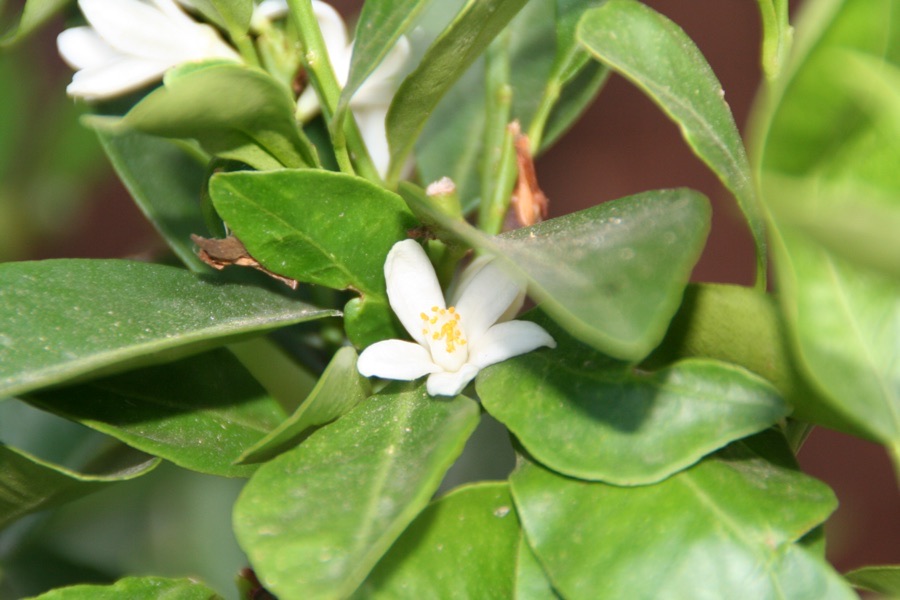
What is this small, white, fragrant flower growing singly among glossy citrus leaves?
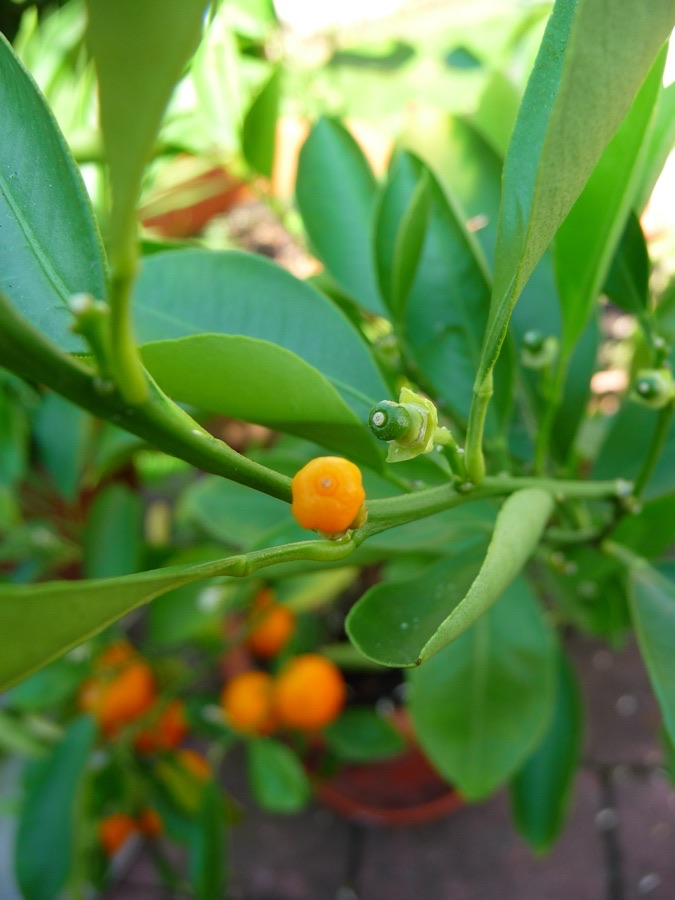
What is this small, round, deep-orange fruit just forming on a citrus branch, still tiny compared to a full-grown fruit?
Honest Limits of This Guide
- World figures come from a published article citing FAOSTAT data for 2024, and FAOSTAT counts mandarins, tangerines and clementines as one crop.
- Satsuma figures, including cold tolerance, rootstocks, spacing, the feeding interval and per-tree yields, come from one University of Florida publication and its north Florida trial. Other climates and types will differ.
- Indian fertiliser and yield figures come from Tamil Nadu Agricultural University guidance for two hill regions; confirm a schedule with your own extension service.
- No published measurement of phototoxic compounds in mandarin peel was found, so none is quoted.
- No pesticide product or active ingredient is named. Control is described by IRAC and FRAC group only; registrations differ by country.
- Bearing age and harvest months are given as ranges, since they shift with type, rootstock and hemisphere.

The rest of this Mandarin & tangerine guide is inside Laisha
Every stage, the full fertiliser programme, the economics and the pest diagnosis for Mandarin & tangerine live in the app — alongside photo-based diagnosis, live market prices, and an agronomist you can actually ask.
Open Laisha — ten days freeTen days free, no card. After that 10 US dollars a month, one price worldwide.
1 more sections of this guide continue inside.
Related Laisha Tools
- Global Market Price Outlook — Check today's price and trend
- Crop Calendar — Build a season-long sowing plan
- Pest & Disease Intelligence — Risk reasoning and a global pest & disease library
- Crop Health — Photo-based first read on a field problem
- Soil Health — Track soil test results across seasons
Sources
- GBIF Backbone Taxonomy species-match record for Citrus reticulata Blanco (usage key 3190172) — Global Biodiversity Information Facility (GBIF), Copenhagen (source)
- EPPO Global Database taxon record for Citrus reticulata, code CIDRE — European and Mediterranean Plant Protection Organization (EPPO), Paris (source)
- GBIF Backbone Taxonomy species-match query for 'Citrus tangerina' — Global Biodiversity Information Facility (GBIF), Copenhagen (source)
- EPPO Global Database taxon record for Citrus x aurantium var. unshiu (satsuma), code CIDUN — European and Mediterranean Plant Protection Organization (EPPO), Paris (source)
- GBIF Backbone Taxonomy species-match record for Citrus x clementina Yu.Tanaka (usage key 9313794) — Global Biodiversity Information Facility (GBIF), Copenhagen (source)
- GBIF Backbone Taxonomy species-match record for Elsinoe fawcettii Bitanc. & Jenkins (usage key 2613163) — Global Biodiversity Information Facility (GBIF), Copenhagen (source)
- GBIF Backbone Taxonomy species-match record for Aculops pelekassi (Keifer, 1959) (usage key 4543942) — Global Biodiversity Information Facility (GBIF), Copenhagen (source)
- Mandarin orange — Wikipedia, citing FAOSTAT and other primary sources (source)
- Tangerine — Wikipedia (source)
- Satsuma (fruit) — Wikipedia (source)
- Citrus greening disease (Huanglongbing) — Wikipedia (source)
- Diaphorina citri (Asian citrus psyllid) — Wikipedia (source)
- Citrus tristeza virus — Wikipedia (source)
- Citrus canker — Wikipedia (source)
- Citrus leafminer — Wikipedia (source)
- Global Crop Priority Research — Laisha internal reference data set, built on FAOSTAT-style country data (source)
- Mandarin orange cultivation guidelines — Tamil Nadu Agricultural University (TNAU) Agritech Portal (source)
- Laisha's own curated agrochemical mode-of-action and hazard-band reference — Laisha (internal curated research) (source)
- Laisha's own curated seed-certification standards research — Laisha (internal curated research) (source)
- The Satsuma Mandarin (Andersen P.C., Ferguson J.J. and Shahid M.A.), HS195 — University of Florida IFAS Extension, Gainesville (source)
Last updated · How Laisha writes and checks its pages · Report a mistake
Go further with Laisha Smarter
US$10 a month · one price worldwide · cancel any time
- Your own crop calendar for this crop, stage by stage
- Pest and disease alerts with IRAC/FRAC-group spray plans
- Ask Laisha about your field — up to 1,000 questions a month
| Free | Smarter | |
|---|---|---|
| Grow guides, pest pages, articles | Read all | Read all |
| Ask Laisha | 5 a day | Up to 1,000 a month |
| Exam practice | The sample on each page | Every question, timed papers |
| Crop calendar and pest alerts | — | For your own fields |
| Calculators and tools | — | All |
| Uploads and reports | — | 100 a month, real files |