How to Grow Rye
Secale cereale · Also called: cereal rye, winter rye, spring rye, Roggen, seigle, centeno, żyto
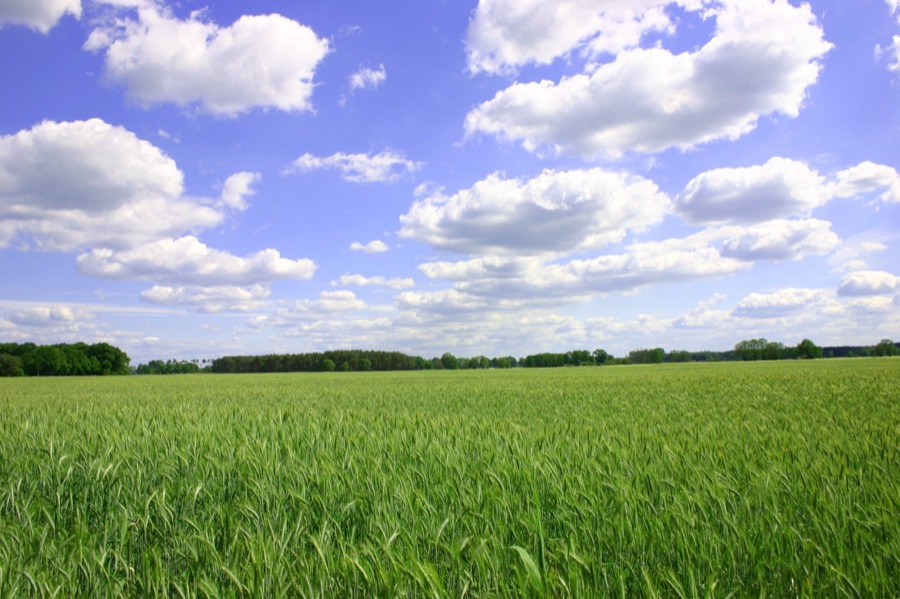
Photo: Gundalf, CC BY-SA 3.0 (Wikimedia Commons)
Rye is the toughest of the world's major grain cereals. Winter rye is the most winter-hardy cereal of all, and it out-yields the others on sandy, acid or infertile soil, the University of Minnesota and University of Wisconsin's Alternative Field Crops Manual records. That toughness made rye the bread grain of Northern and Eastern Europe for centuries, on land too poor or too cold for a reliable wheat crop. Rye is also the only major cereal whose flowers open and cross with their neighbours, which is why hybrid rye exists and why rye is the cereal the ergot fungus attacks most easily. Every rye grower has to learn to keep ergot out of the grain. Rye is also the second parent, alongside wheat, of this library's triticale. Buy any spray from a licensed dealer and use it only as its label directs.
Global Importance
Rye is concentrated in northern and eastern Europe, a few countries grow most of it, and the world total swings from year to year with winter weather. Elsewhere it has shrunk: the Alternative Field Crops Manual records Minnesota's rye grain area falling from 7.2 million acres in 1930 to 32,000 acres in 1989.
Market Segments
One rye harvest genuinely feeds three real, distinct markets in a way most cereals in this library do not: human food (real bread flour), animal feed and fodder, and a real, distinctive third use as a cover crop grown to protect soil rather than to be harvested for grain at all.
Growth Habit
Rye is the hardiest winter cereal and the only major one that cross-pollinates. Alberta's guidance says winter rye needs about four to six weeks of autumn growth, to about 8 to 10 cm of top growth, before it hardens for winter. Its open flowers shed pollen on the wind, and the same open flowers let ergot spores in. It also grows tall, which makes lodging a risk on rich land.
Growing Rye, Stage by Stage
- 1. Pick your poorest well-drained land — Rye beats other cereals on sandy, acid or infertile land, but it cannot survive winter where water ponds or ice sheets form. Leave at least a year since the last rye crop, to cut ergot.
- 2. Choose hybrid or open-pollinated, and ergot-free seed — Hybrids yield more but must be bought new each year. Choose seed with at least 85 percent germination and no ergot bodies; no ergot-resistant variety exists.
- 3. Sow shallow, four to six weeks before freeze-up — Give winter rye four to six weeks of growth before hard frost. Sow about 2.5 to 4 cm deep into firm, moist soil; in Alberta, 2.5 cm gave twice the emergence of 5 cm.
- 4. Give modest nitrogen, split on light soil — Use a soil test. About 45 kg of nitrogen per hectare suits a modest grain goal; much more invites lodging.
- 5. Water — Rye copes with drought better than other temperate cereals. Its sensitive time is flowering, the same stage at which ergot gets in.
- 6. Let the crop smother the weeds — Dense early growth suppresses most weeds, so herbicides are often not needed. In trials, rye residue alone cut weed growth by 60 to 95 percent.
- 7. Walk the heads at flowering for ergot — Look for black bodies in the heads and mow grassy headlands before they seed, since wild grasses carry ergot too. Watch for rust and stem nematode as well.
- 8. Harvest by combine at about 22 percent moisture — To limit shattering, start combining at about 22 percent grain moisture and dry the grain, or swath first. Ripe rye sprouts quickly in rain.
- 9. Clean out ergot, dry to 12 to 15 percent and store — Remove ergot by optical sorter, gravity table or brine flotation. Deliver below 15 percent moisture, and store long-term at 12 percent with aeration.
Fertiliser Programme
Rye needs nitrogen like any cereal, but less than wheat. For a goal of 30 to 50 bushels per acre (about 1.9 to 3.1 tonnes per hectare), the Alternative Field Crops Manual suggests about 40 lb of nitrogen per acre (about 45 kg per hectare), none after alfalfa or clover, and warns that heavy nitrogen makes grain rye lodge. On light soils, split it between sowing and a spring topdressing. Phosphorus and potash follow a soil test.
Common Problems & Troubleshooting
If you see: Curved, horn-shaped black or dark purple bodies, longer than the grains around them, poking out of rye heads, often thickest near grassy field edges.
It likely means: Ergot, caused by the fungus Claviceps purpurea. Rye is, by itself, the real cereal this fungus infects most easily of all, because its own flowers stay open and cross with their neighbours.
Do this: Sort every ergot body out before grain is eaten, sold or fed. The Alternative Field Crops Manual records that rye with 0.5 percent or more ergot is unfit for food or feed, and cooking, milling or brewing will not make it safe.
If you see: Reddish-brown or orange pustules on rye leaves or stems that leave rusty powder on your fingers.
It likely means: Stem rust, Puccinia graminis. A published source records that this disease returned to Europe in the 2020s after a real 60-year absence, so do not assume old safety still holds.
Do this: Tell your local plant-protection or extension office straight away, and destroy volunteer rye in old stubble, which carries leaf rust into the next crop.
If you see: Tall rye bent flat in the richest, greenest parts of the field after a storm.
It likely means: Lodging. Rye stems are tall, Minnesota varieties averaging about 1.3 metres, and heavy nitrogen makes them weaker and top-heavy.
Do this: Harvest the flattened areas first, as soon as they are dry enough, and lower the nitrogen on that field next time. Semi-dwarf hybrids lodge less.
If you see: Stunted, twisted, swollen stems in a patch of crop that looks generally sickly and spreads outward year on year.
It likely means: Stem nematode, Ditylenchus dipsaci, a real tiny worm that lives inside the plant, not an insect, and survives for years in infested soil and old plant matter.
Do this: Rotate away from rye and other host crops on that patch for several years.
If you see: Bare or badly thinned patches appearing across a winter rye field as it comes out of the cold season, often in low spots or where ice sat.
It likely means: Winter injury. Even though rye is genuinely the most cold-hardy of the major cereals, an unusually severe winter, standing ice, or waterlogged ground can still kill a real patch of it.
Do this: Assess the real extent of damage once growth resumes in spring before deciding whether to keep or replace the stand.
If you see: Swollen grains splitting with small shoots in heads left standing through wet weather after ripening.
It likely means: Pre-harvest sprouting. Buyers check for it with a falling number test and pay less for sprouted rye.
Do this: Combine sooner, at about 22 percent moisture, and dry the grain rather than leaving it standing.
If you see: Pale, thin rye in spring, with the lowest leaves turning yellow first.
It likely means: Nitrogen shortage, common on the sandy, low-organic-matter land rye is often given.
Do this: Topdress nitrogen early in spring, keeping the rate modest so the crop does not lodge.
If you see: Big bare gaps in the field. A thin crop with a lot of visible soil between plants, and weeds filling those gaps.
It likely means: The seed did not come up well. Usually sown too deep, into a dry or lumpy seedbed, or the seed was old and weak.
Do this: Weed those gaps now. Bare soil that grows weeds is worse than bare soil alone.
Real Farm Economics
Rye pays on land where wheat would not. Its inputs are low: modest nitrogen and few herbicides, because its thick early growth smothers weeds. Its grain can go to bread flour, feed or distilling, and its straw sells for bedding or mulch. Alberta records that hybrid rye yields about 15 to 25 percent more than open-pollinated rye, but hybrid seed must be bought new every year.
Yield & Market Value
Rye yield is clean, dry grain. In the US Upper Midwest, state averages are commonly 20 to 40 bushels per acre (about 1.3 to 2.5 tonnes per hectare), and 70 to 80 bushels (about 4.4 to 5 tonnes) is reachable with good management. Milling buyers also check ergot and falling number, so grade matters as much as weight.
Remember It This Way
If you forget every other page of this guide, keep these lines. They are the whole crop, in order, short enough to carry in your head.
- The toughest cereal here. Grows where wheat and barley give up.
- Cold, poor, sandy, acidic soil are rye's own real home ground.
- Open flowers cross with neighbours. That same habit invites ergot in.
- Black horns in the head are ergot. Clean every load.
- Tallest of the temperate cereals, so lodging is a real risk.
- Go easy on nitrogen. Tall rye falls over. Watch flowering weather.
- Grown for bread, for feed, and to protect bare soil between seasons.
- Start combining near 22 percent moisture, then dry it.
Test Yourself: Identification
Which cereal is this, standing upright with blue-green leaves on ground that looks too sandy and poor for wheat?
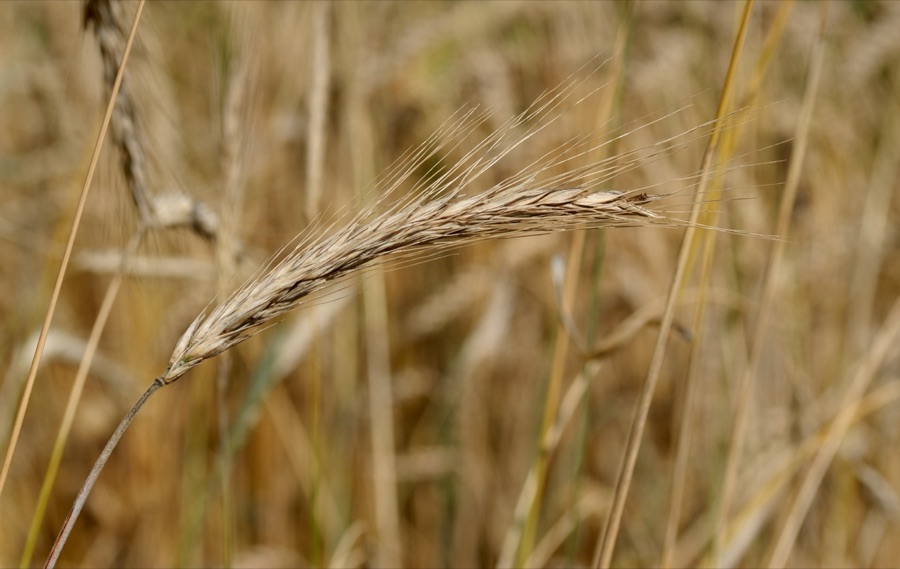
Which cereal's seed head is this, with slender spikelets and long bristles?
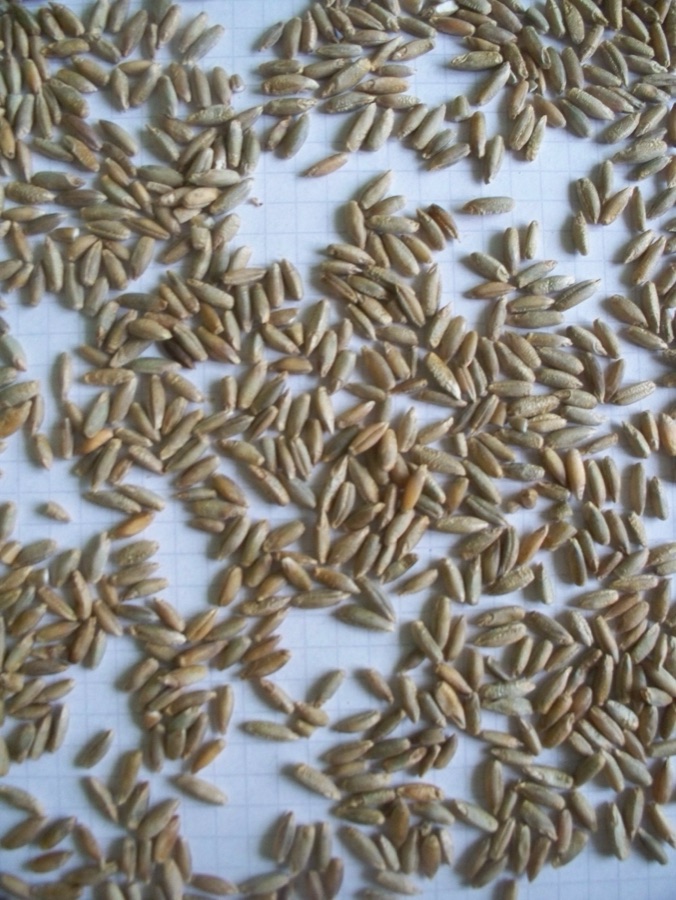
Which cereal's long, slim grains are these, just threshed and cleaned?
Honest Limits of This Guide
- The sowing dates behind this guide come from the northern US and Canada. Elsewhere, use the rule behind them: winter rye needs four to six weeks of growth before hard frost, and spring rye goes in as soon as the soil can be worked.
- No per-hectare cost figure for rye that holds across countries was found. The fertiliser figures given come from Minnesota and Wisconsin and suit a modest yield goal.
- No rye-specific ergot limit for livestock feed could be independently confirmed beyond the general 0.5 percent food-and-feed figure quoted here. The rye ergot limits stated with confidence are the seed-certification sclerotia counts in seedGradingAndCertification.
- India's Minimum Seed Certification Standards have no rye entry, so no Indian seed figure is given.
- Sprays are named here only by mode-of-action group. No product or compound is named; a licensed dealer and the pack label decide what you use.
- Rye takes about 90 days from sowing as a spring crop and 8 or 9 months, winter included, as a winter crop, but variety and local season shift both.
Related Laisha Tools
- Global Market Price Outlook — Check today's price and trend
- Crop Calendar — Build a season-long sowing plan
- Pest & Disease Intelligence — Risk reasoning and a global pest & disease library
- Crop Health — Photo-based first read on a field problem
- Seed Quality Intelligence — Check a seed lot before you plant it
- Post-Harvest Loss Prevention — Real storage science by crop
Sources
- GBIF Backbone Taxonomy species-match record for Secale cereale L. — Global Biodiversity Information Facility (GBIF), Copenhagen (source)
- World Checklist of Vascular Plants (WCVP) search results for Secale cereale, queried live through GBIF's own hosted copy of the checklist — Royal Botanic Gardens, Kew, hosted via GBIF (dataset f382f0ce-323a-4091-bb9f-add557f3a9a2) (source)
- EPPO Global Database entry for Secale cereale, EPPO code SECCE — European and Mediterranean Plant Protection Organization (EPPO), Paris (source)
- Rye (Secale cereale) — Wikipedia (source)
- Ergot (Claviceps purpurea) — Wikipedia (source)
- Vodka (distilled spirit) — Wikipedia (source)
- Laisha's own curated global crop build-priority research, built on FAOSTAT's own 'Rye' item category — Laisha (internal curated research, sourced from FAOSTAT QCL, area harvested and production averaged over 2021-2023) (source)
- Global Seed Certification Standards, rye entries across the EU cereal seed directive, Canada's Seeds Regulations and the FAO Quality Declared Seed system — Laisha internal reference data set, compiled from the primary legal instruments it cites (source)
- Laisha's own curated agrochemical mode-of-action and toxicity colour-band reference — Laisha (internal curated research) (source)
- Seeding Fall Rye (Agdex 117/20-1) — Alberta Agriculture and Forestry, Government of Alberta (source)
- Rye, Alternative Field Crops Manual (Oelke, Oplinger, Bahri, Durgan, Putnam, Doll and Kelling, 1990) — University of Minnesota and University of Wisconsin-Madison, hosted by Purdue University Center for New Crops and Plant Products (source)
Last updated · How Laisha writes and checks its pages · Report a mistake
Go further with Laisha Smarter
US$10 a month · one price worldwide · cancel any time
- Your own crop calendar for this crop, stage by stage
- Pest and disease alerts with IRAC/FRAC-group spray plans
- Ask Laisha about your field — up to 1,000 questions a month
| Free | Smarter | |
|---|---|---|
| Grow guides, pest pages, articles | Read all | Read all |
| Ask Laisha | 5 a day | Up to 1,000 a month |
| Exam practice | The sample on each page | Every question, timed papers |
| Crop calendar and pest alerts | — | For your own fields |
| Calculators and tools | — | All |
| Uploads and reports | — | 100 a month, real files |