Farming more, emitting less? The per-tonne sum
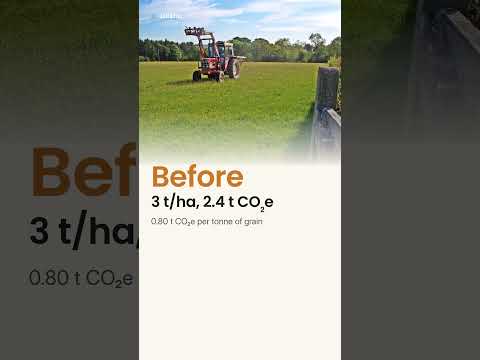
Maize: 3 t/ha at 2.4 t CO2e/ha is 0.80 per tonne; 4 t/ha at 2.6 is 0.65, 19 % lower per tonne but 8 % higher per hectare. Climate-smart only if the extra yield spares forest elsewhere: judge per tonne and in total. The full video covers the three pillars of climate-smart agriculture, practices that adapt and cut emissions, and an honest look at the criticisms.
Two ways to count farm emissions
Greenhouse gas emissions from farming can be reported per hectare (area-based) or per tonne of product (emission intensity). Both numbers are true, and they answer different questions. Per hectare tells you how much a piece of land adds to the atmosphere. Per tonne tells you how efficiently the food is produced. A farm can lower one while raising the other, which is why claims about 'climate-smart' farming need both.
Emissions are expressed in carbon dioxide equivalent (CO2e), which converts methane and nitrous oxide into the warming effect of CO2 over 100 years. For crops, the largest sources are usually nitrous oxide from nitrogen fertiliser and manure, the energy used to make fertiliser, fuel for machinery and pumping, and, in flooded rice, methane.
The worked example, step by step
Start: 3 tonnes of maize per hectare with 2.4 t CO2e per hectare. Intensity = 2.4 ÷ 3 = 0.80 t CO2e per tonne of grain.
After improved varieties and better-timed nitrogen: 4 t/ha with 2.6 t CO2e/ha. Intensity = 2.6 ÷ 4 = 0.65 t CO2e per tonne. The change per tonne is (0.65 − 0.80) ÷ 0.80 = −19 per cent. The change per hectare is (2.6 − 2.4) ÷ 2.4 = +8 per cent.
Yield rose by a third, so each tonne carries a smaller share of the emissions, even though the field as a whole emits slightly more because more fertiliser and harvest work go into it.
When higher yields really help the climate
The per-tonne gain becomes a real climate gain when the extra output means less land is needed elsewhere. If the region would otherwise clear forest or plough grassland to grow the same food, those land-use changes release far more carbon than the extra fertiliser on existing fields. This idea is called land sparing. It holds only if higher yields actually reduce pressure on land; if higher profits instead encourage farmers to expand, total emissions can rise (a rebound effect).
FAO's definition of climate-smart agriculture has three pillars: sustainably raising productivity and incomes, adapting and building resilience to climate change, and reducing or removing emissions where possible. A practice does not need to cut emissions per hectare to be climate-smart, but it should not ignore them.
Practices that cut both numbers
Some practices reduce emissions per hectare and per tonne together. Matching nitrogen to crop need (right source, rate, time and place), using leaf colour charts or sensors, and placing fertiliser below the surface reduce nitrous oxide and save money. In rice, alternate wetting and drying cuts methane substantially when well managed. Reduced tillage saves fuel. Agroforestry and hedgerows store carbon in wood and soil.
When reading any claim, ask three things: per hectare or per tonne, over what time, and whether land use elsewhere changed.
Transcript
Farming more while emitting less: is that really possible?
Here is a worked example.
A maize farm grows three tonnes per hectare and emits two point four tonnes of carbon dioxide equivalent per hectare. That is zero point eight per tonne of grain.
With better varieties and better-timed fertiliser, it grows four tonnes and emits two point six.
Per tonne of grain, emissions fall nineteen per cent. But per hectare, they rose eight per cent. It is climate-smart if the extra yield means less forest is cleared elsewhere. So always judge results per tonne and in total.
The full climate-smart farming guide is in our long video and at laisha.ai.
Last updated · How Laisha writes and checks its pages · Report a mistake
Go further with Laisha Smarter
US$10 a month · one price worldwide · cancel any time
- Ask Laisha about what you watched — up to 1,000 questions a month
- Your own crop calendar and pest alerts
- Every calculator and tool