Gambhari
गम्भारी
Gmelina arborea Roxb.
Lamiaceae · Gmelina
Benefits & side effects
TRADITIONAL VIEW, WITH SAFETY LIMITS
What the texts say Gambhari does
- Shothahara — reduces swelling
- Deepana — kindles digestion (appetiser)
- Vatahara — pacifies vata
- Balya — strengthening
- Rasayana — rejuvenative
What the evidence says. Clinical evidence for gambhari as a medicine is close to nil; most published science treats the tree as timber and an agroforestry crop.
Side effects and limits
- Digestive upset
- Loose stools with the fruit, in keeping with its classical place among aids to purgation
Avoid or ask first: No absolute contraindication is documented here. This is written deliberately rather than left blank.
A traditional classification, not a recommendation. The full safety record is below.
Stands in 5 groups
- Virechanopaga — Adjuvant to purgation (named there as Kashmarya)
- Shothahara — Reducing swelling (named there as Kashmarya)
- Dahaprashamana — Allaying burning (named there as Kashmarya Phala)
- Sarivadi — Thirst, burning, and Pitta fever (named there as Kashmaryaphala)
- Brihat Panchamula — The greater five roots (named there as Kashmarya)
A Samhita can only be read forwards, from the group to its members. This is the same list read backwards.
Photographs
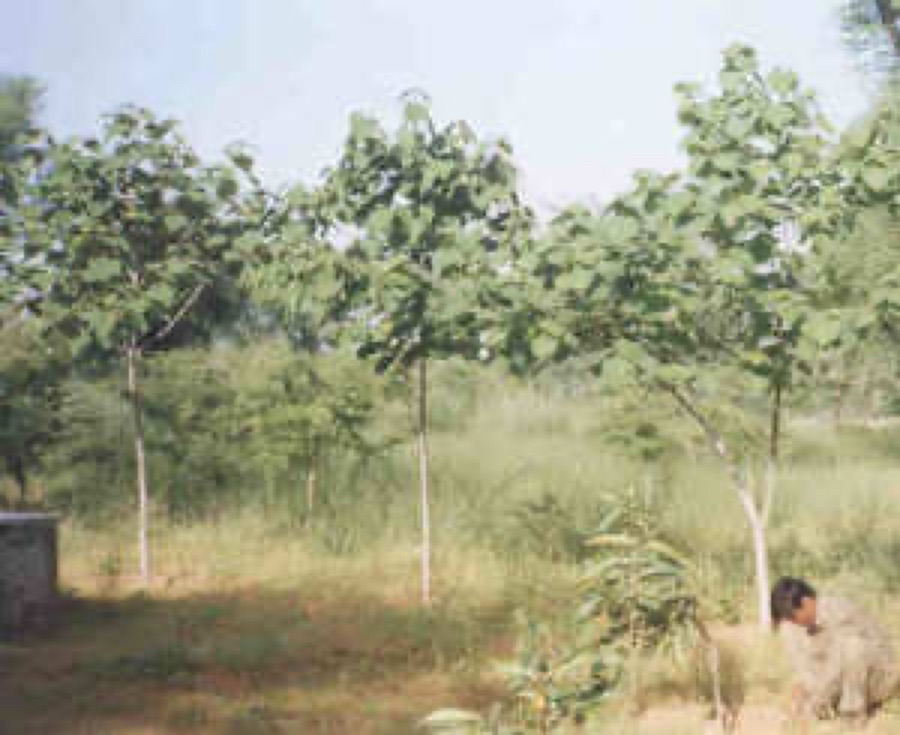
Photo: LRBurdak · CC BY-SA 3.0 · Wikimedia Commons

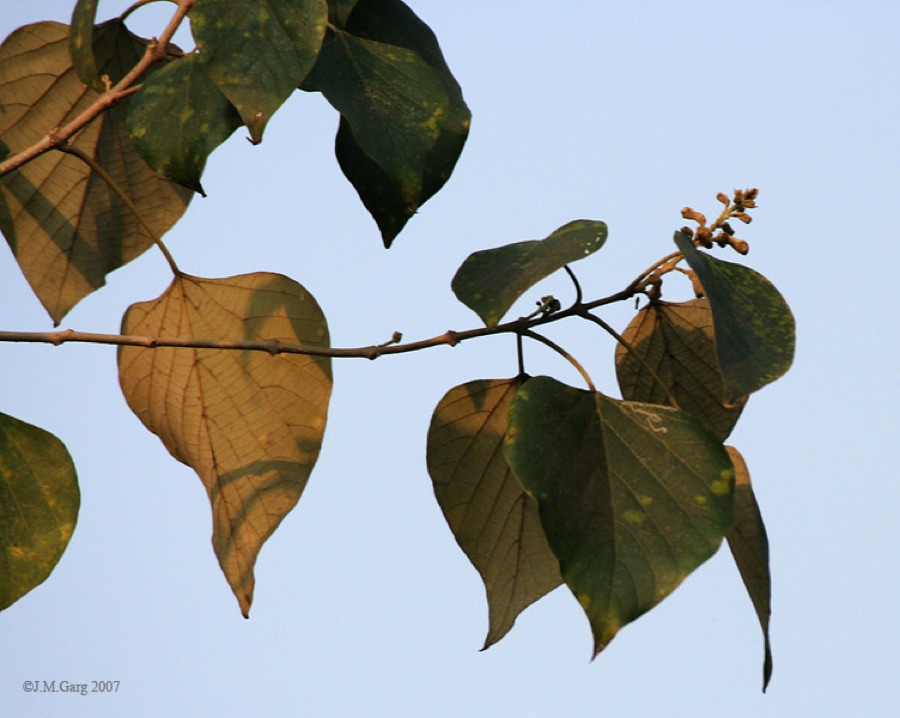
Photo: J.M.Garg · CC BY-SA 3.0 · Wikimedia Commons

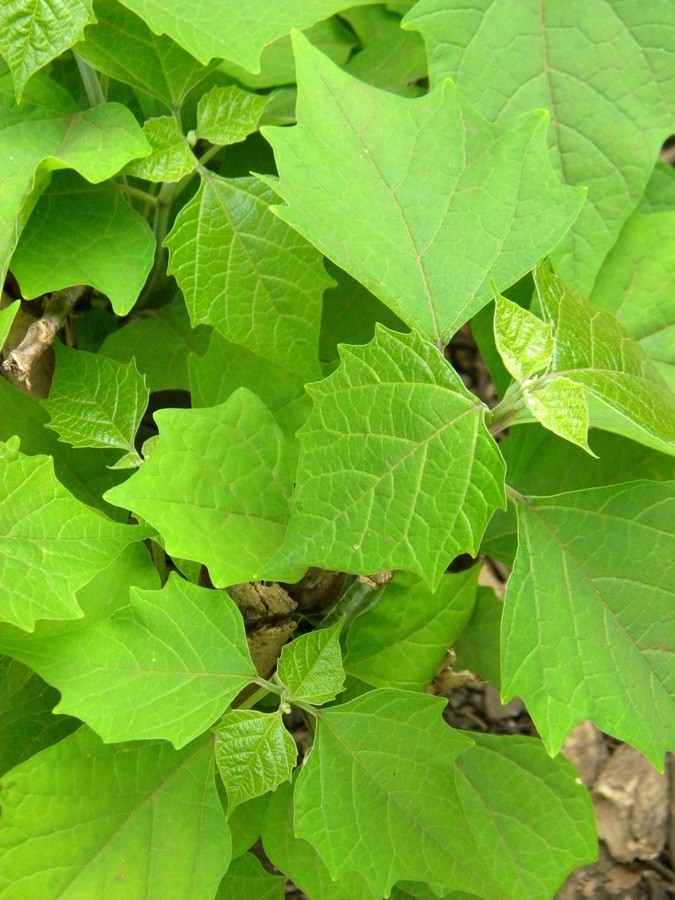
Photo: Obsidian Soul · CC BY-SA 3.0 · Wikimedia Commons

Matra and anupana
AS THE CLASSICAL TEXTS AND THE API PRESCRIBE
| Twak kwatha | 50–100 ml |
| Churna | 3–6 g |
| Anupana | Ushnodaka · Madhu |
| Kala | Adhobhakta |
Classical measures for a decoction and a powder of gambhari root bark; the fruit has its own preparations and is not covered by these figures.
Reported from Sharangadhara Samhita and the Ayurvedic Pharmacopoeia of India. Laisha states what the texts prescribe; it does not recommend. No quantity here is adjusted for a particular person — not for agni, koshtha, bala, age, pregnancy, kidney or liver function, or anything already being taken.
Pharmacopoeial standard
Ayurvedic Pharmacopoeia of India, Part I
| Marker | Gmelinol and the lignans |
| Assay | |
| Total ash | |
| Acid-insoluble ash | |
| Alcohol-soluble extractive | |
| Water-soluble extractive | |
| Foreign matter |
The article is Gmelina arborea root, with gmelinol and related lignans as markers. Of all ten Dashamoola roots it is among the most dependably supplied.
The gmelinol marker is not a test Laisha has run; no gambhari material was examined. The ash, extractive and assay limits must come from the current edition of the Ayurvedic Pharmacopoeia of India, not from this page, because a misremembered limit is a figure a laboratory might act on.
Rasapanchaka
| Rasa | TiktaKashayaMadhura |
| Guna | Guru |
| Virya | Ushna |
| Vipaka | Katu |
| Prabhava | The fruit, not the root, carries the special reputation: the texts call it rasayana and hridya, and handle root and fruit almost as two dravya. |
| Doshakarma | Tridoshahara. |
Tikta and kashaya with madhura, ushna virya and katu vipaka. The fruit is madhura with sheeta virya and is treated separately.
Karma and part used
Charaka puts kashmarya in three groups of ten, and the part decides which: the root sits with the other Dashamoola roots under shothahara, while the fruit is counted in virechanopaga, the aids to purgation, and dahaprashamana, the relievers of burning. A sweet, cooling fruit and a warming, bitter root under one name explains why the tradition keeps them apart. These are classical categories, recorded as such.
| Upayukta anga | Mula (the root) Mula twak (the root bark) Phala (the fruit) |
| Why it matters | Root and root bark go into Dashamoola. The ripe fruit, kashmarya phala, is a separate article: the texts call it madhura and sheeta, and Charaka lists it among aids to purgation and relievers of burning, a role the root never has. |
Paryaya
Kashmari and Shriparni, the auspicious-leaved, are the names the texts use most, and Charaka writes kashmarya. Madhuparnika, sweet-leaved, and Bhadraparni point to the foliage and fruit rather than the root, and Sarvatobhadra, auspicious on every side, is praise. A student should notice that this tree's synonyms do not all describe the part Dashamoola uses.
Names, by language
| English | Beechwood |
| Sinhala | Eth demata |
| Nepali | Khamari |
| Hindi | Gambhari |
| Kannada | Shivani |
| Tamil | Kumizhu |
| Telugu | Gummadi |
| Malayalam | Kumizhu |
| Marathi | Shivan |
| Gujarati | Shivan |
| Bengali | Gamar |
| Punjabi | Gumhar |
| Odia | Gambhari |
| Urdu | Gambhar |
Classical references
Charaka's groupings on this page were checked against the Charak Samhita Online text of Sutrasthana 4. For Sushruta and the Bhavaprakasha the chapter or varga is named and no verse number is given, since none could be confirmed.
Formulations it appears in
| Dashamoolarishta | Gambhari root bark is fermented with the other nine roots. |
| Dashamoola Kwatha | An equal share of the ten-root decoction. |
| Chyawanprash | Enters through the Dashamoola decoction in the base. |
| Dashamoola Taila | Its root is in the decoction used to process the oil. |
Adulterants and substitutes
Plantation timber makes gambhari easier to source honestly than its fellow great roots, so outright species fraud is uncommon. What does happen is a part swap: a timber plantation yields stem bark and wood in bulk, but root only when a stump is grubbed out, so stem material is sometimes sold as root bark. For the fruit, freshness and drying matter more than identity.
Identity
Gmelina arborea Roxb., family Lamiaceae, checked against the GBIF backbone on 28 September 2026 at 99 per cent confidence. No rival species is sold under the name. Hindi gamhar and the English beechwood and white teak all mean this one tree, which is now raised in plantations far beyond India, Ghana and Mexico among them, for pulp and light timber. That makes gambhari the one great root of Dashamoola whose supply need not come from wild stands.
A WAY TO REMEMBER IT
Gmelina honours Johann Georg Gmelin. Arborea simply means tree-like.
What the tradition holds
Two uses run side by side. The root bark serves as one of the Brihat Panchamoola, mostly through Dashamoola decoctions, the arishta and medicated oils. The fruit is described as sweet and cooling, grouped with remedies that ease burning and assist purgation, and counted by the Bhavaprakasha as a rasayana. These are the texts' own statements, not effects tested in people.
Constituents. The root and bark carry lignans including gmelinol, along with iridoid glycosides. Content differs between root, bark and fruit.
What the evidence says
| Status | Clinical evidence for gambhari as a medicine is close to nil; most published science treats the tree as timber and an agroforestry crop. |
| Suggested | A field trial in Jharkhand measured biomass and carbon storage in gamhar-based agroforestry and found roots made up roughly a fifth of tree biomass. That is useful to anyone planning a sustainable root harvest, and says nothing about medicinal effect. |
| Not established | Whether root, bark or fruit changes any health outcome has not been tested in a controlled human trial. |
| The honest gap | Published pharmacology rarely separates root from stem bark or fruit, while the tradition treats them as different dravya. |
Safety
Gambhari has no record of serious harm in traditional use, which reflects how little it has been studied as much as any margin of safety. The texts call it tridoshahara and the fruit cooling, so the heat warnings attached to agnimantha are not raised for it. Since Charaka lists the fruit among aids to purgation, loose stools are the reaction a careful user would watch for. Pregnancy, regular medicines or a diagnosed condition all call for a word with a doctor or qualified practitioner before use.
| Side effects | Digestive upset Loose stools with the fruit, in keeping with its classical place among aids to purgation |
| Contraindications | No absolute contraindication is documented here. This is written deliberately rather than left blank. |
| Interactions | No specific drug interaction is documented for gambhari root or fruit. Taken as a purgative-type fruit preparation, it could in principle shorten gut transit alongside laxative medicines; this is an inference from its classical grouping, not a reported case. |
| Pregnancy and breastfeeding | Gambhari has not been studied in pregnant or breastfeeding women; that decision belongs to a qualified practitioner. |
Growing it
| Climate | Tropical, in moist deciduous forest; also planted widely as a timber crop. |
| Soil | Deep, well-drained, moist ground. Grows fast where it is suited. |
| Planting | A tree, raised from seed or by stump planting. Among the fastest-growing hardwoods in India. |
| Harvest | Root and root bark are taken when trees are grubbed out, which is the honest source. Fruit is collected ripe. |
| What is not stated | Spacing, rotation and yield figures for gamhar plantations exist in forestry literature but differ by country and by purpose, timber or pulp; this entry does not reproduce them. |
Last updated · How Laisha writes and checks its pages · Report a mistake
Go further with Laisha Smarter
US$10 a month · one price worldwide · cancel any time
- Ask Laisha about any herb or formulation — up to 1,000 questions a month
- The full study tracks with practice questions
- Reports and exports as real files