Kantakari
कण्टकारी
Solanum virginianum L.
Solanaceae · Solanum
Benefits & side effects
TRADITIONAL VIEW, WITH SAFETY LIMITS
Hindi name: Kateli
What the texts say Kantakari does
- Kasahara — relieves cough
- Shwasahara — relieves breathlessness
- Deepana — kindles digestion (appetiser)
- Pachana — digests ama (digestive)
- Jwaraghna — used in fever
- Vatahara — pacifies vata
What the evidence says. Kantakari has a long and consistent classical record for cough. Clinical evidence for it as a single herb is limited.
Side effects and limits
- Burning sensation
- Digestive upset
- Mouth and throat irritation
Avoid or ask first: Pregnancy.; Conditions aggravated by ushna and tikshna dravya, including acid dyspepsia.
A traditional classification, not a recommendation. The full safety record is below.
Stands in 10 groups
- Kanthya — Good for the voice and throat
- Hikkanigrahana — Arresting hiccough (named there as Kantakarika)
- Kasahara — Relieving cough
- Shothahara — Reducing swelling
- Sheetaprashamana — Allaying cold
- Angamardaprashamana — Allaying body ache (named there as Kantakarika)
- Vidarigandhadi — Vata disorders and the wasting states
- Brihatyadi — Agni, bladder and the urinary passage (named there as Kantakarika)
- Laghu Panchamula — The lesser five roots
- Panchatikta — The five bitters
A Samhita can only be read forwards, from the group to its members. This is the same list read backwards.
Photographs
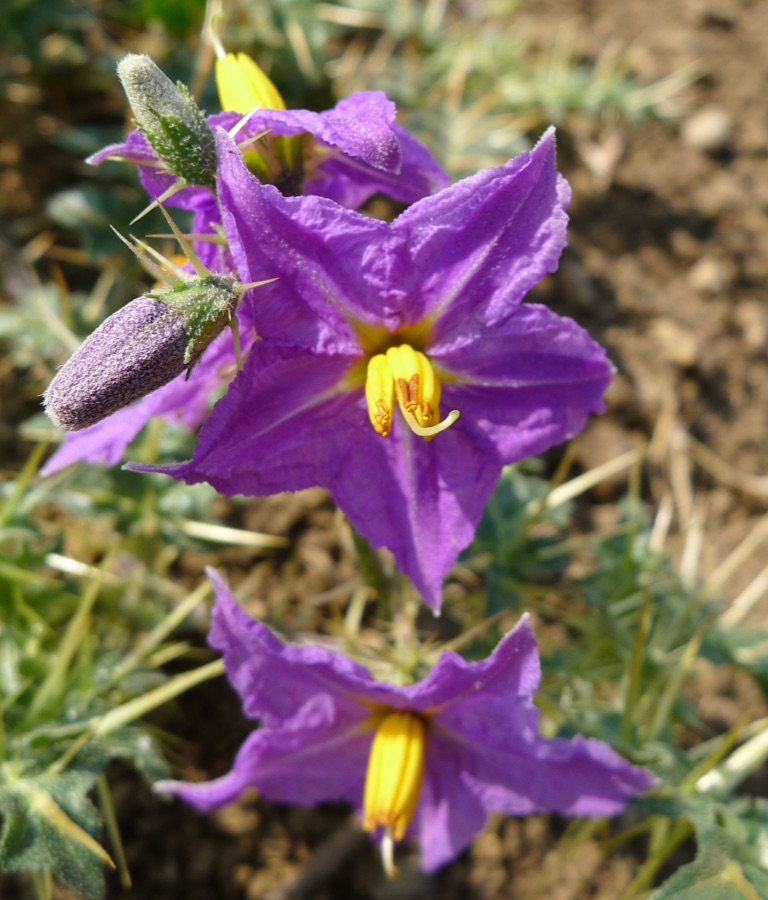
Photo: gailhampshire · CC BY 2.0 · Wikimedia Commons

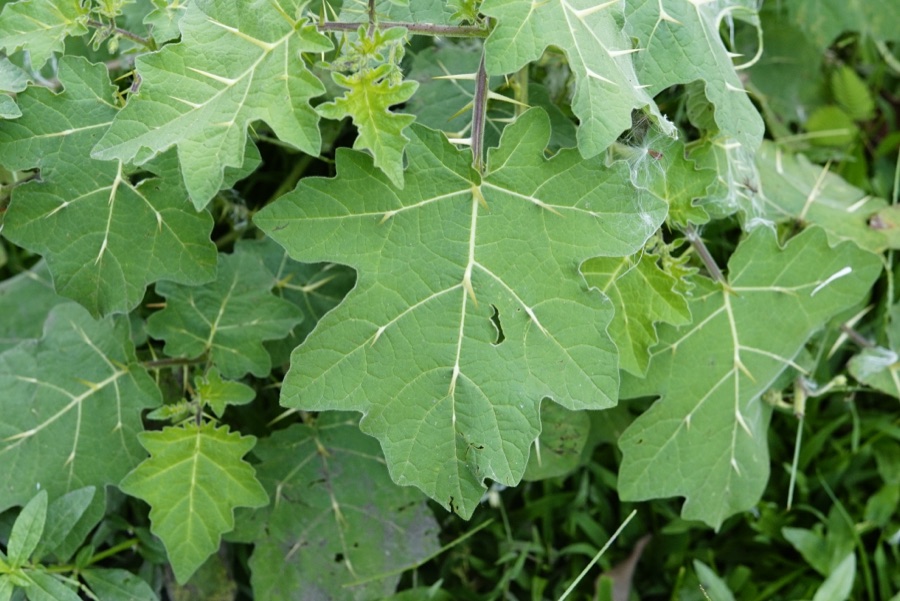
Photo: Vengolis · CC BY-SA 4.0 · Wikimedia Commons

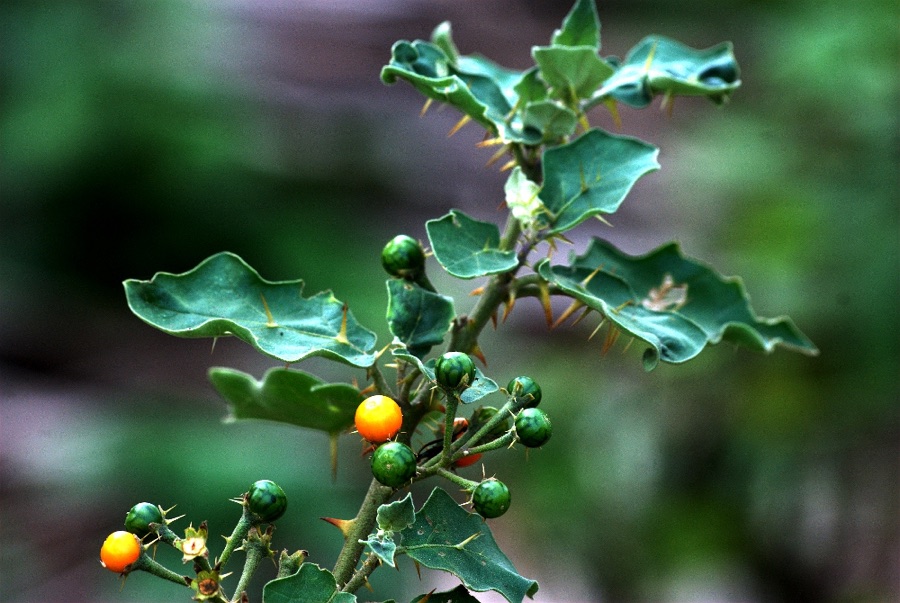
Photo: Original uploaded by Arayilpdas. · CC BY-SA 3.0 · Wikimedia Commons

Matra and anupana
AS THE CLASSICAL TEXTS AND THE API PRESCRIBE
| Panchanga churna | 3–6 g |
| Kwatha | 50–100 ml |
| Anupana | Madhu · Ushnodaka |
| Kala | Adhobhakta |
Used in Dashamoola and also alone, especially for cough; figures refer to the whole plant or root as stated.
Reported from Sharangadhara Samhita and the Ayurvedic Pharmacopoeia of India. Laisha states what the texts prescribe; it does not recommend. No quantity here is adjusted for a particular person — not for agni, koshtha, bala, age, pregnancy, kidney or liver function, or anything already being taken.
Pharmacopoeial standard
Ayurvedic Pharmacopoeia of India, Part I
| Marker | Solasodine |
| Assay | |
| Total ash | |
| Acid-insoluble ash | |
| Alcohol-soluble extractive | |
| Water-soluble extractive | |
| Foreign matter |
The pharmacopoeial species is Solanum virginianum. Other Solanum species in the Brihati group have different alkaloid levels, which is why the pair is examined side by side.
These are the marker and the identity test for this dravya, and they are not a test Laisha has run on anything. Laisha does not state the numeric limits here: the assay, ash and extractive figures must be read from the current edition of the Ayurvedic Pharmacopoeia of India, because a wrong limit printed here is a number a laboratory would act on. The entries in this library that DO carry figures carry them because each one was checked.
Rasapanchaka
| Rasa | TiktaKatu |
| Guna | LaghuRukshaTikshna |
| Virya | Ushna |
| Vipaka | Katu |
| Prabhava | Of all the Dashamoola herbs, the texts associate Kantakari most strongly with cough and breathlessness, and it appears in more of Charaka's groups than Brihati does. |
| Doshakarma | Kaphavatahara. Being ushna and tikshna it increases pitta. |
Bitter and pungent, heating, pungent after digestion. The texts link this profile to its action on kapha and on breathing.
Karma and part used
The actions listed are those the classical texts and Charaka's group lists record. They are the tradition's statements, not modern findings about effects in people.
| Upayukta anga | Mula (the root) Panchanga Phala (the fruit) |
| Why it matters | Dashamoola uses the root, while the pharmacopoeial article for many single-herb preparations is the whole plant (panchanga). The green berries hold the most glycoalkaloid, which is why safety notes focus on the fruit. |
Paryaya
Kantakari means 'the thorny one' and Duhsparsha 'hard to touch', both describing the prickles on stem and leaf. Kshudra, 'the small one', separates it from Brihati, 'the large one'. Vyaghri, 'the tigress', gives its name to Vyaghri Haritaki; Nidigdhika is an older name for the same plant.
Names, by language
| English | Yellow-berried nightshade |
| Sinhala | Katuwelbatu |
| Nepali | Kantakari |
| Hindi | Kateli |
| Kannada | Nelagulla |
| Tamil | Kandankathiri |
| Telugu | Nelamulaka |
| Malayalam | Kantakari |
| Marathi | Bhui ringani |
| Gujarati | Bhoyaringani |
| Bengali | Kantikari |
| Punjabi | Kandiari |
| Odia | Bhejibaigana |
| Urdu | Katai khurd |
Classical references
Rasa, guna, virya, vipaka and karma are recorded as the classical texts give them, with the text and section named so a student can open the book and check. Where an exact chapter and verse could not be confirmed, this library names the section rather than inventing a number.
Formulations it appears in
| Dashamoolarishta | One of the ten roots. |
| Dashamoola Kwatha | One of the ten roots. |
| Kantakari Avaleha | A linctus (avaleha) named after Kantakari, prescribed in the texts for kasa and shvasa. |
| Vyaghri Haritaki | Named after Vyaghri, one of Kantakari's synonyms; Kantakari is the base of the formula. |
Adulterants and substitutes
Solanum nigrum and other small solanums are sometimes gathered with it. The confusion examiners ask about is with Brihati, the large member of the pair, which has its own naming problem. Dried, cut roots of the two are hard to tell apart. In Dashamoola, where both belong, a mix-up has little effect; in a Kantakari avaleha it changes the formula.
Identity
Kantakari is Solanum virginianum L., a low, spreading, very prickly herb with violet flowers and small round berries that ripen yellow. GBIF matched the name with high confidence on 28 September 2026. Ayurvedic books more often call it Solanum xanthocarpum or S. surattense; both are synonyms of the same species, not separate plants. It is one of the five lesser roots of Dashamoola.
A WAY TO REMEMBER IT
Solanum is linked to Latin solamen, comfort. Virginianum is a historical slip in naming: the plant is Asian and has nothing to do with Virginia. Kantakari, 'the thorny one', describes the plant exactly.
What the tradition holds
Kantakari is one of the Laghu Panchamoola of Dashamoola and is classed throughout the texts as kasahara (for cough) and shvasahara (for breathlessness). Charaka places it in six of his fifty groups, including those for cough and for hiccup.
Constituents. Solanum virginianum contains steroidal glycoalkaloids, including solasodine, and steroidal saponins. The unripe fruit holds the highest alkaloid levels; the root holds less.
What the evidence says
| Status | Kantakari has a long and consistent classical record for cough. Clinical evidence for it as a single herb is limited. |
| Suggested | Health Canada's monograph system shows a regulator accepting some traditional-use claims for Ayurvedic ingredients on the strength of documented tradition. That reflects the history of use rather than trial results. |
| Not established | Well-designed trials showing that Kantakari helps any respiratory or other condition have not been identified. Its place in the cough group is a classical classification, not proof of effect. |
| The honest gap | Published work rarely records which part was used, and root and fruit differ markedly in alkaloid content. |
Safety
Kantakari is a nightshade. Its green, unripe berries contain glycoalkaloids of the type that make green potatoes poisonous, which is why the texts specify the part and the method of preparation. Being heating and sharp, it may aggravate pitta. People on prescription medicines, those who are pregnant and anyone with a diagnosed condition should consult a doctor or qualified practitioner first.
| Side effects | Burning sensation Digestive upset Mouth and throat irritation |
| Contraindications | Pregnancy. Conditions aggravated by ushna and tikshna dravya, including acid dyspepsia. |
| Interactions | Antidiabetic medicines: blood-sugar lowering has been reported for Solanum species, so the effects may add up. Solasodine-type glycoalkaloids: large amounts of unripe fruit irritate the gut and could add to other irritant medicines. |
| Pregnancy and breastfeeding | Not to be used in pregnancy. There is not enough evidence to establish safety in breastfeeding. |
Growing it
| Climate | Dry and hot; a weed of waste ground and roadsides. |
| Soil | Poor, dry, well-drained ground. |
| Planting | Self-sows from seed. |
| Harvest | Roots lifted after fruiting, washed and dried. Fruit collected ripe where fruit is wanted. |
| What is not stated | Spacing, varieties and yields for Kantakari have not been verified against a named agricultural authority, so none are given. Most supply is still gathered from wild, weedy stands. |
Last updated · How Laisha writes and checks its pages · Report a mistake
Go further with Laisha Smarter
US$10 a month · one price worldwide · cancel any time
- Ask Laisha about any herb or formulation — up to 1,000 questions a month
- The full study tracks with practice questions
- Reports and exports as real files