Patha
पाठा
Cissampelos pareira L.
Menispermaceae · Cissampelos
Benefits & side effects
TRADITIONAL VIEW, WITH SAFETY LIMITS
What the texts say Patha does
- Grahi — digestive that absorbs excess fluid and binds the stool
- Deepana — kindles digestion (appetiser)
- Pachana — digests ama (digestive)
- Vedanasthapana — relieves pain
- Krimighna — anthelmintic (against worms)
- Jwaraghna — used in fever
What the evidence says. Traditional use is long recorded. Modern clinical evidence is limited.
Side effects and limits
- Gastric irritation reported with prolonged use
Avoid or ask first: No absolute contraindication is documented here. This is written deliberately rather than left blank.
A traditional classification, not a recommendation. The full safety record is below.
Stands in 9 groups
- Sandhaniya — Uniting and healing (named there as Ambashthaki)
- Stanyashodhana — Purifying breast milk
- Jwarahara — Relieving fever
- Aragvadhadi — Kapha, poisoning, and wound cleansing
- Pippalyadi — Agni, Kapha, and the digestive disorders
- Brihatyadi — Agni, bladder and the urinary passage
- Patoladi — Pitta, Kapha, fever, and vomiting
- Ambashthadi — Wound healing and the binding of stool (named there as Ambashtha)
- Mustadi — Cleansing breast milk, Kapha, and the vagina
A Samhita can only be read forwards, from the group to its members. This is the same list read backwards.
Photographs
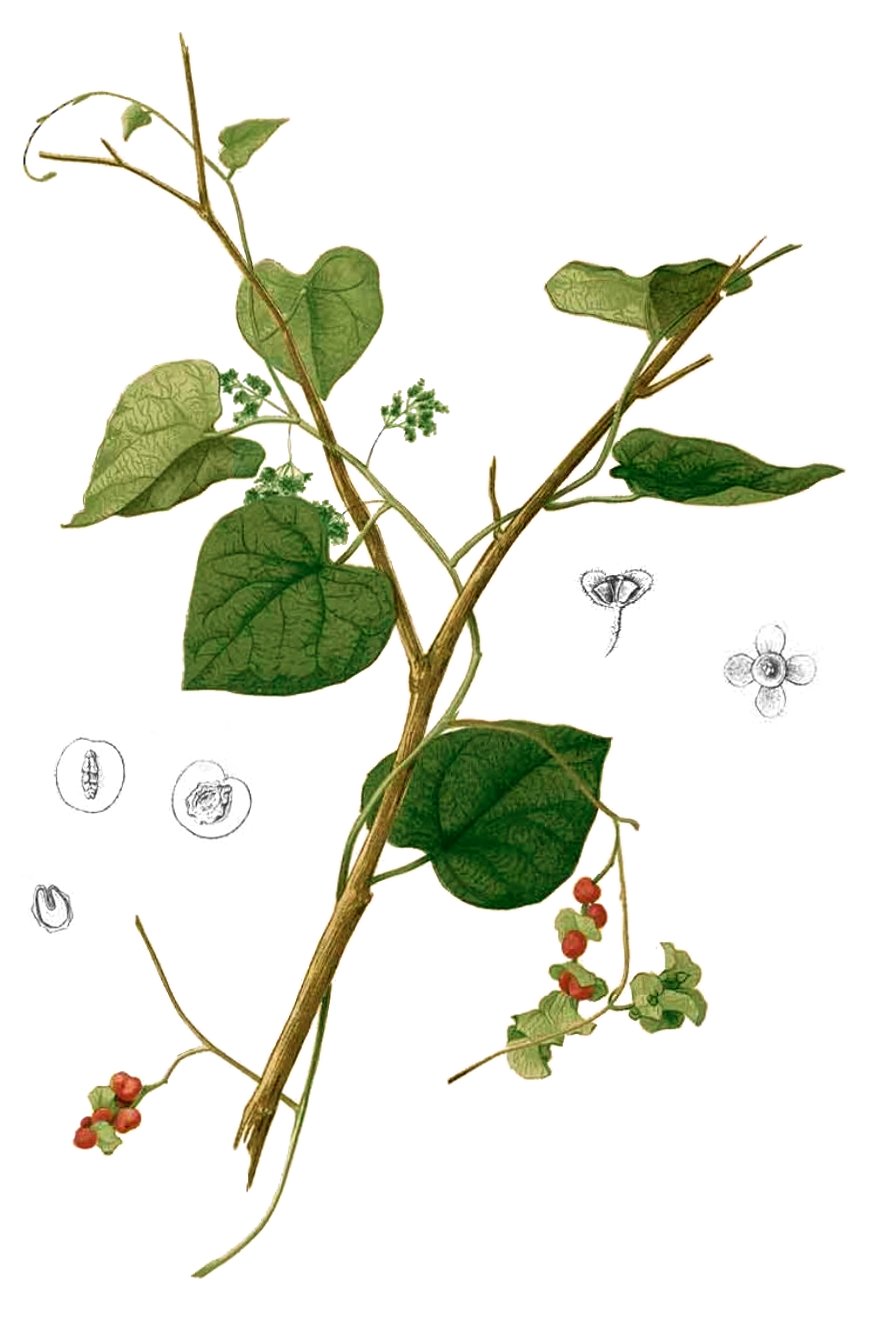
Photo: Francisco Manuel Blanco (O.S.A.) · Public domain · Wikimedia Commons

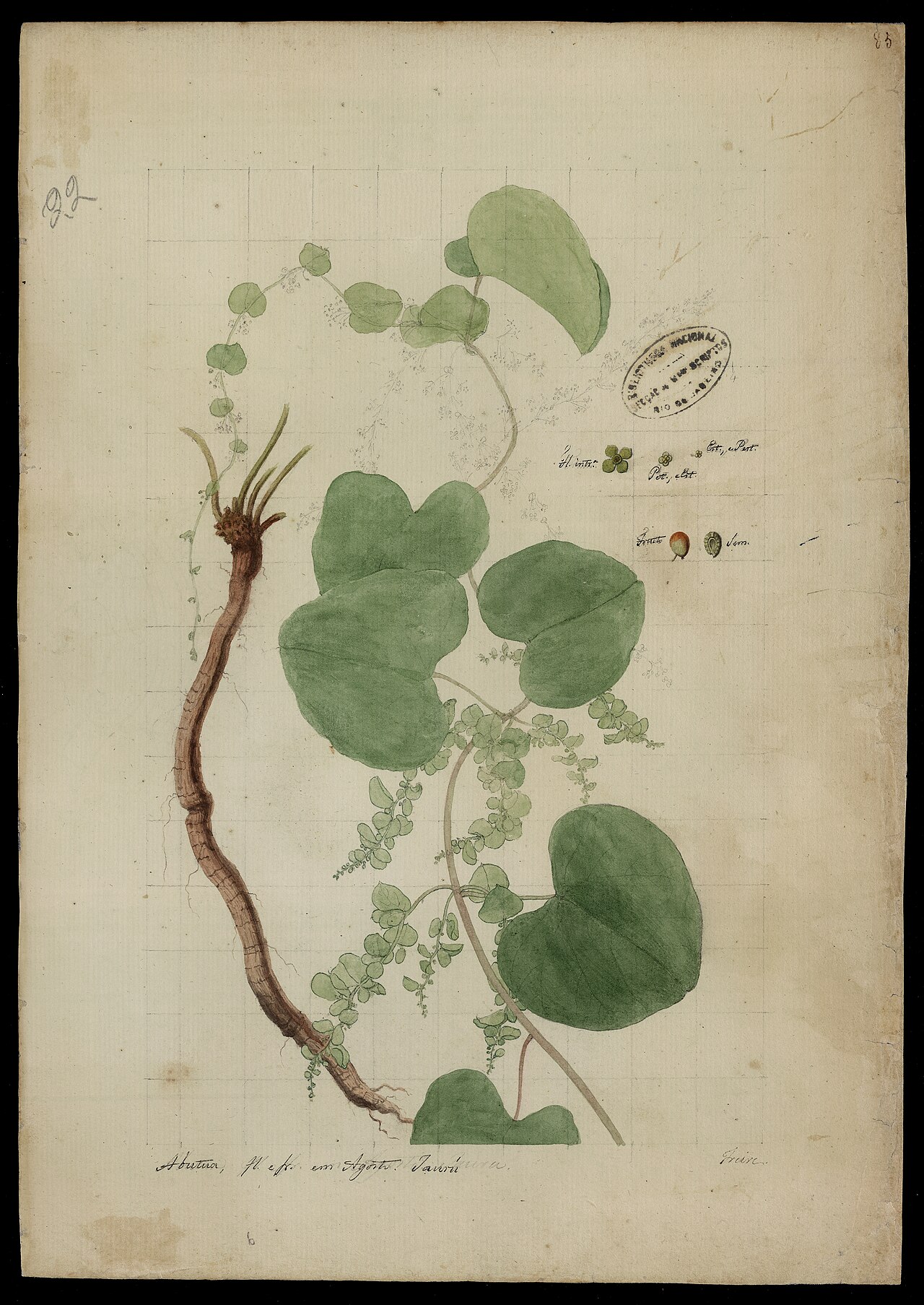
Photo: Unknown · Public domain · Wikimedia Commons

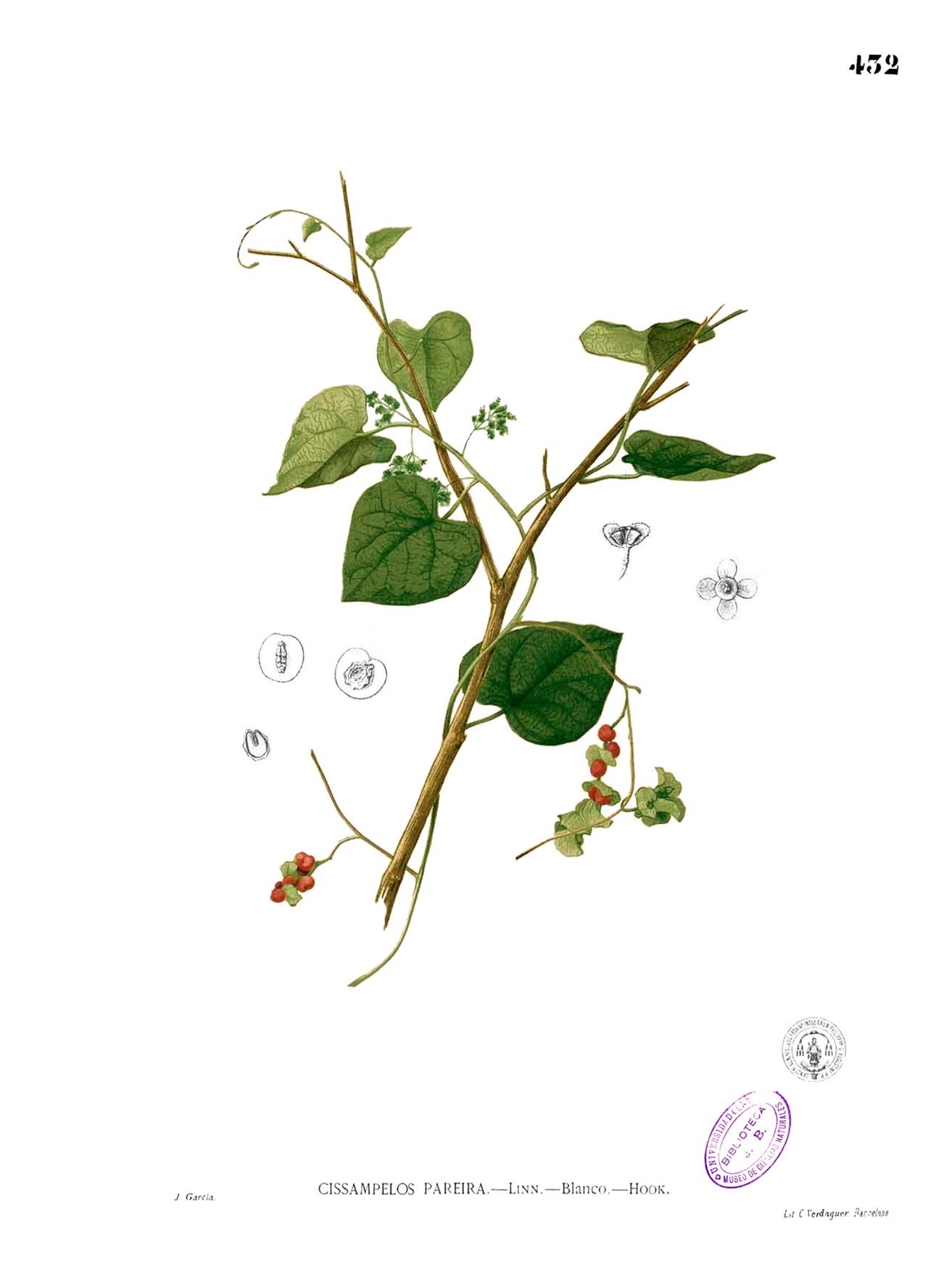
Photo: Francisco Manuel Blanco (O.S.A.) · Public domain · Wikimedia Commons

Matra and anupana
AS THE CLASSICAL TEXTS AND THE API PRESCRIBE
| Churna | 1–3 g |
| Kwatha | 50–100 ml |
| Anupana | Ushnodaka · Takra |
| Kala | Adhobhakta |
The classical grahi matra.
Reported from Sharangadhara Samhita and the Ayurvedic Pharmacopoeia of India. Laisha states what the texts prescribe; it does not recommend. No quantity here is adjusted for a particular person — not for agni, koshtha, bala, age, pregnancy, kidney or liver function, or anything already being taken.
Pharmacopoeial standard
Ayurvedic Pharmacopoeia of India, Part I
| Marker | Total bisbenzylisoquinoline alkaloids |
| Assay | |
| Total ash | |
| Acid-insoluble ash | |
| Alcohol-soluble extractive | |
| Water-soluble extractive | |
| Foreign matter |
Cissampelos pareira root. Cyclea peltata is the accepted article in Kerala practice and carries a different alkaloid profile.
These are the marker and the identity test for this dravya, and they are not a test Laisha has run on anything. Laisha does not state the numeric limits here: the assay, ash and extractive figures must be read from the current edition of the Ayurvedic Pharmacopoeia of India, because a wrong limit printed here is a number a laboratory would act on. The entries in this library that DO carry figures carry them because each one was checked.
Rasapanchaka
| Rasa | Tikta |
| Guna | LaghuTikshna |
| Virya | Ushna |
| Vipaka | Katu |
| Prabhava | Named in the texts for atisara and for the disorders of the yoni, and it heads Sushruta's Ambashthadi gana under the name Ambashtha. |
| Doshakarma | Kaphavatahara. |
Tikta with ushna virya and katu vipaka. It is a bitter that warms, which is why it sits in the digestive and the grahi groups rather than the cooling ones.
Karma and part used
These are the actions the classical texts record. They are statements about what the tradition holds, and this library does not restate them as findings about a human body.
| Upayukta anga | Mula (the root) |
| Why it matters | The root is the pharmacopoeial article. The leaf is used regionally and is not the same material. |
Paryaya
Ambashtha is the name Sushruta's Ambashthadi gana is built on, which is why Patha and Ambashtha resolve to one dravya in the gana lists.
Names, by language
| English | Velvet leaf |
| Hindi | Patha |
| Kannada | Padavali beru |
| Tamil | Ponmusutai |
| Telugu | Visaboddi |
| Malayalam | Padathali |
| Marathi | Pahadvel |
| Gujarati | Venivel |
| Bengali | Akanadi |
| Odia | Kanabindhia |
| Urdu | Patha |
Classical references
Formulations it appears in
| Pathadi Kwatha | Named for the dravya. |
| Kutajarishta | An ingredient. |
| Pushyanuga Churna | An ingredient. |
Adulterants and substitutes
Cyclea peltata is the standing substitution and in Kerala practice it is the accepted article rather than a substitute. Stephania japonica is also traded as Patha. All three are Menispermaceae with similar cross-sections, so the root alone does not settle it and the source has to be known.
Identity
Cissampelos pareira is the accepted Patha of the pharmacopoeia. Cyclea peltata is used as Patha across much of south India and Kerala, and both are Menispermaceae with similar roots. This is a live regional divergence, not an error by either side.
A WAY TO REMEMBER IT
Cissampelos is Greek kissos, ivy, and ampelos, a vine — a climber that looks like both. Pareira comes from the Portuguese trade name pareira brava, wild vine. Patha means one that reads or recites, and the shield-shaped leaf is the recognition character.
What the tradition holds
Patha heads the Ambashthadi gana of the Sushruta Samhita and is named among the Trptighna mahakashaya of the Charaka Samhita. That is what the tradition holds and where it is set down.
What the evidence says
| Status | Traditional use is long recorded. Modern clinical evidence is limited. |
| Suggested | The Ayurvedic Pharmacopoeia of India sets a standard for the root of Cissampelos pareira, with total bisbenzylisoquinoline alkaloids as its marker. That fixes what may be sold as Patha; it is not evidence that the root does anything in a body. |
| Not established | No good clinical trial establishes an effect of Patha root on any named condition. Results reported for 'Patha' are hard to use even where they exist, because much of south India and Kerala supplies Cyclea peltata under the same name, a related root with a different alkaloid profile. |
| The honest gap | Published work on this dravya rarely records the origin or the standard of the material tested, so results cannot be attributed to a defined article. |
Safety
Cissampelos pareira contains bisbenzylisoquinoline alkaloids, and plants of this group have a documented pharmacology, so this is not an inert bitter. It is one of the dravya where the quantity and the source genuinely matter. Anyone pregnant, on medication or managing a diagnosed condition should speak to a doctor or a qualified practitioner first.
| Side effects | Gastric irritation reported with prolonged use |
| Contraindications | No absolute contraindication is documented here. This is written deliberately rather than left blank. |
| Interactions | No specific drug interaction is documented for this dravya. That is the honest state of the evidence, not a statement that none exists — most Ayurvedic dravya have never been studied for interaction with modern medicines at all. |
| Pregnancy and breastfeeding | Traditional texts use Patha in obstetric preparations, and modern safety data in pregnancy are absent. Safety in pregnancy has not been established, and the traditional use does not establish it. |
Last updated · How Laisha writes and checks its pages · Report a mistake
Go further with Laisha Smarter
US$10 a month · one price worldwide · cancel any time
- Ask Laisha about any herb or formulation — up to 1,000 questions a month
- The full study tracks with practice questions
- Reports and exports as real files