Udumbara
उदुम्बर
Ficus racemosa L.
Moraceae · Ficus
Benefits & side effects
TRADITIONAL VIEW, WITH SAFETY LIMITS
Hindi name: Gular
What the texts say Udumbara does
- Grahi — digestive that absorbs excess fluid and binds the stool
- Vranaropana — heals wounds
- Raktastambhana — checks bleeding (haemostatic)
- Varnya — improves complexion
- Dahaprashamana — relieves burning
What the evidence says. Of the four milky trees, udumbara has the most modern work, but almost all of it is in cells and rodents and the few human studies are very small.
Side effects and limits
- Constipation from the tannins
- Digestive upset
- Skin irritation from the latex
Avoid or ask first: No absolute contraindication for udumbara is recorded in the sources used here, and the field is filled in to say so.
A traditional classification, not a recommendation. The full safety record is below.
Stands in 2 groups
- Mutrasangrahaniya — Binding the urine
- Nyagrodhadi — Wounds, burns, Pitta, and Prameha
A Samhita can only be read forwards, from the group to its members. This is the same list read backwards.
Photographs
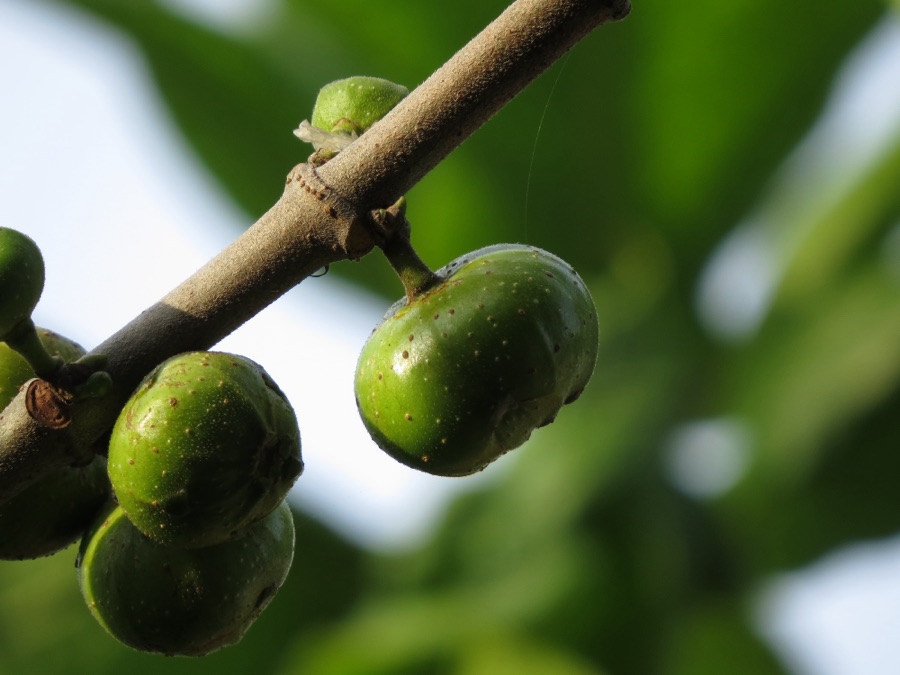
Photo: Lưu Ly · CC BY-SA 3.0 · Wikimedia Commons

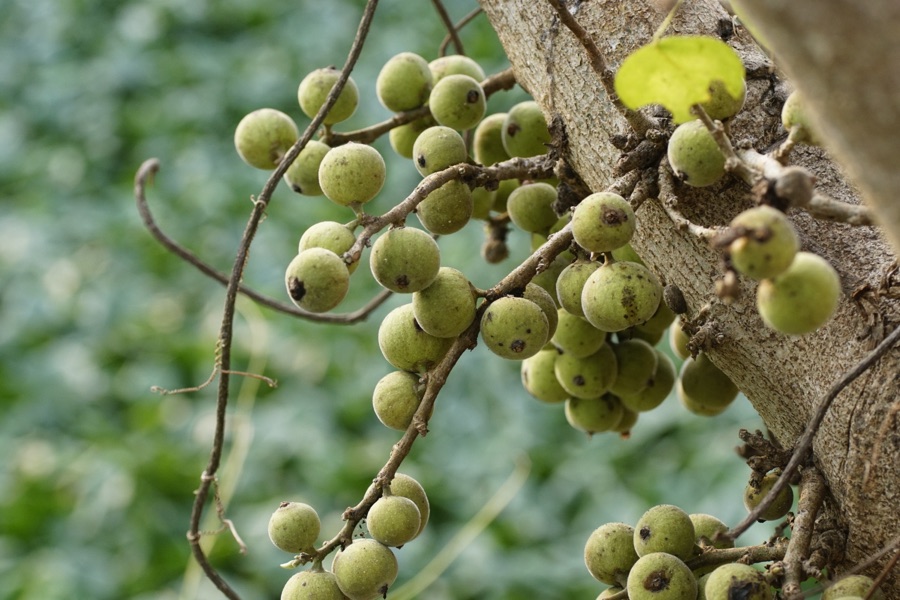
Photo: Vengolis · CC BY-SA 4.0 · Wikimedia Commons

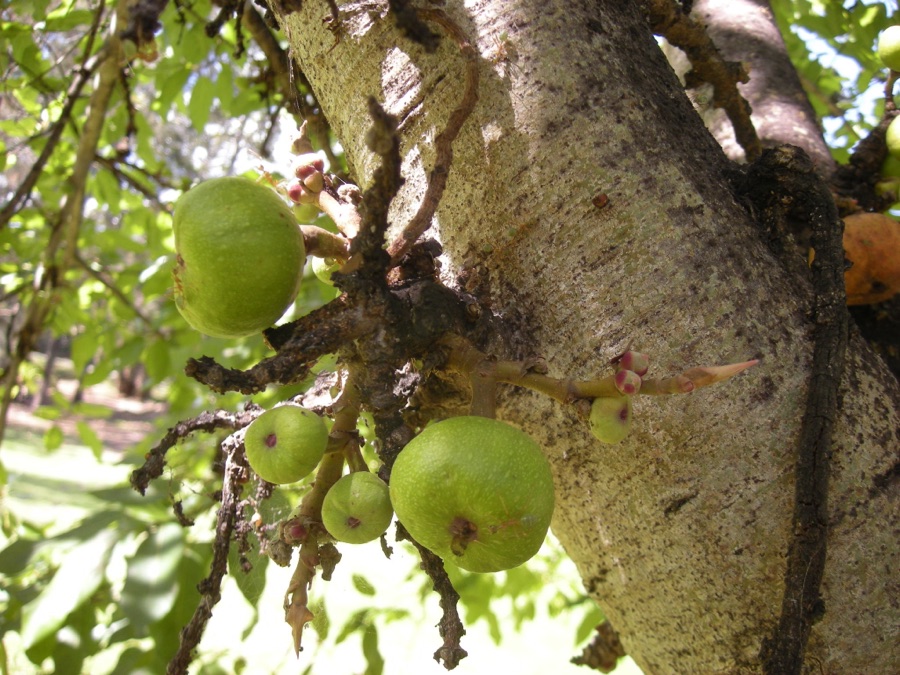
Photo: Ethel Aardvark · CC BY 3.0 · Wikimedia Commons

Matra and anupana
AS THE CLASSICAL TEXTS AND THE API PRESCRIBE
| Twak kwatha | 50–100 ml |
| Churna | 3–6 g |
| Anupana | Madhu · Tandulodaka |
| Kala | Adhobhakta |
Udumbara is given in the Kshiri Vriksha and Panchavalkala combinations, and in Charaka mostly as local oils and washes; its fruit is also simply eaten as food, which is not the same thing as a medicinal dose.
Reported from Sharangadhara Samhita and the Ayurvedic Pharmacopoeia of India. Laisha states what the texts prescribe; it does not recommend. No quantity here is adjusted for a particular person — not for agni, koshtha, bala, age, pregnancy, kidney or liver function, or anything already being taken.
Rasapanchaka
| Rasa | KashayaMadhura |
| Guna | GuruRuksha |
| Virya | Sheeta |
| Vipaka | Katu |
| Prabhava | No unique prabhava is recorded. Beyond the shared Nyagrodhadi uses for wounds and discharge, the nighantu tradition singles out the fruit, rather than the bark, in prameha. |
| Doshakarma | Calms pitta and kapha. Heavy and drying, so the texts expect it to raise vata when overused, though the sweet fruit is gentler on this point than the bark. |
Udumbara is the one milky tree given a second taste, madhura, beside kashaya, which fits a tree whose ripe fruit is eaten. Virya is sheeta and vipaka katu.
Karma and part used
The list mirrors the group's astringent, wound-healing and bleeding-checking actions; what is particular to udumbara is that several of these are attributed to the fruit and latex as well as to the bark. The library reports them as the tradition's claims, not as measured effects.
| Upayukta anga | Twak (the stem bark) Phala (the fruit) Ksheera (the latex) Mula (the root) |
| Why it matters | Bark is the main article, but udumbara is the milky tree whose fruit and latex matter most: the unripe fig is a vegetable and a medicine, the ripe fig is eaten, and the latex is used on its own in Charaka's oils. |
Paryaya
Jantuphala, insect-fruit, is an observation rather than a metaphor: every fig holds the tiny wasps that pollinate it. Sadaphala, always-fruiting, notes how long the crop lasts on the trunk, and Hemadugdha ties the tree's milky sap to gold. Yajnanga, limb of the sacrifice, ties the tree to Vedic ritual use.
Names, by language
| English | Cluster fig |
| Sinhala | Attikka |
| Nepali | Dumri |
| Hindi | Gular |
| Kannada | Atti |
| Tamil | Athi |
| Telugu | Medi |
| Malayalam | Athi |
| Marathi | Umbar |
| Gujarati | Umbardo |
| Bengali | Dumur |
| Punjabi | Gular |
| Odia | Dimiri |
| Urdu | Gular |
Classical references
Qualities are cited to the Bhavaprakasha Nighantu, group memberships to Sushruta and Charaka, and the local preparations to Charaka's chapter on gynaecological disorders with verse numbers checked against Charak Samhita Online. Nothing is given a verse number that was not checked.
Formulations it appears in
| Nyagrodhadi Kwatha | Udumbara bark is the second tree of the group decoction. |
| Nalpamaradi Taila | An external oil made from the barks of the fig trees; the cluster fig is among them. |
Adulterants and substitutes
Bark of the other milky figs is collected as udumbara, which matters less in the group formulas than in a single-tree one. The fruit raises its own problem: dried cluster figs are sold beside, and mixed with, other dried wild figs, and a fig that has been infested and spoiled is hard to tell from one that simply carries its normal wasps. The latex, needed for Charaka's oil, is almost never supplied commercially and has to be collected fresh.
Identity
Ficus racemosa, the cluster fig, confirmed against the GBIF backbone on 28 September 2026 at 99 per cent confidence; older Ayurvedic books call it Ficus glomerata. Of the four Kshiri Vriksha it is the easiest to name in the field, because its figs hang in dense bunches straight from the trunk and thick branches instead of among the leaves. It is native from India through Southeast Asia to Australia and is common along streams.
A WAY TO REMEMBER IT
Ficus racemosa: racemosa means the figs are borne in clusters directly on the trunk and branches, not in the leaf axils. The name tells you where to look for the fruit.
What the tradition holds
Udumbara is counted in Sushruta's Nyagrodhadi gana and in Charaka's Mutrasangrahaniya group, and it is the milky tree that Charaka uses most in his chapter on gynaecological disorders, where its unripe fruit, its tender fruit and its latex each enter a different medicated oil. These are records of the tradition, not findings about the tree's effects.
Constituents. A 2015 review names bergenin as the main stem-bark compound, with kaempferol, coumarin, leucocyanidin and leucopelargonidin glycosides, beta-sitosterol, stigmasterol, lupeol and ellagic acid. The fruit carries sugars and fibre, and the latex enzymes.
What the evidence says
| Status | Of the four milky trees, udumbara has the most modern work, but almost all of it is in cells and rodents and the few human studies are very small. |
| Suggested | A review reports one placebo-controlled study of the bark in thirty volunteers and a platelet study of unstated size. Studies this small cannot establish an effect, and the review gives too few details to judge them. Health Canada's compendium reflects a documented tradition, not trial evidence. |
| Not established | No benefit of udumbara for any named condition is established. The rodent studies are mixed: one reported changes in liver and kidney markers at the higher levels tested while still calling the extract safe, which is a reason for caution rather than reassurance. |
| The honest gap | Older papers on Ficus glomerata and newer ones on Ficus racemosa are describing the same tree under two names, and authors do not always say which part, extract or region they used. |
Safety
The ripe fruit is a food and the bark a strongly astringent, tannin-rich drug. Taken in quantity the bark can constipate and can lower the absorption of iron and of medicines swallowed with it. The latex irritates skin. Rodent studies of the bark extract reported liver and kidney marker changes at higher levels, so long use deserves medical oversight. Every fig contains fig wasps, which is harmless. Anyone pregnant, on medication or managing a diagnosed condition should speak to a doctor or a qualified practitioner first.
| Side effects | Constipation from the tannins Digestive upset Skin irritation from the latex |
| Contraindications | No absolute contraindication for udumbara is recorded in the sources used here, and the field is filled in to say so. |
| Interactions | No specific drug interaction is documented for udumbara in these sources, because none has been studied; tell the doctor who prescribes any other medicine. Blood-glucose-lowering medicines: small studies of the bark have looked at blood glucose, so anyone on diabetes treatment should have a doctor watch for additive lowering. Oral iron and other medicines taken at the same time: tannins in the bark can bind them in the gut. |
| Pregnancy and breastfeeding | Charaka uses udumbara in local gynaecological preparations, but no modern study has established that it is safe to take in pregnancy or while breastfeeding; ask a qualified practitioner first. |
Growing it
| Climate | Tropical and subtropical, characteristically along watercourses. |
| Soil | Moist, deep ground; tolerates seasonal flooding. |
| Planting | Raised from seed or cuttings; in the wild it grows chiefly along watercourses, where birds and bats spread the seed. |
| Harvest | Bark taken in strips from part of the trunk. Fruit picked from the trunk itself, where it grows in clusters. |
| What is not stated | No agricultural authority's spacing or yield figures for cluster fig have been checked, so none are offered; supply comes mainly from wild and village trees. |
Last updated · How Laisha writes and checks its pages · Report a mistake
Go further with Laisha Smarter
US$10 a month · one price worldwide · cancel any time
- Ask Laisha about any herb or formulation — up to 1,000 questions a month
- The full study tracks with practice questions
- Reports and exports as real files